
Behncke Construction stabilized three basement walls in Moline, Illinois with twelve heavy structural steel I-beams, each installed for continuous contact with the block wall, and tuckpointed deteriorated and open mortar joints inside and out.
PROJECT SUMMARY
Date posted: September 13, 2026
Service: Foundation wall stabilization and tuckpointing
Location: Moline, Illinois
Problem: Basement block walls needing stabilization, with deteriorated and open mortar joints
Solution: Twelve heavy structural steel I-beams installed across three basement walls; interior and exterior tuckpointing of deteriorated mortar joints
Foundation type: Concrete block
Completion status: Completed
Project photos
Project overview
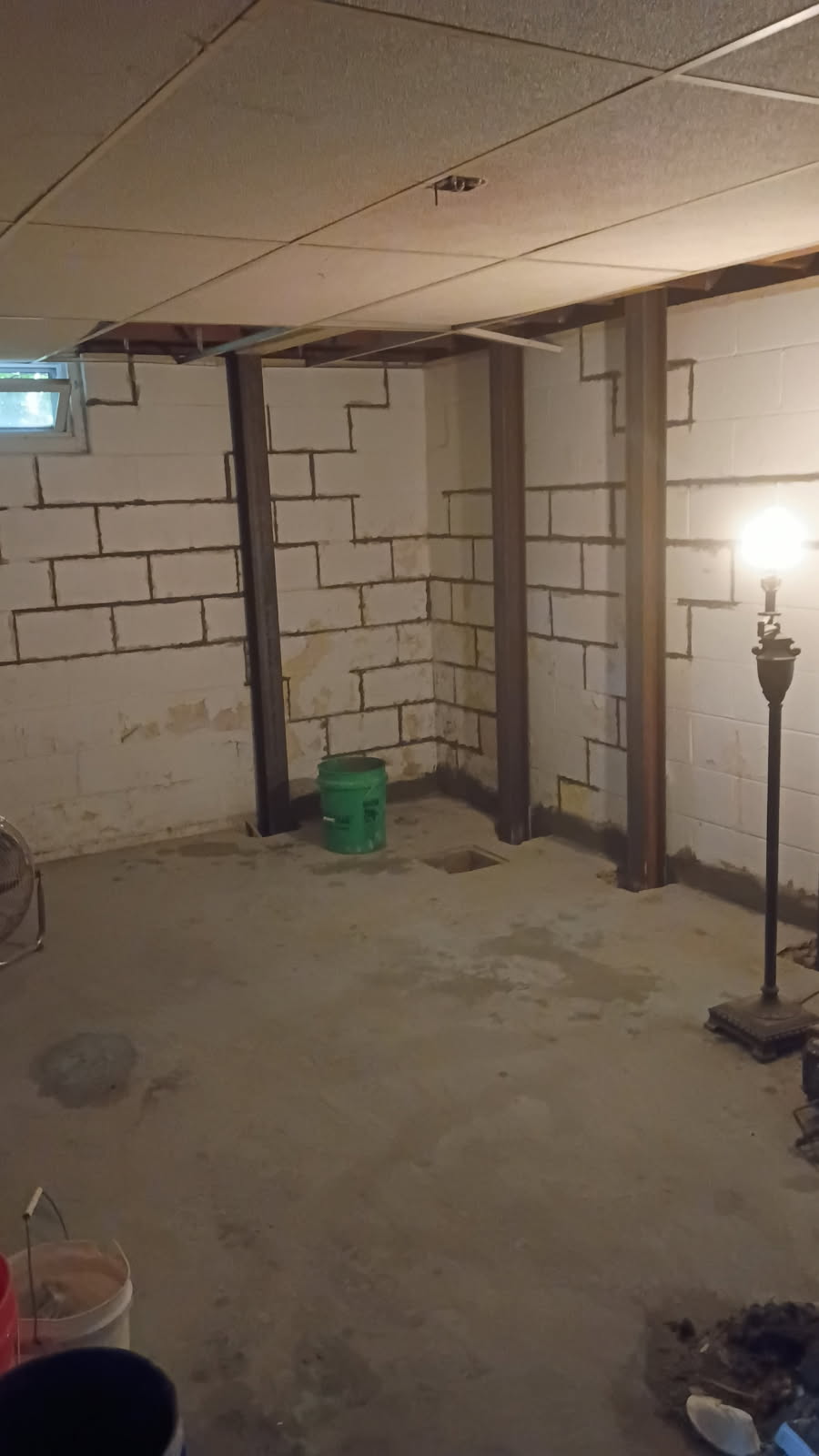
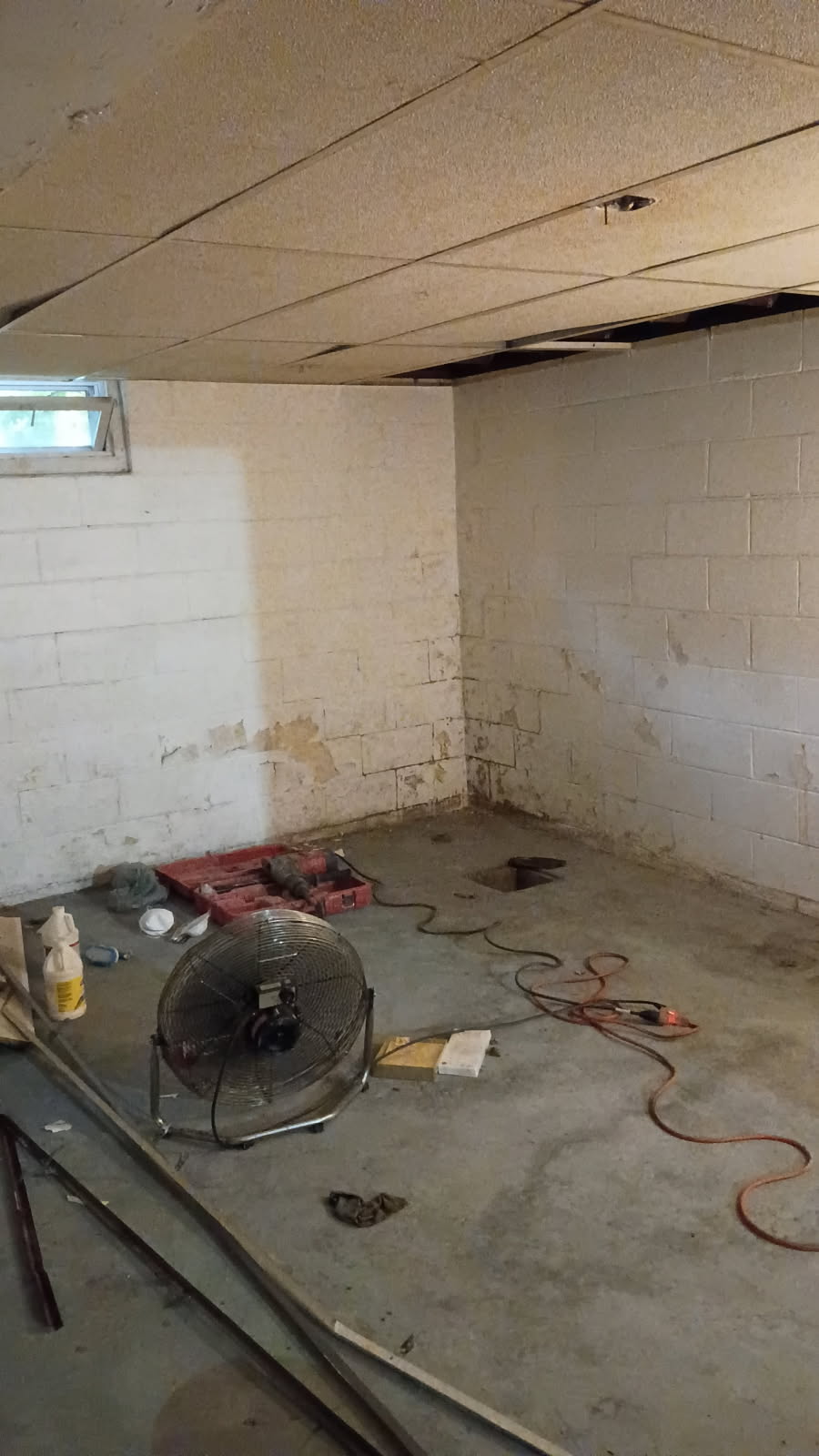
A home in Moline, Illinois needed its basement foundation walls stabilized. Three walls were involved, and the mortar joints in the block had deteriorated in places, with some joints open. The crew braced the walls with steel and repaired the masonry in the same project.
Project details
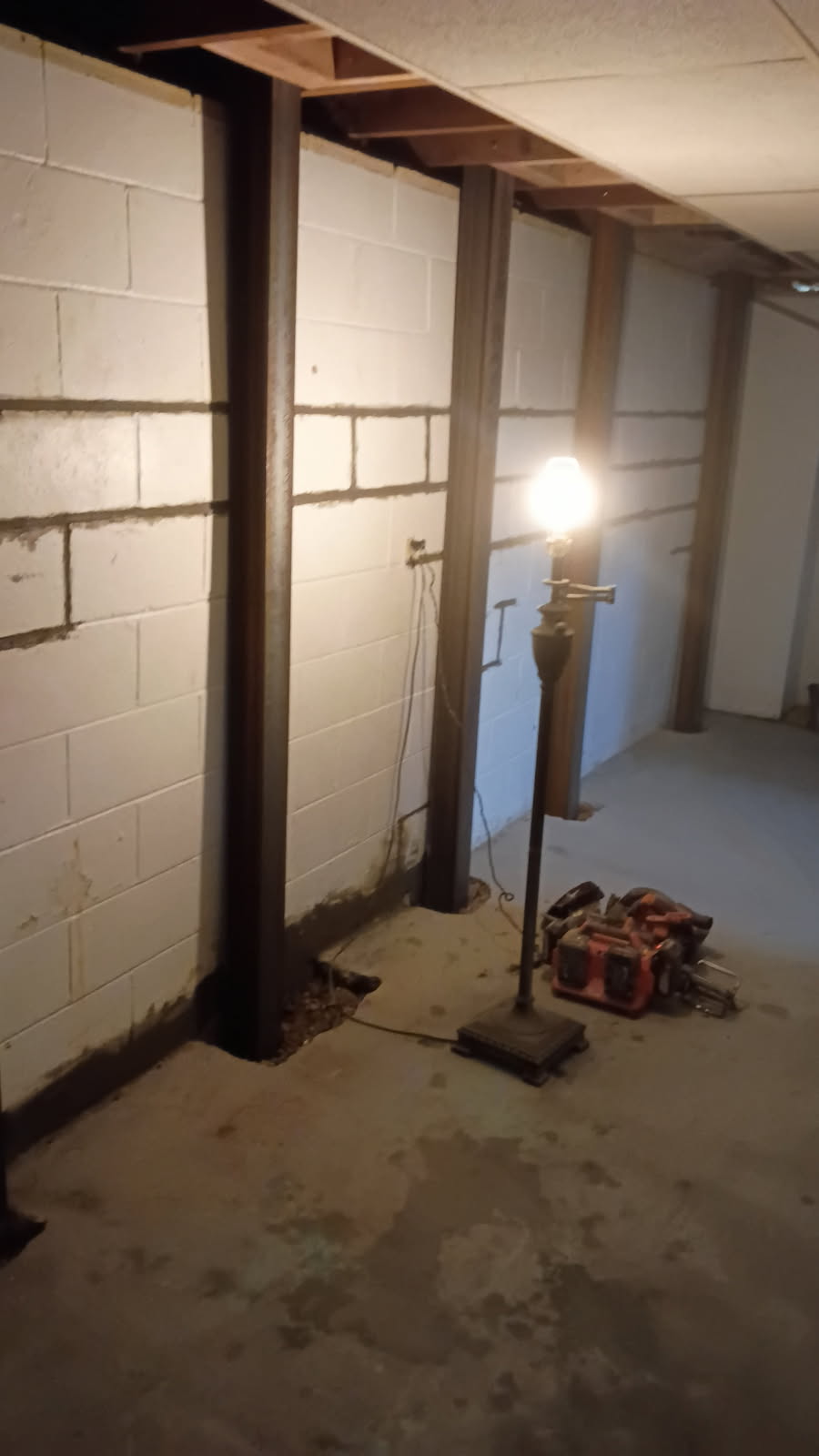
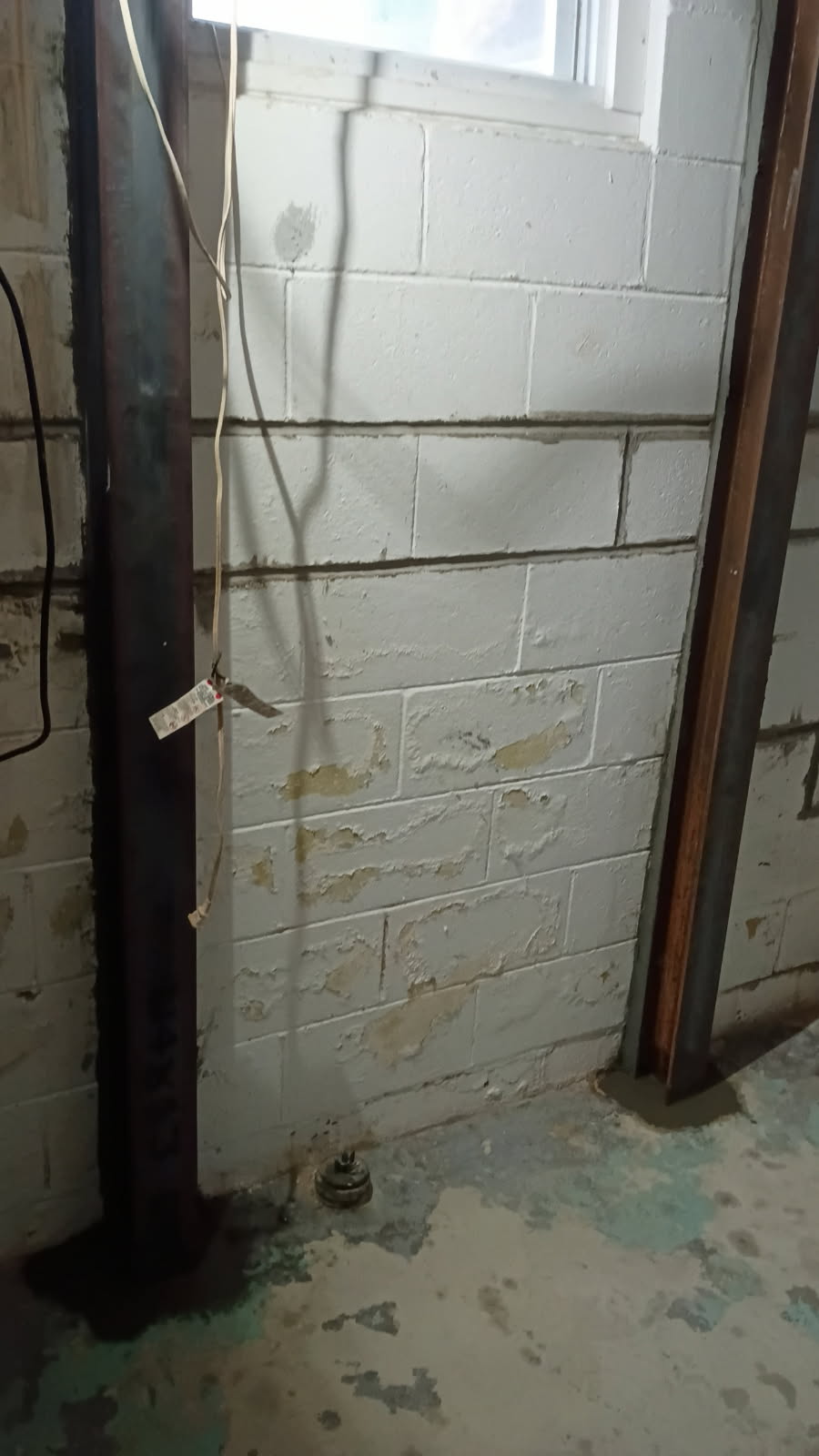
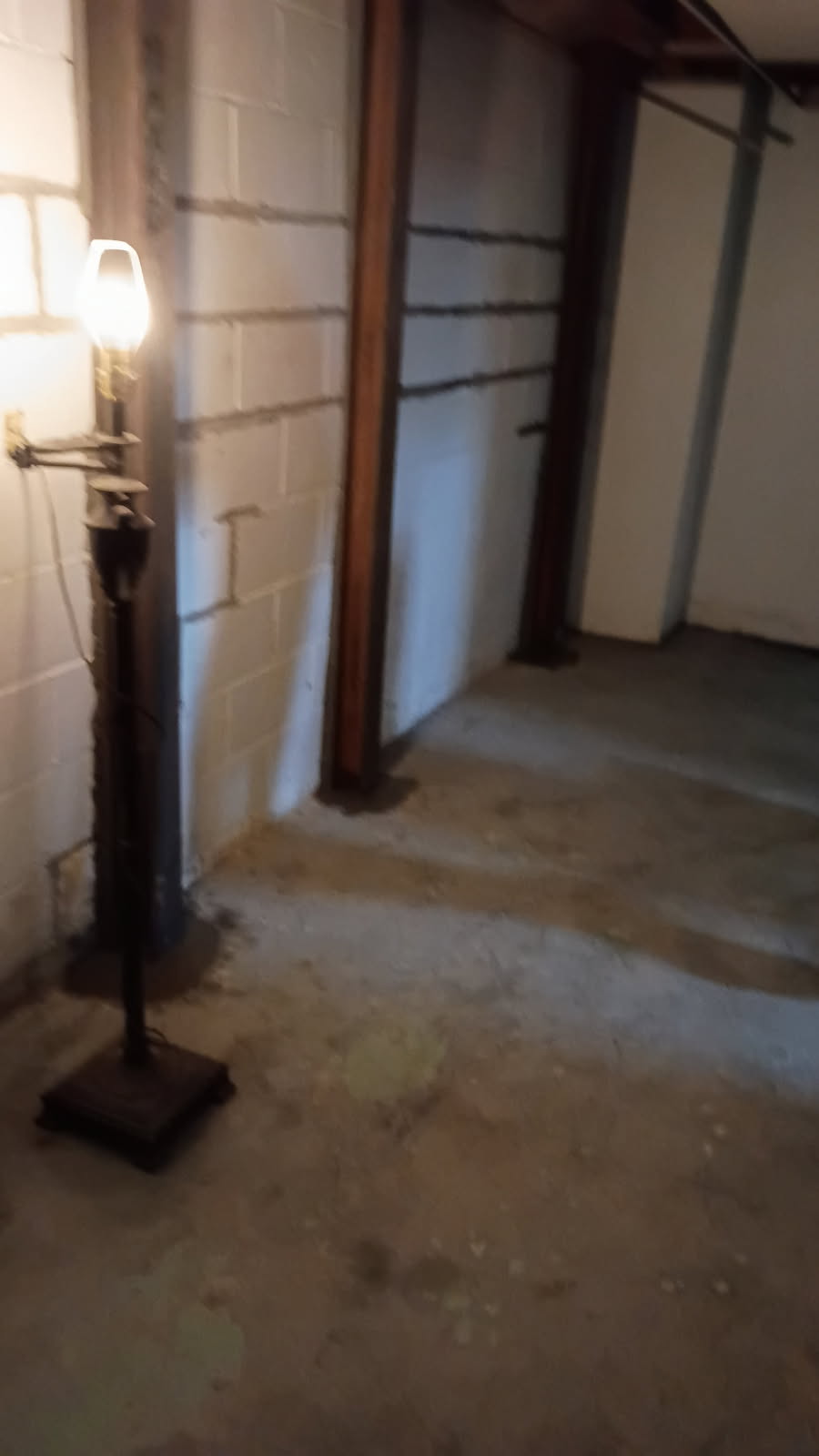
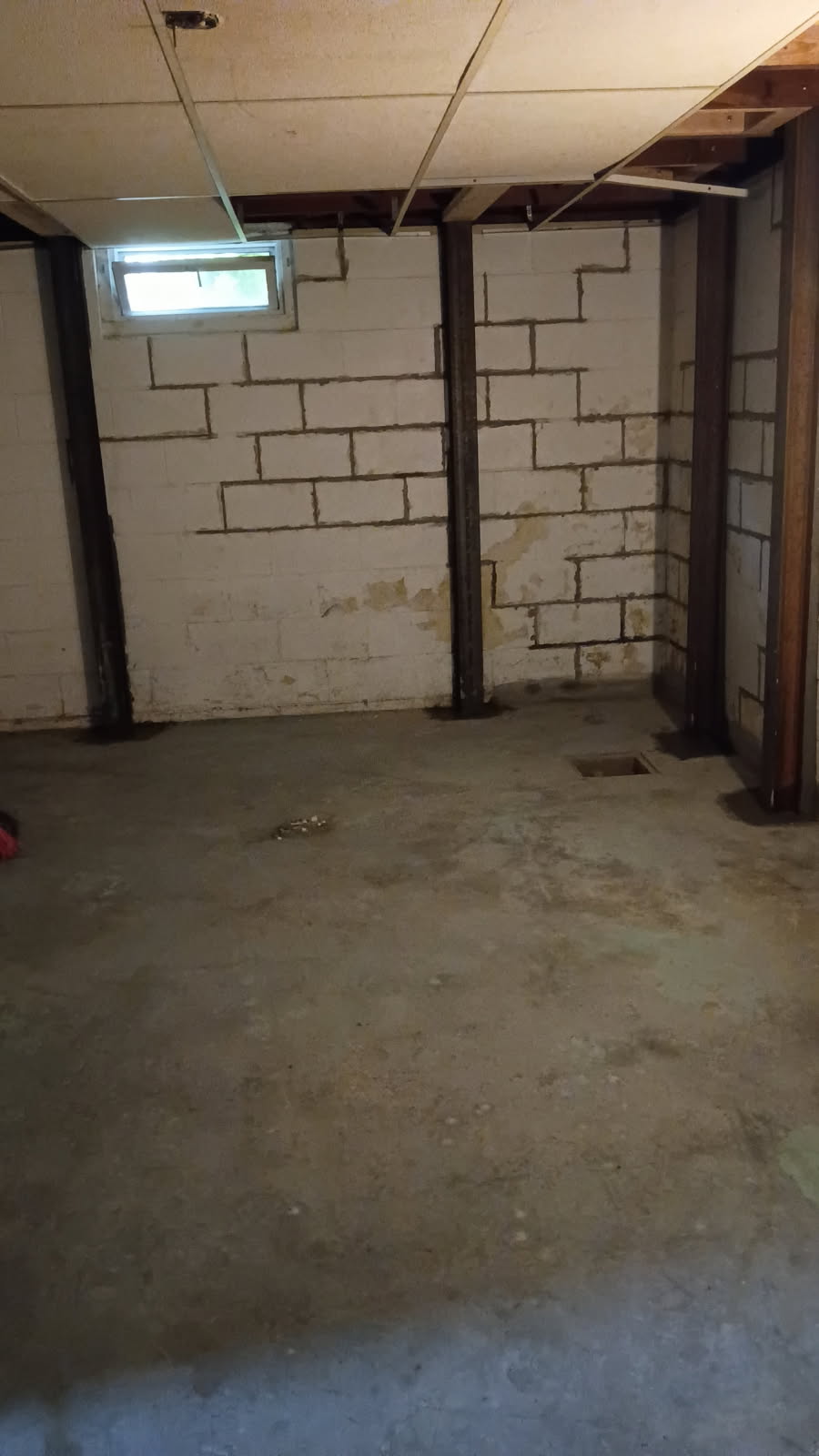
Twelve heavy structural steel I-beams were installed across the three basement walls. Each beam is set so that it has continuous contact with the foundation wall from top to bottom, rather than touching at a few points the way a bolt-on support does. The intent is a permanent, integrated stabilization system in which the beams become part of the wall.
The crew also completed tuckpointing on both the interior and exterior faces of the foundation, repairing the deteriorated and open mortar joints so the block wall itself is sound behind the bracing.
What homeowners should know
When a foundation needs more than a beam or two, spacing and coverage matter as much as the size of the steel. A wall run is only as stable as its weakest unsupported stretch, so braces are typically distributed along the wall at regular intervals rather than clustered where the movement is most visible. Twelve beams across three walls is the kind of layout used when the goal is to stabilize whole walls, not to patch one bulge.
Bracing and tuckpointing go together on older block foundations. Mortar joints are the mortar between the blocks, and when they deteriorate or open up, water gets into the hollow cores of the block and the wall loses stiffness between braces. Repairing the joints on the inside restores the wall surface the beams bear against; repairing them on the outside keeps water from working into the wall in the first place. Doing one without the other often leaves the job half finished.
Homeowners in the Quad Cities can read more about bowing basement walls, how wall reinforcement works, and how the region’s clay soils load foundation walls through wet and dry cycles. After a stabilization like this, keep water away from the foundation outside and watch the repaired joints for any new cracking; the braces are designed to stop movement, and dry, sound masonry helps them do it.
Photo highlights
- The finished basement with braces installed across three walls.
- A beam set for continuous contact with the wall, with the mortar joints repaired beside it.
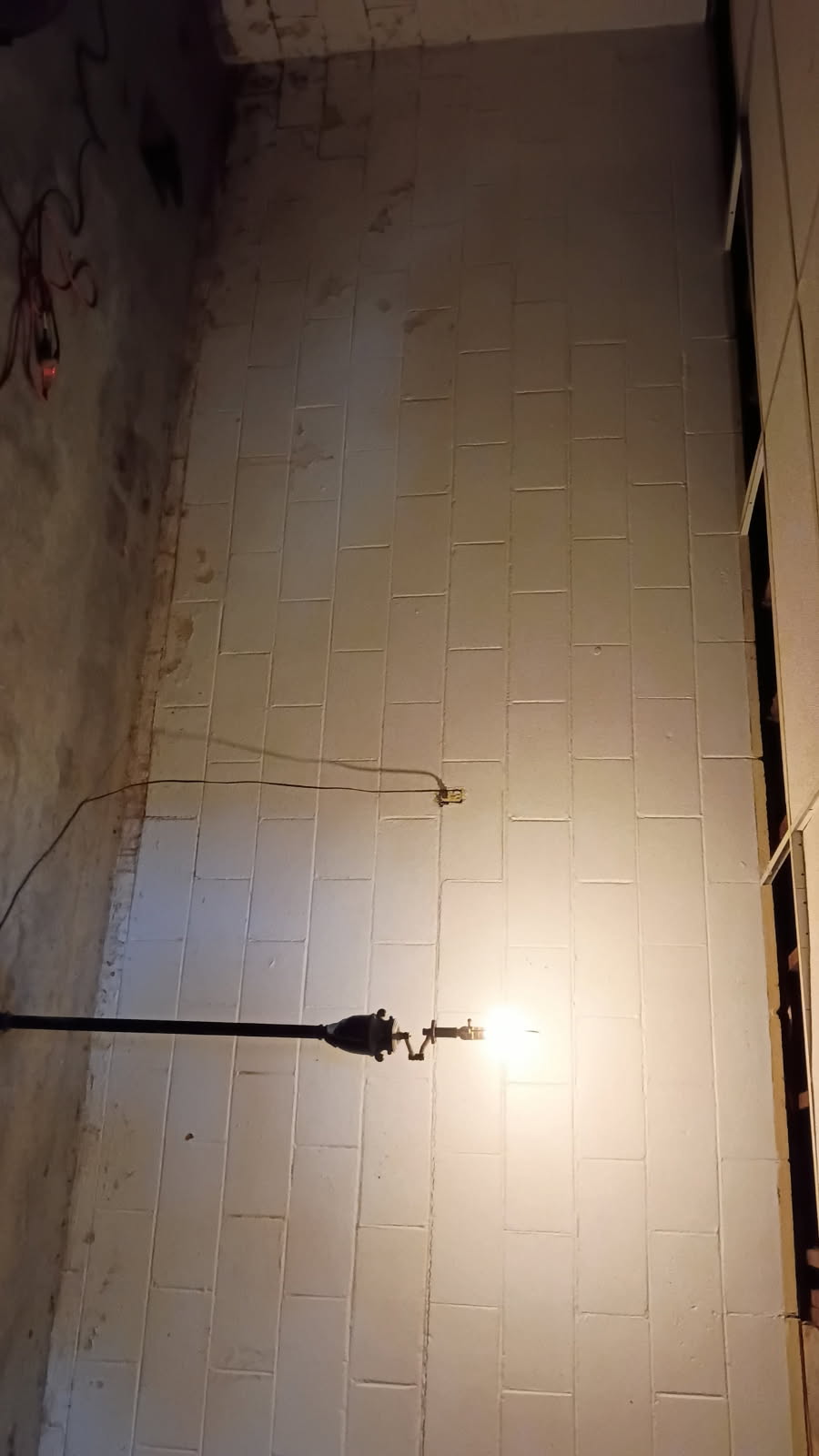
- One of the walls before the work: staining and open joints along the block.
- Open and deteriorated mortar joints before tuckpointing.
- Braces installed beside a basement window.
- A run of beams along one wall after installation.
- Braced walls meeting at a corner.
- Freshly tuckpointed joints with a beam anchored at the top of the wall.
Related services
- Steel I-Beam Foundation Repair
- Bowing Basement Walls
- Masonry Repair
- Foundation Repair in Moline
- More recent project updates
Basement walls that need real stabilization?
Behncke Construction braces foundation walls with heavy structural steel and repairs the masonry around them. Contact us or call (563) 332-6045.