
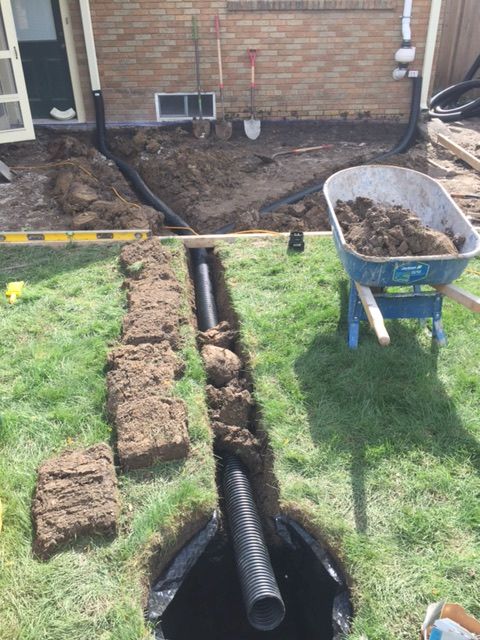
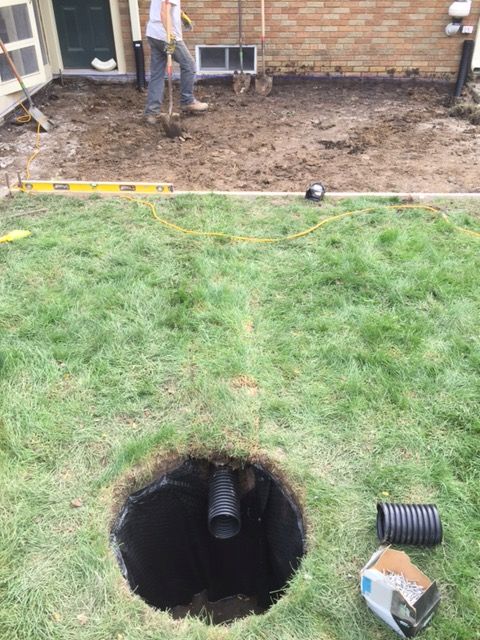
Most “foundation leaks” we’re called for start at a downspout
When water shows up in a basement, the reflex is to assume the foundation failed. Usually it didn’t.
More often than not the culprit is surface water, a downspout dumping right at the wall, a yard that slopes toward the house, or a window well with nowhere to drain. We’ve fixed plenty of “wet basements” with a downspout extension and a few hours of regrading, for a fraction of what an interior system costs. We find out where the water actually comes from before anyone talks about waterproofing. The cheapest fix is often the correct one.
The Behncke crew · Quad Cities, since 1948
Water never stays where it lands.
We watch the same chain of damage repeat season after season.
One Problem Leads to the Next
Water always finds the lowest point. Water that isn’t managed rarely stays a yard problem. In Quad Cities clay it follows a predictable path, straight to the most expensive part of the house. This is why we look at drainage first. Standing water almost always leaves clues, a stain line, a soft spot, a downspout aimed the wrong way.
The fix is almost always upstream. Solve the drainage and you protect the basement and the foundation at the same time, for a fraction of what those repairs cost later.
Systems Designed to Move Water Away
Grading & Slope Correction
Re-establishing the right slope so the ground carries water away from the foundation instead of toward it, the simplest, most durable fix when it’s the cause.
Yard & French Drains
Subsurface drains that collect water from low, soggy areas and carry it to a safe discharge point well away from the home.
Surface Drains & Catch Basins
Capture standing water in driveways, patios, and problem low spots and route it off the property through concrete or asphalt drains.
Downspout & Sump Discharge Lines
Extending roof downspouts and sump discharge well past the foundation so the water you pump out doesn’t simply circle back.
Sometimes the Fix for a Wet Basement Is Outside
Before anyone recommends an interior waterproofing system, it’s worth asking whether the water should have reached the wall at all. In many Quad Cities homes, correcting grading and adding the right drainage solves the problem at a fraction of the cost, and that’s the recommendation you’ll get from us when it’s the right one.
Soggy Yard or Standing Water?
We’ll walk the property, find where the water is collecting and why, and recommend the most practical way to move it away for good, in writing, usually within one business day.
Maintaining drainage and grading around your foundation
Good drainage isn’t a one-time fix — the ground keeps settling and gutters keep clogging. A little seasonal upkeep keeps water heading away from your foundation, where it belongs:
- Keep gutters clear and confirm downspouts carry water several feet from the house, not straight down beside the foundation.
- Watch the grade. Soil should slope away from the house. Fill in low spots where soil has settled against the foundation and started to trap water.
- Look for pooling after storms. Standing water near the foundation is the warning sign that grading or drainage needs attention.
- Check discharge points — sump lines and drain outlets should stay clear and terminate well away from the house.
Because so many wet-basement problems start outside, exterior grading and downspout discharge are part of every Annual Basement & Foundation Checkup. If water is already finding its way in, start with fixing the drainage first.
Keep learning
Browse the full Knowledge Library →
Almost Everything We Fix Starts as Water.
Foundations, basements, concrete, drainage, masonry, follow the water and you’ve found the cause. Here is the whole story, from the cloud to the crack.
- Rain hits the roof
- Gutter catches it
- Extension carries it out
- Positive grade sheds it away
- Safe discharge
- Dry basement
- Rain overflows the gutter
- Water runs down the foundation
- Soil saturates against the wall
- Hydrostatic pressure builds
- A crack opens
- Water gets in
- Interior damage
The leak didn’t begin in the basement. It began on the roof.
Keep following the water: Waterproofing · Drainage · Foundation Repair · Concrete
Prefer to pay monthly?
Spread your project into manageable payments through our independent third-party financing partners. Financing is optional, and approval and terms are set by the provider.
Straight answers, no sales pressure
Yard drainage questions we hear from Quad Cities homeowners
The questions we get most from Davenport, Bettendorf, Moline, Rock Island, and LeClaire, answered the same way we’d explain them standing in your yard.
I have yard or lawn drainage issues or standing water, can you fix it?
Yes, and yard drainage is often the fix that keeps water out of your basement in the first place, so it’s some of the most valuable work we do. Standing water usually comes down to grade that slopes the wrong way or downspouts dumping right at the house. We regrade, bury and extend downspouts, and add yard or French drains where needed to carry the water away. We quote it as prevention, frequently instead of a bigger interior job.
Can you install a French drain?
Yes. A French drain is one of our standard tools for moving water away from where it’s collecting, a gravel-and-pipe channel that gives the water a path out. We look at where the water is coming from and where it needs to go before we place it, because a French drain in the wrong spot just moves the puddle. Done right, it’s often what solves a chronic wet spot and keeps water off the foundation.
Water from the yard or sidewalk drains toward my basement, can you redirect it?
Yes, and this is one of the most common, and most fixable, problems we see. When the grade or a sidewalk sends water toward the foundation, we redirect it: regrading so the ground slopes away, burying downspouts to carry roof water past the problem, and adding drains where the water collects. Fixing the water outside is almost always cheaper than fighting it inside, so it’s the first lever we reach for.
Can you bury my downspouts or gutters?
Yes, burying downspouts so they discharge well away from the foundation is one of the simplest, highest-value drainage fixes there is. Downspouts dumping right at the corner are behind a surprising number of wet basements. We run them underground to a safe outlet so the roof water lands where it belongs instead of against your wall. Sometimes it’s part of a larger grading fix; sometimes it’s the whole solution.
Recent Work
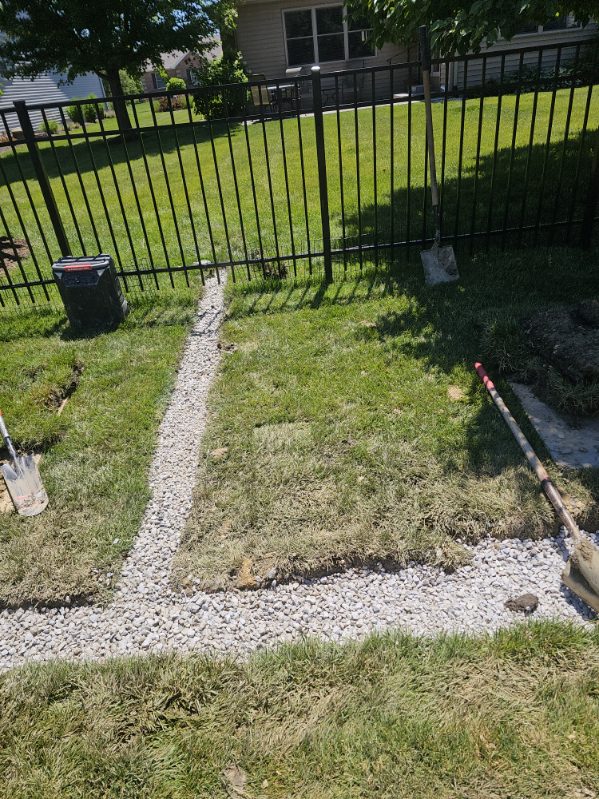
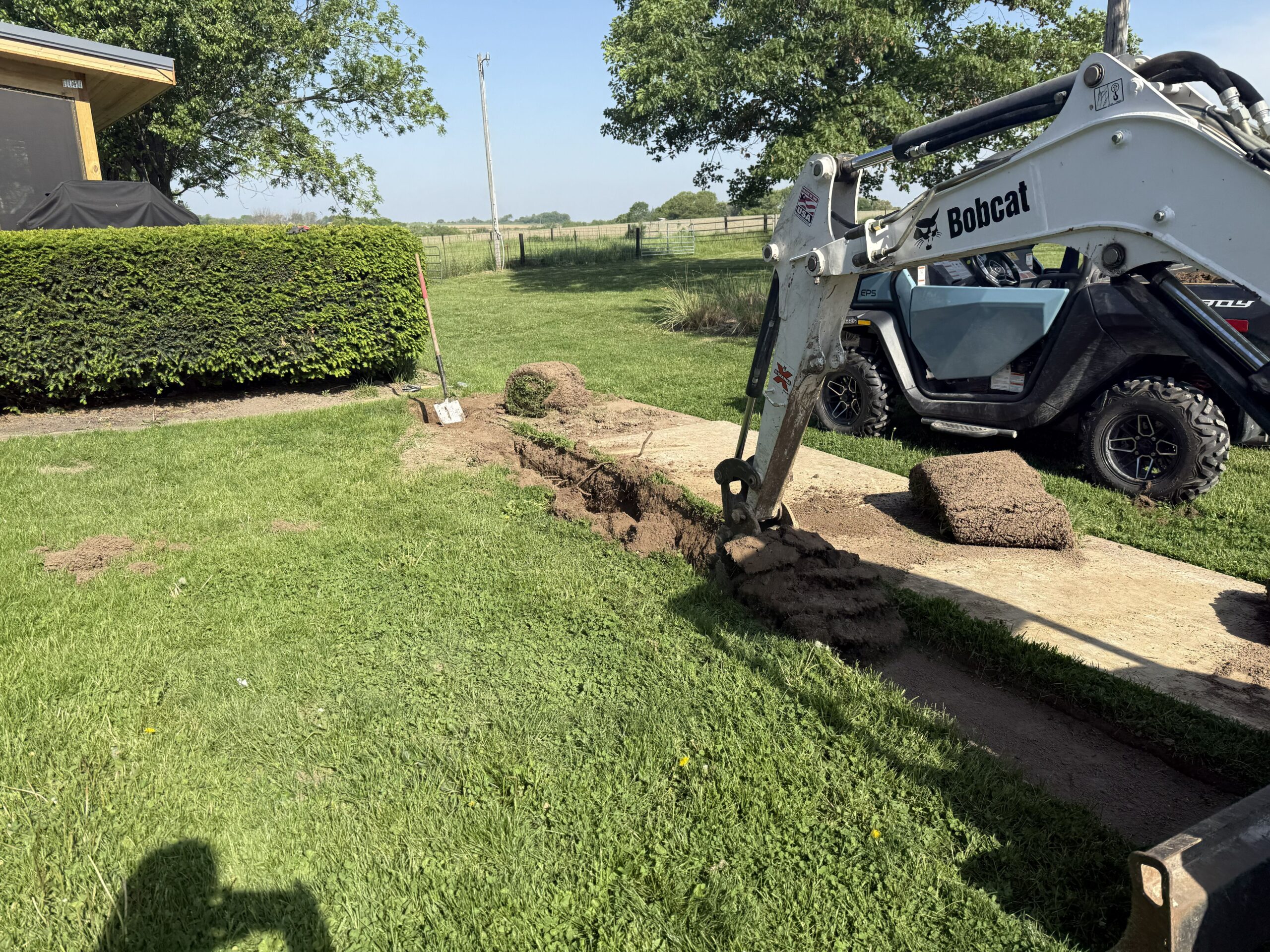
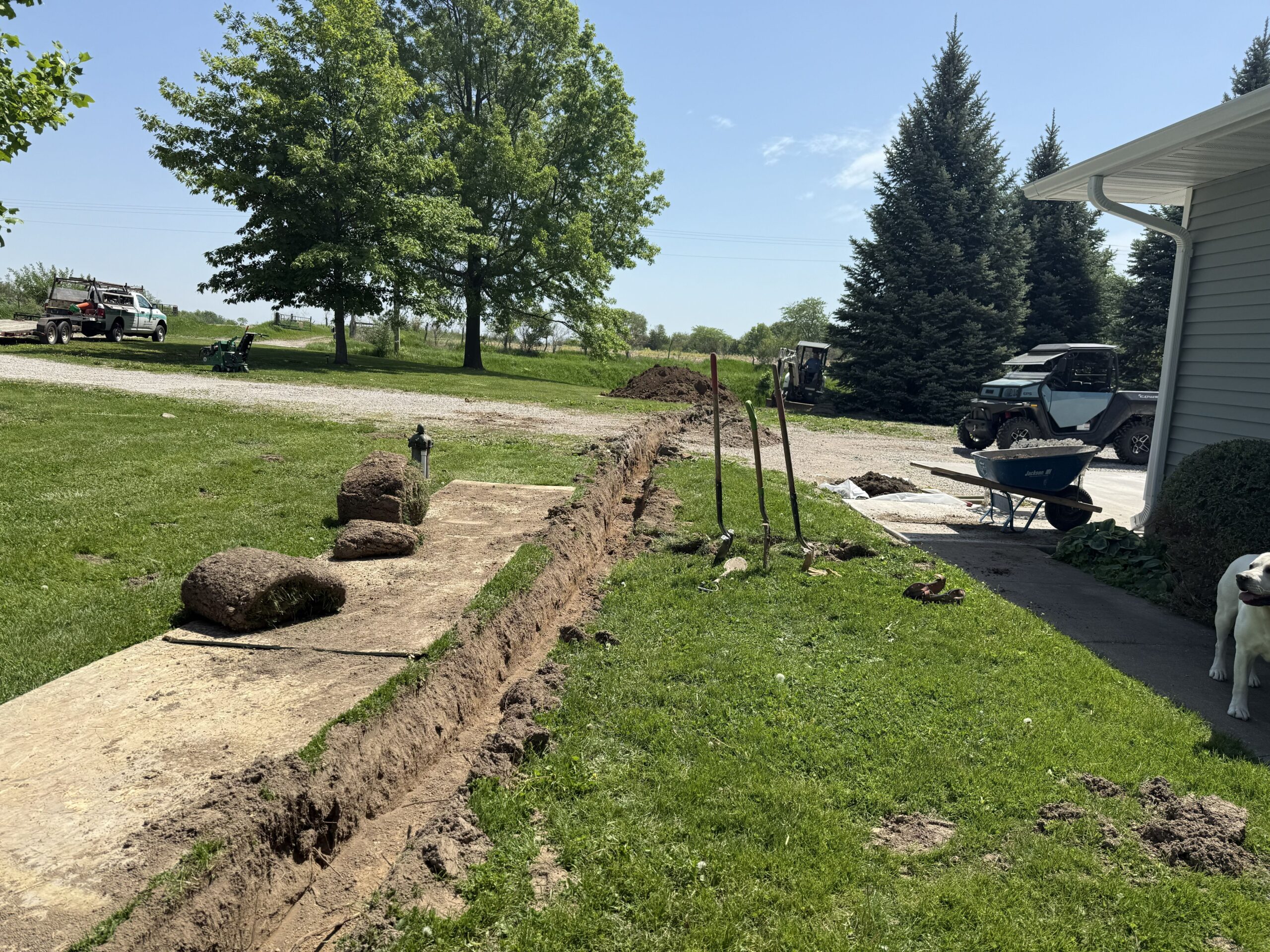
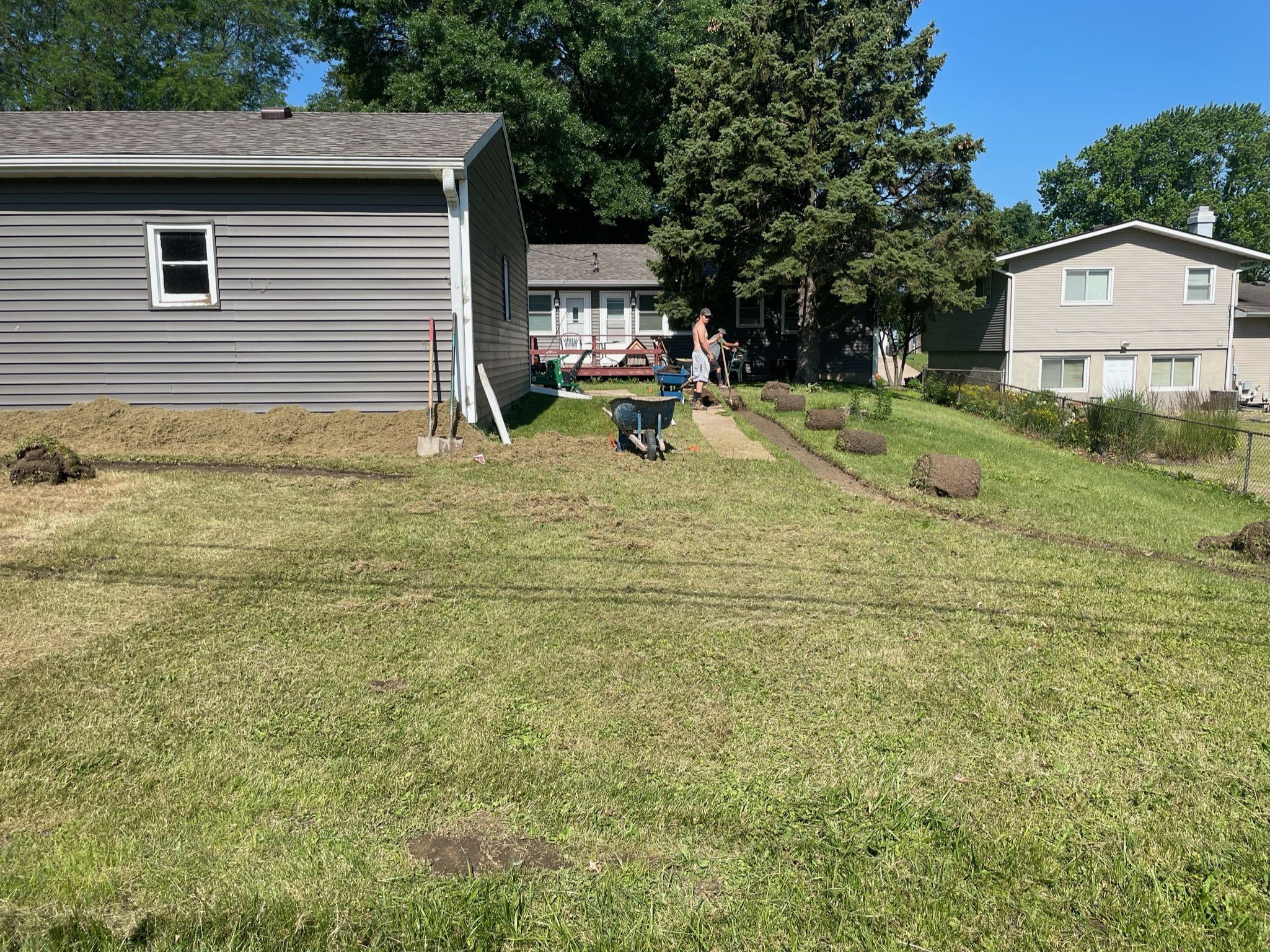
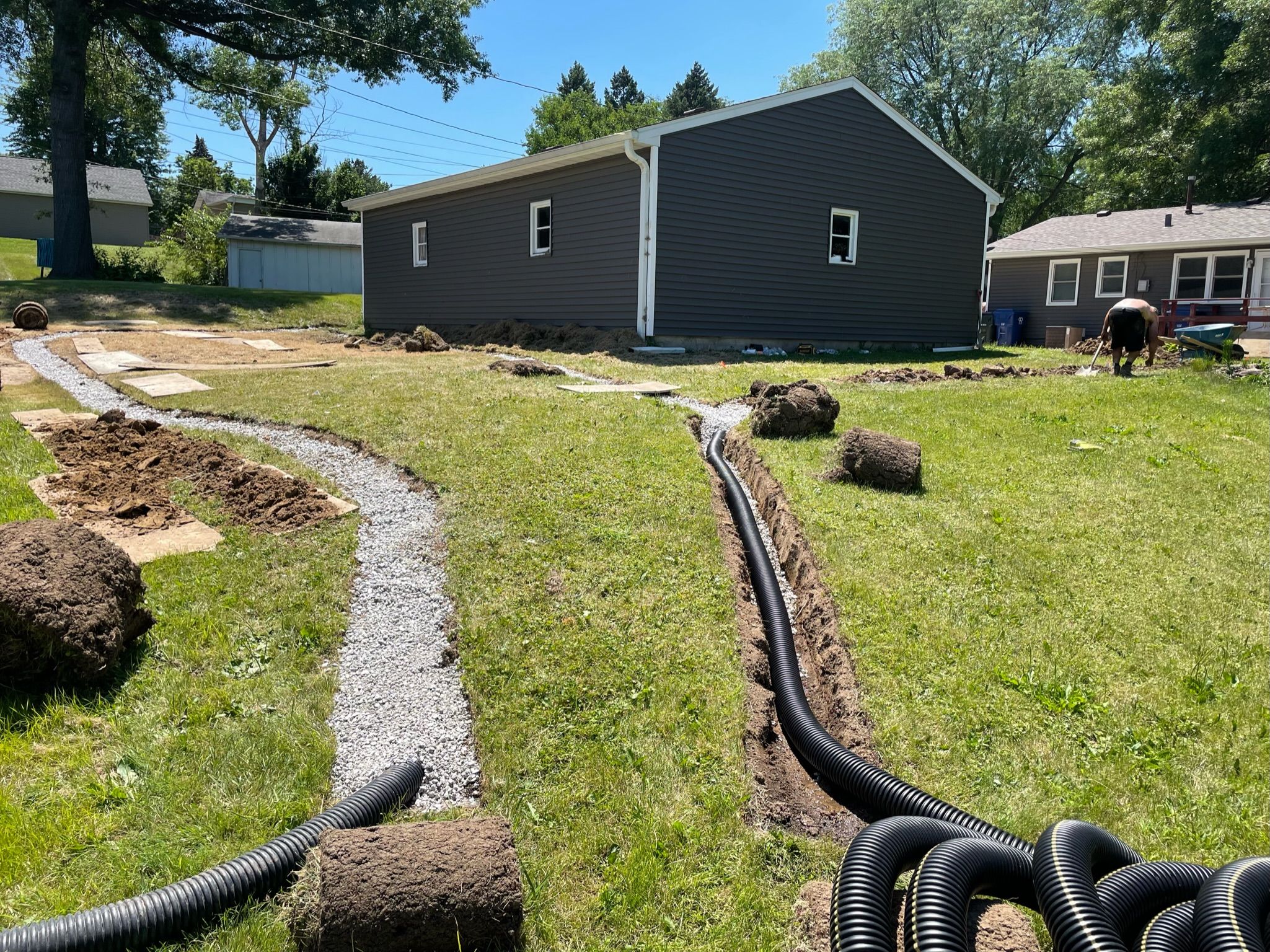
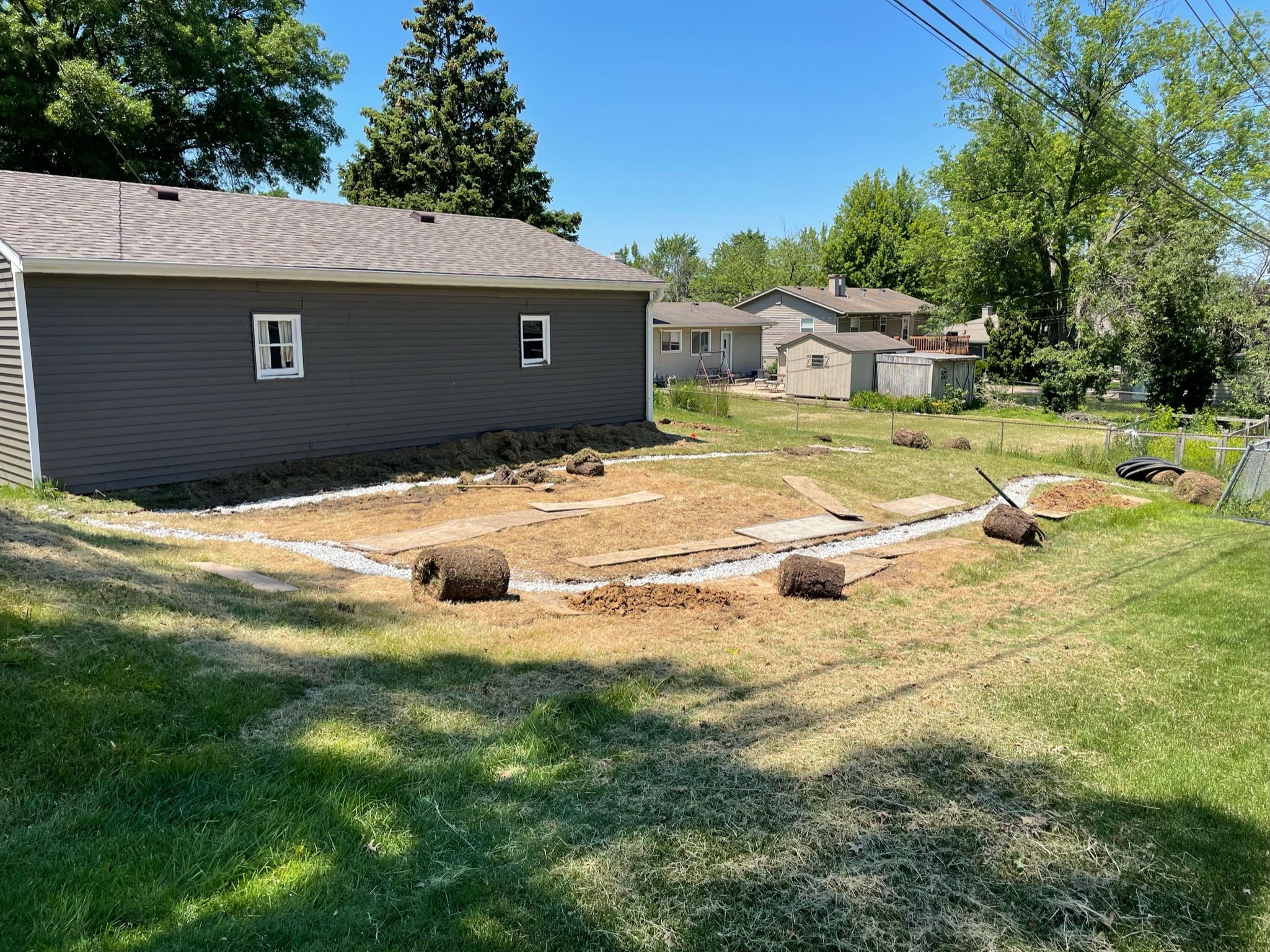
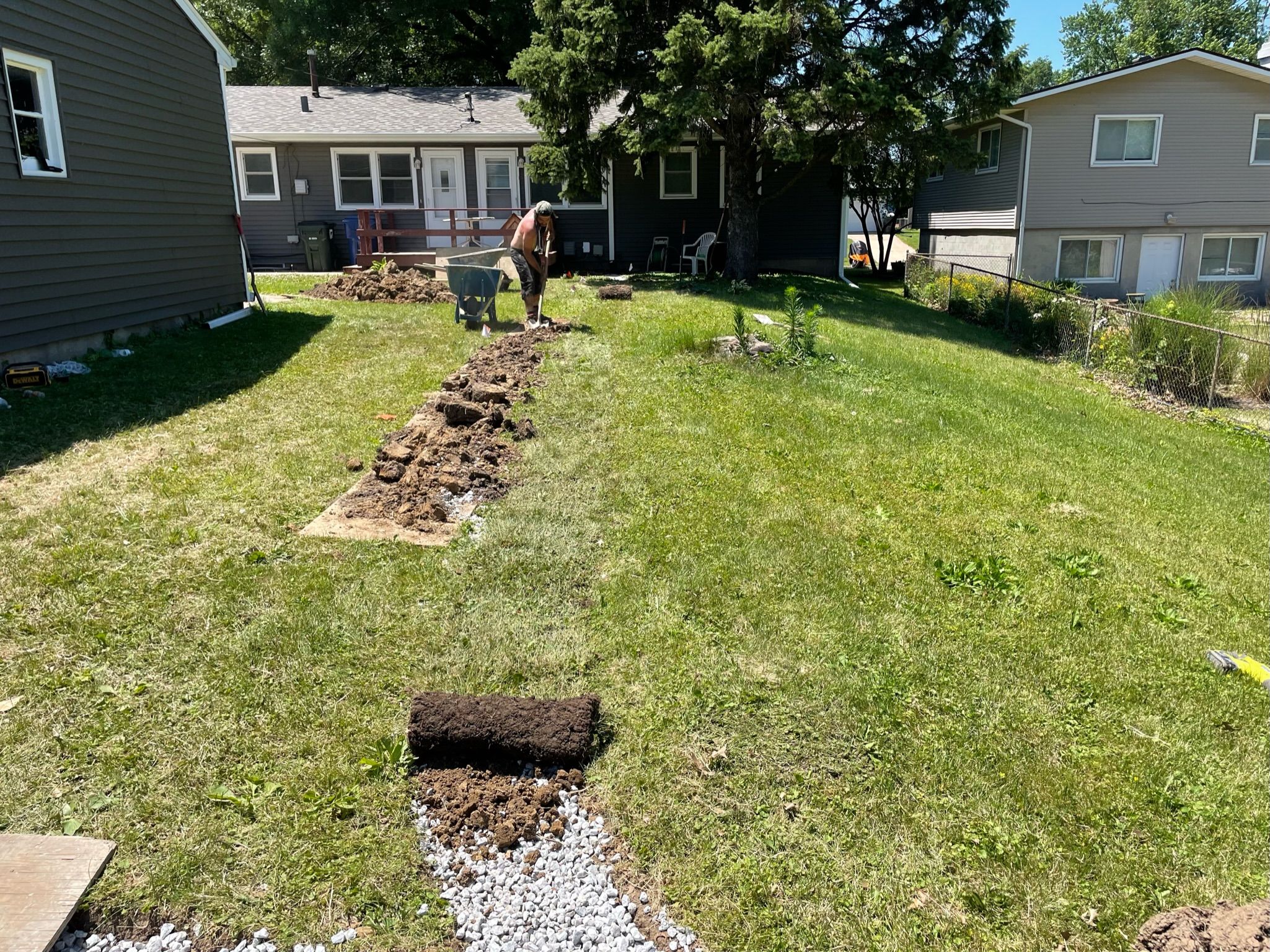
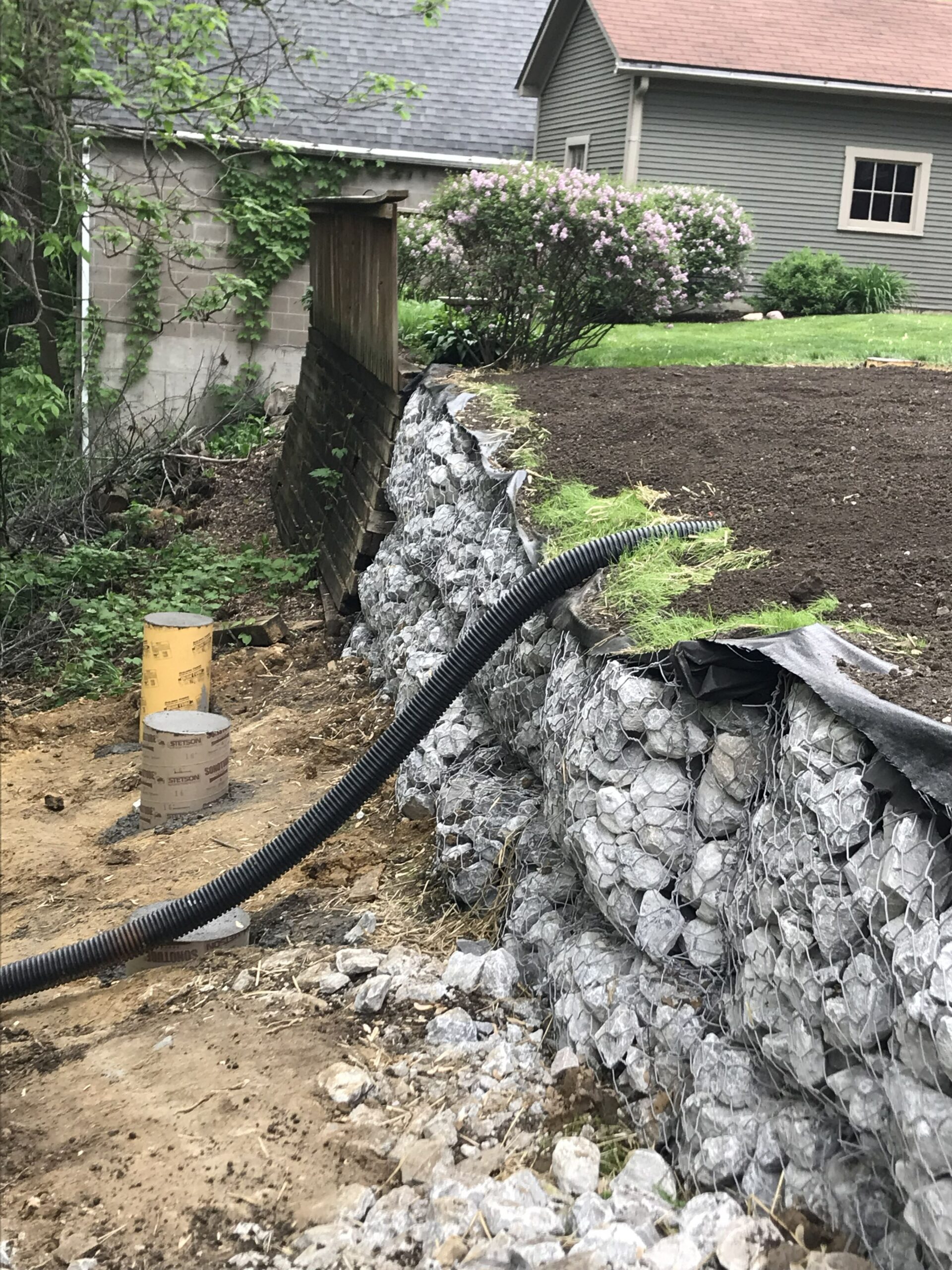
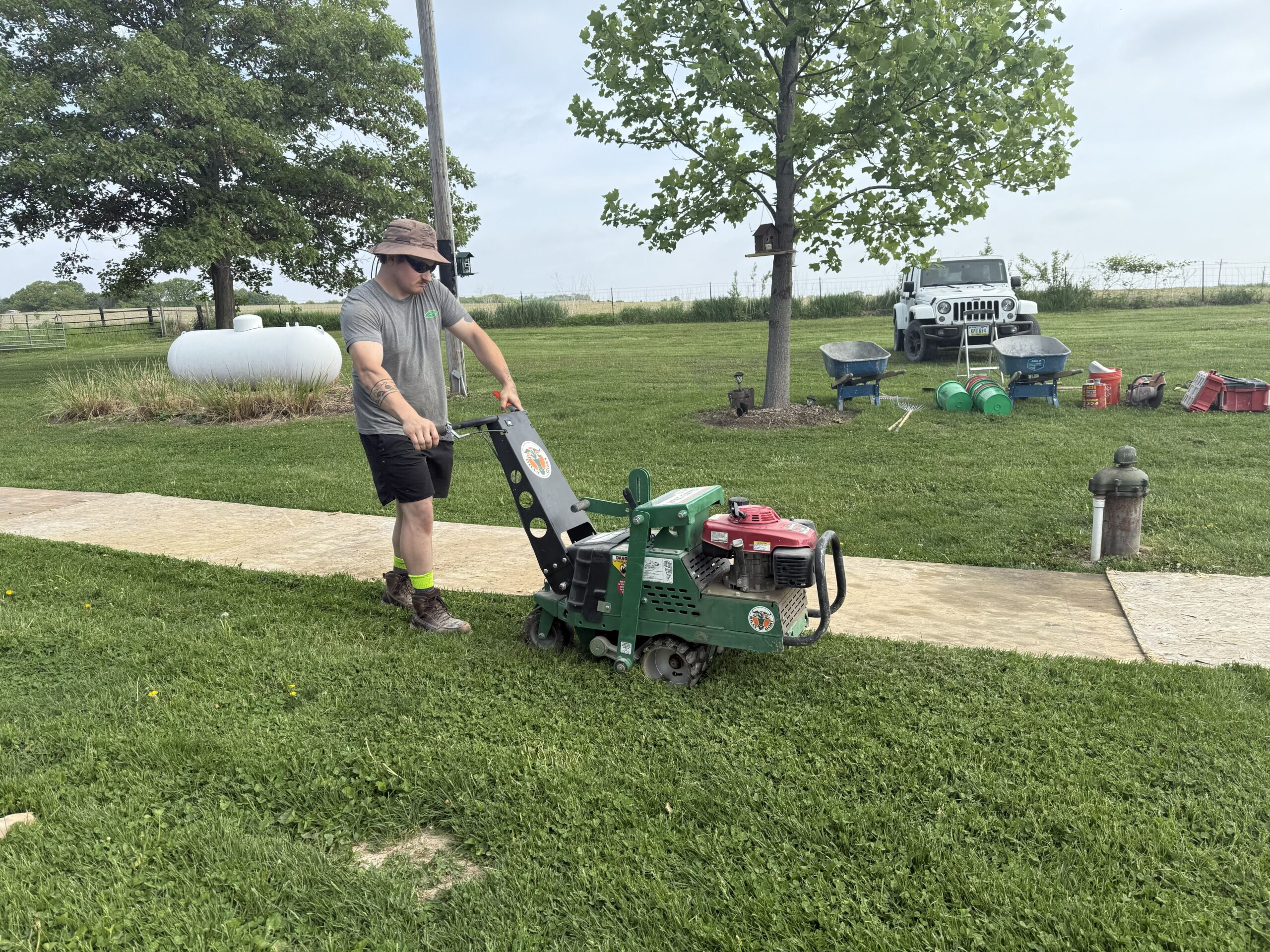
Recent Lawn Drainage Projects
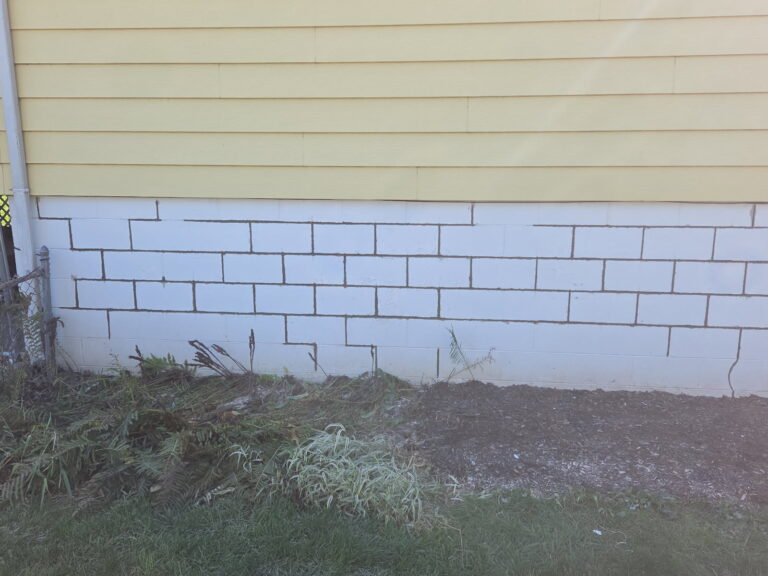 Foundation Tuckpointing and Drainage Repair — Moline, IllinoisMolineDeteriorating and broken mortar joints in a Moline foundation were letting water into the home. Behncke Construction tuckpointed the damaged joints an…
 Exterior Foundation Waterproofing, Drainage and Masonry Repair — Moline, IllinoisMolinePoor exterior drainage was letting water reach a Moline foundation. Behncke Construction sealed the foundation from the exterior, repaired a damaged s…
 Exterior Crack Repair and Lawn Drainage SystemWater was getting in at the foundation, but this home did not need an interior drain tile system. Behncke Construction sealed the exterior foundation…
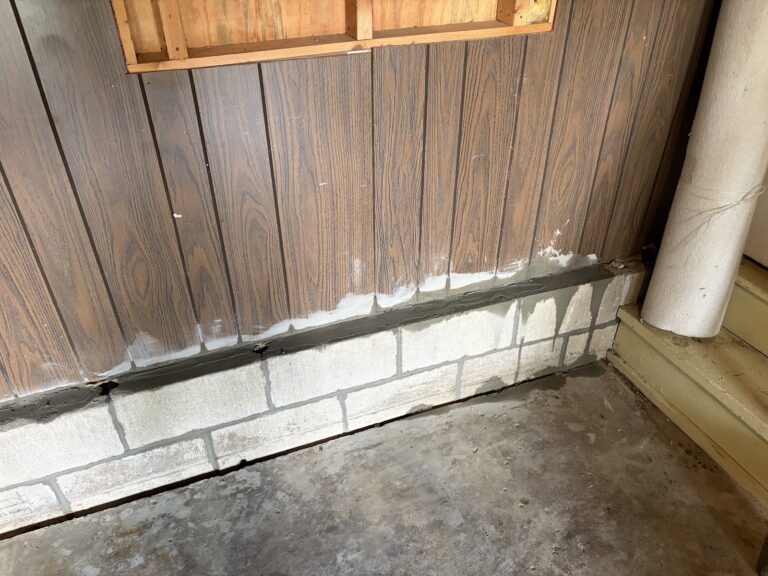 Drainage & Tuckpointing Repair — Davenport, IowaDavenportDrainage and tuckpointing repair in Davenport, Iowa — Behncke Construction installed about 75 feet of underground downspout drainage and reinforced a…
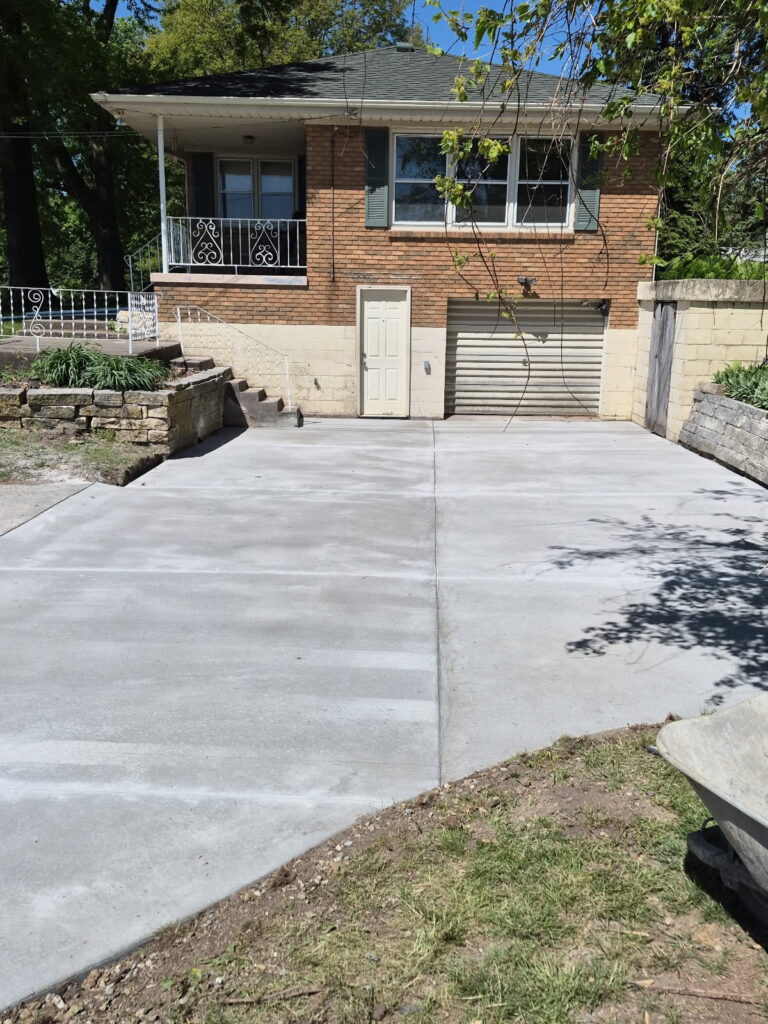 Concrete Driveway and Retaining Wall Repair — Davenport, IowaDavenportConcrete driveway and retaining wall repair on Fair Avenue in Davenport, Iowa — Behncke Construction corrected drainage, rebuilt the retaining wall, a…