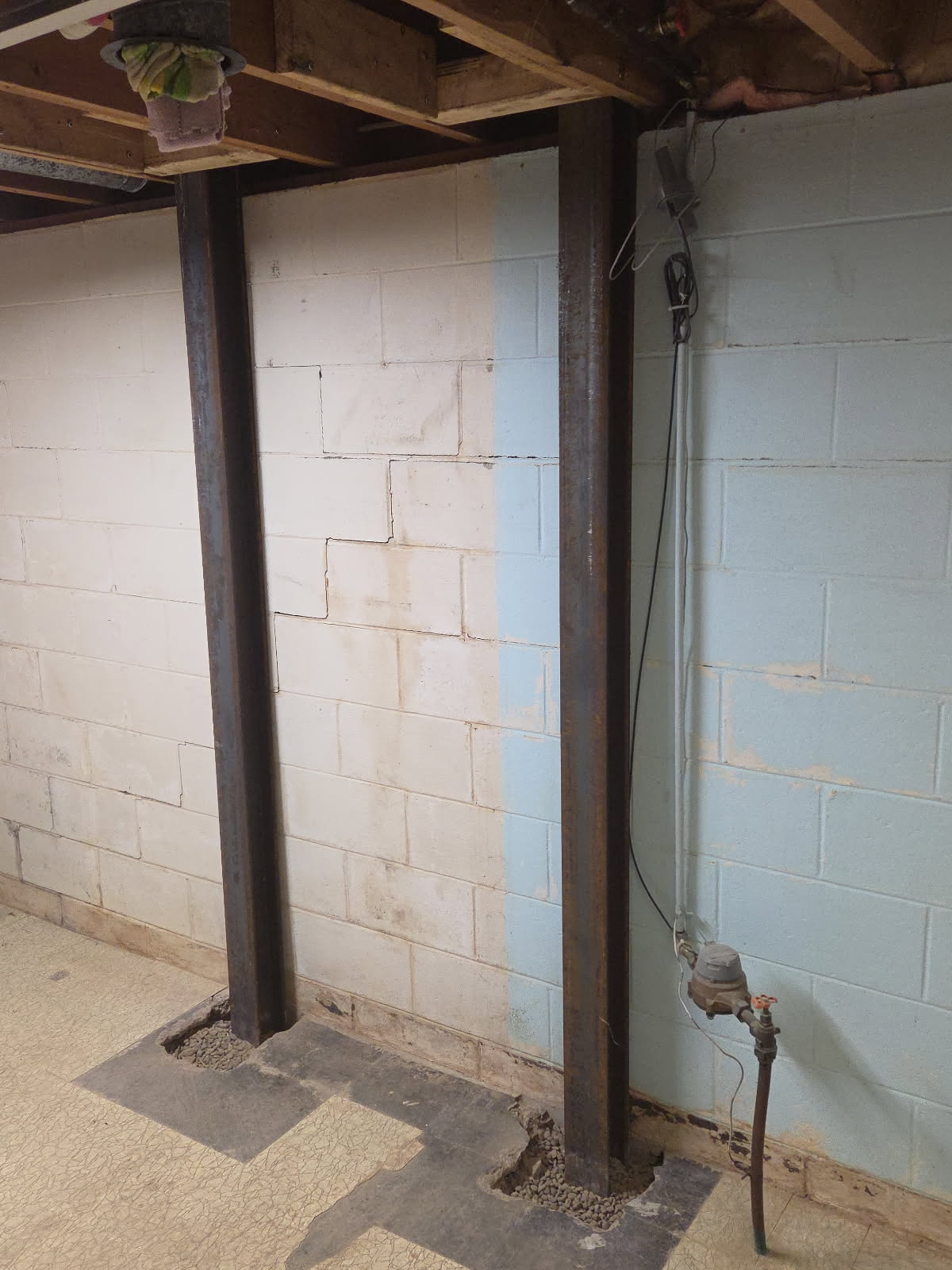
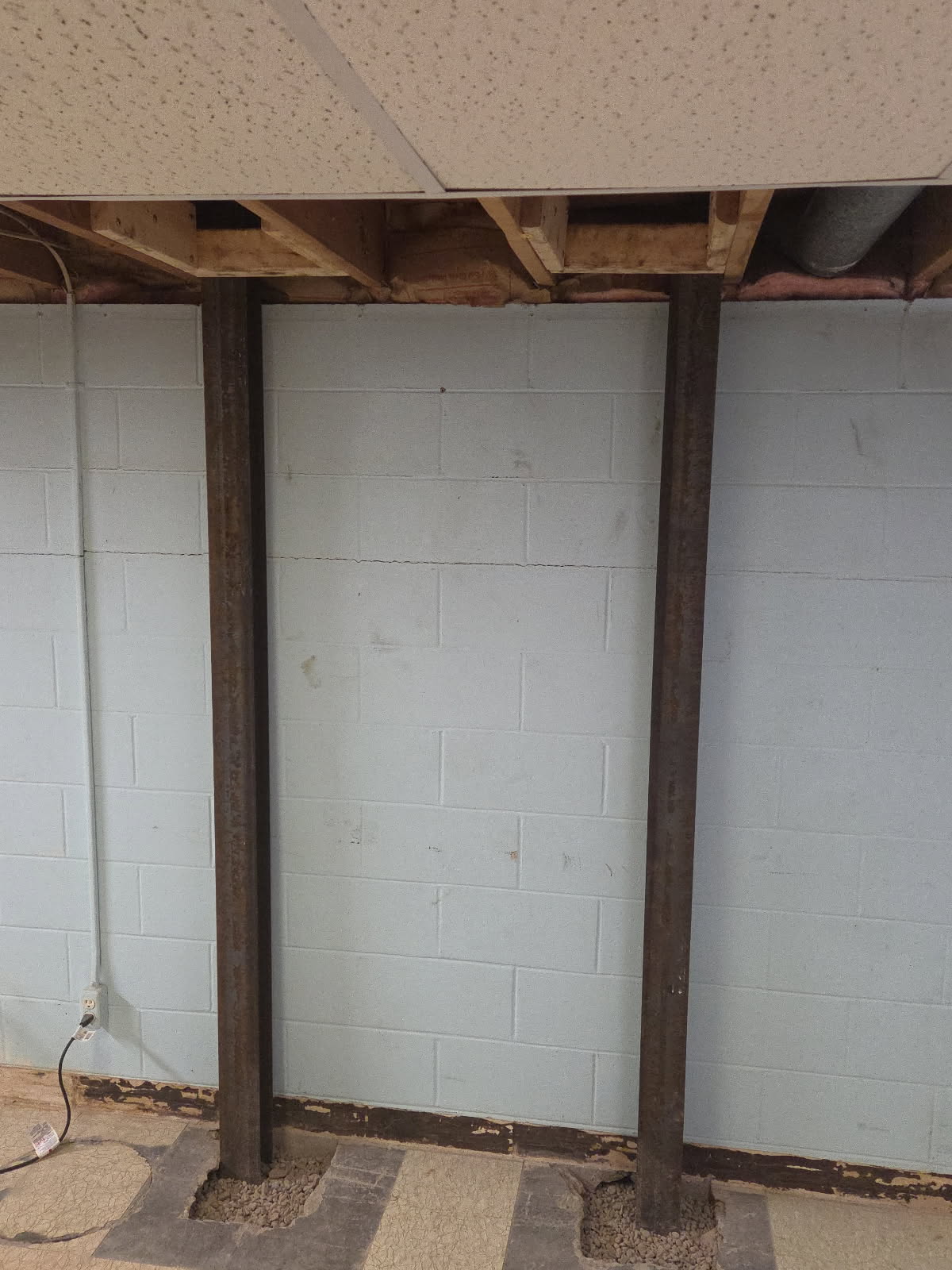
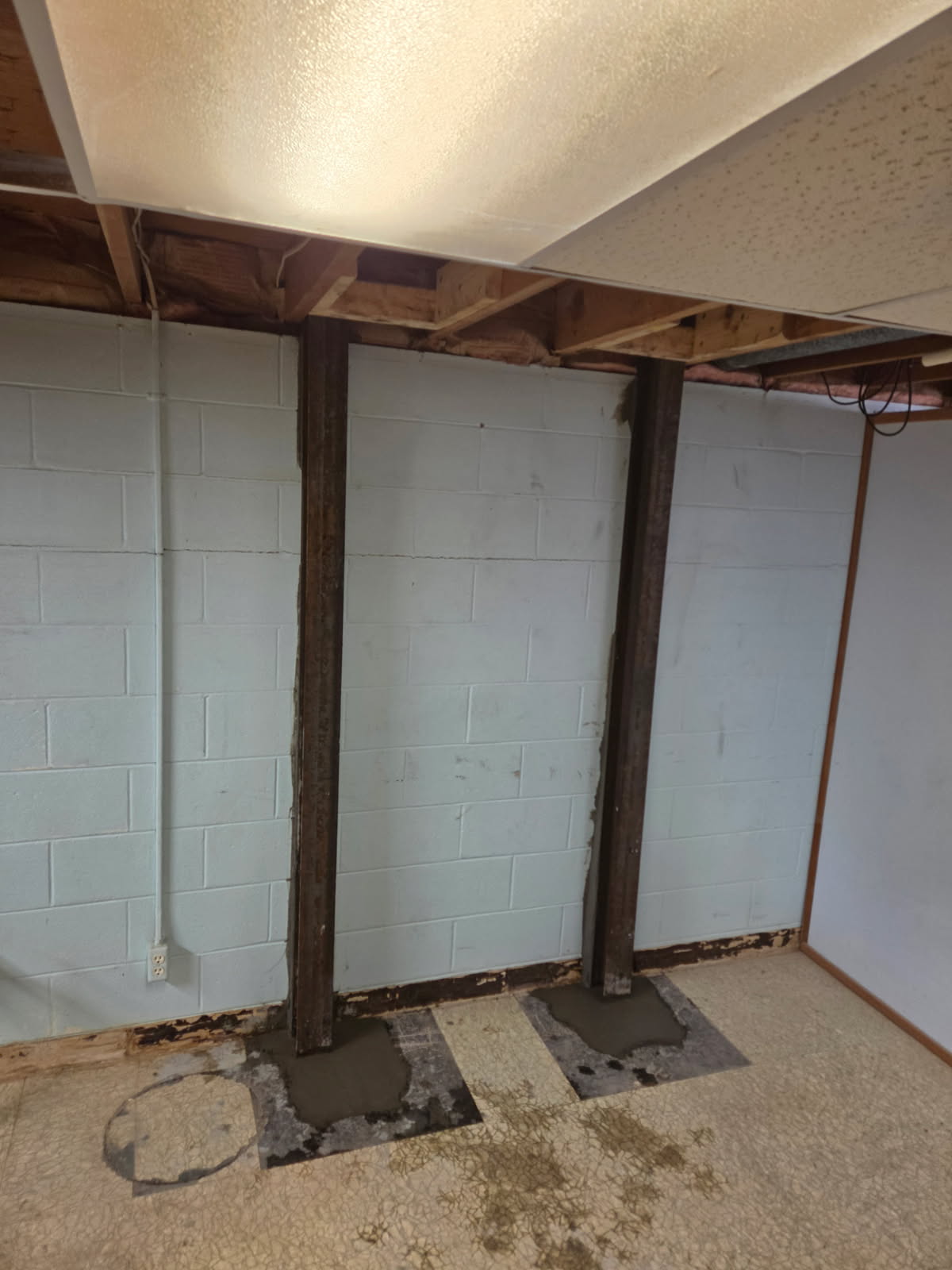
Six heavy-duty steel I-beams permanently stabilizing a bowing basement wall in Bettendorf, Iowa — embedded into the floor slab and set against a continuous mortar bed for full wall contact.
PROJECT SUMMARY
Date posted: July 13, 2026
Service: Foundation wall stabilization — heavy-duty steel I-beam bracing
Location: Bettendorf, Iowa
Problem: Bowing basement wall requiring permanent structural stabilization
Solution: Six heavy-duty steel I-beams embedded into the floor slab and set against a continuous mortar bed for full wall contact
Foundation / wall type: Basement wall (bowing)
Materials used: 6 heavy-duty structural steel I-beams
Installation method: Beams embedded in the slab (not floor-bolted); continuous mortar bed at the wall
Completion status: Completed
Project photos
Project overview
Not all foundation wall bracing systems are built the same. We’re installing six heavy-duty steel I-beams to permanently stabilize a bowing basement wall in Bettendorf, and the details make all the difference.
Many contractors simply bolt steel beams to the basement floor and leave gaps between the beam and the wall. We take a different approach because we believe a better repair lasts longer.
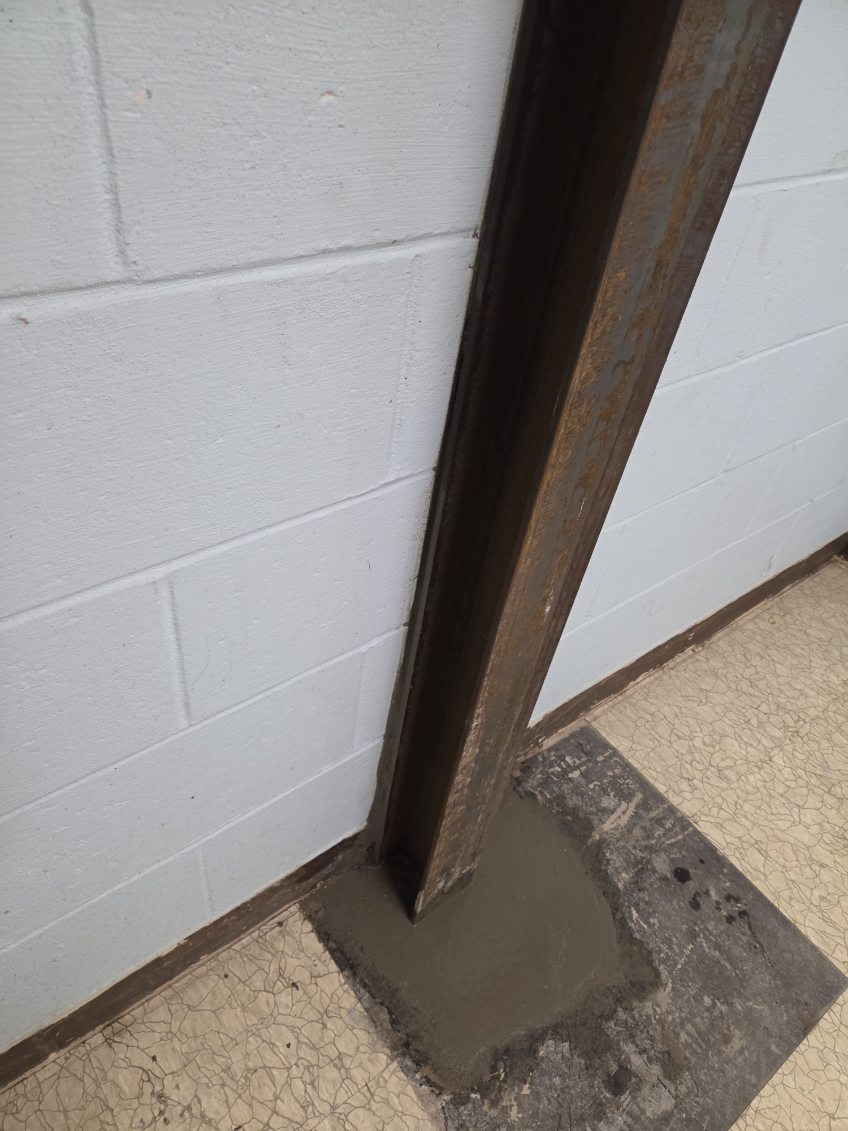
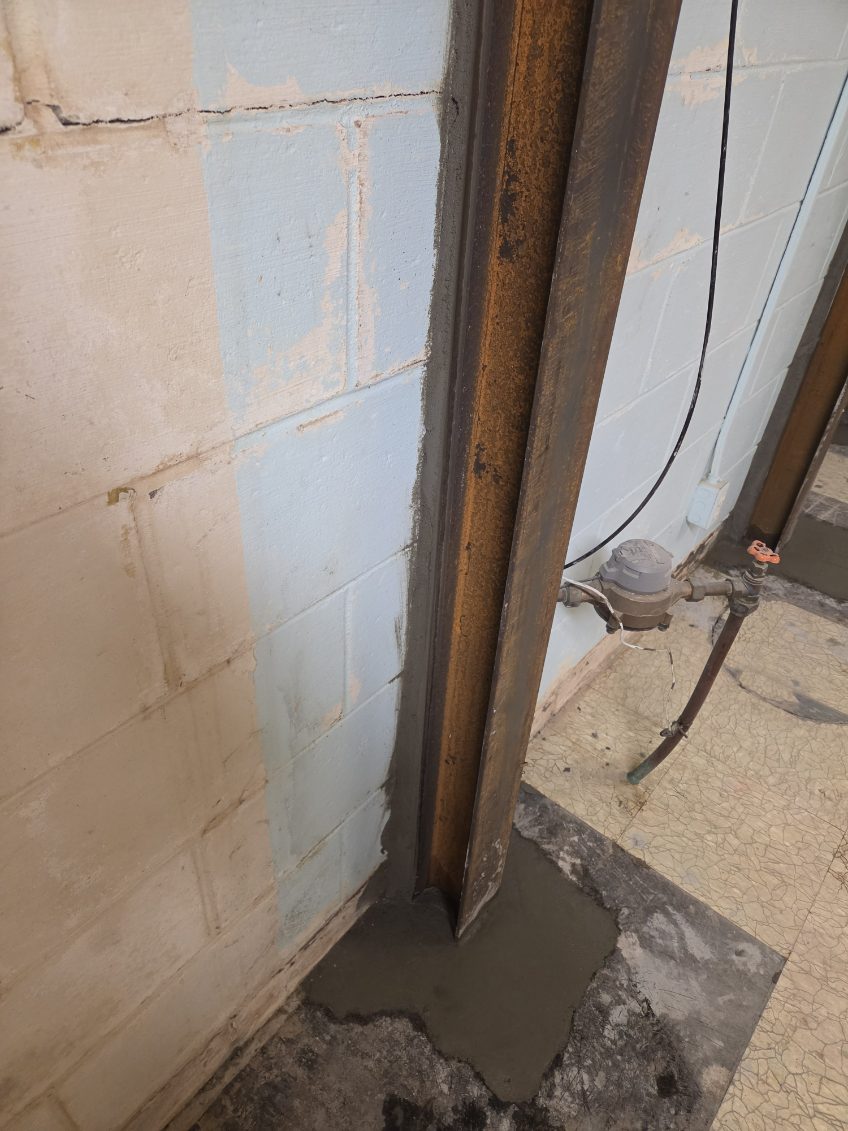
Full contact: We install a continuous thick mortar bed between the wall and each steel beam, creating full contact from top to bottom instead of only touching at a few high spots.
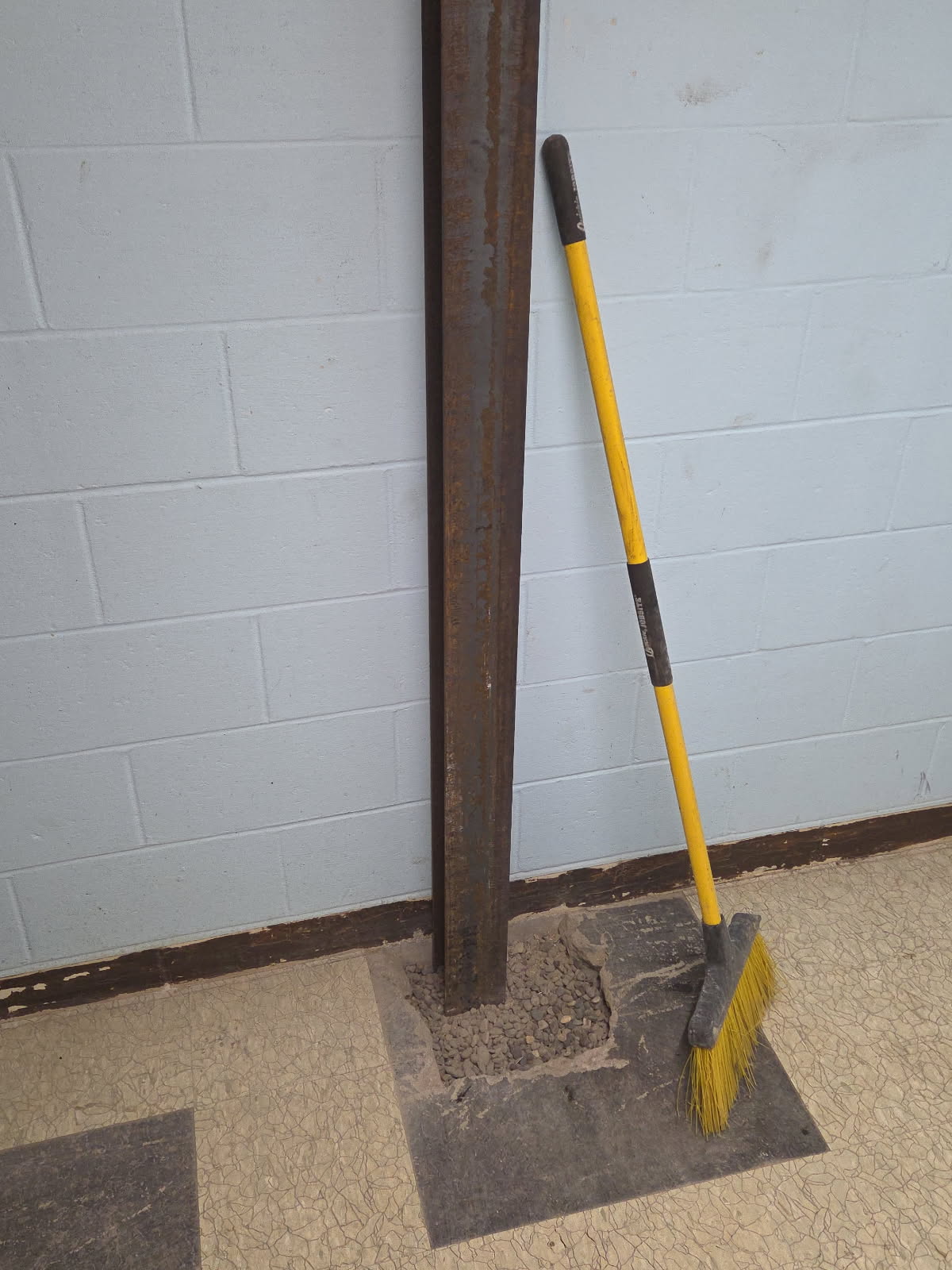
Embedded in the floor: We do not bolt our braces to the concrete floor. Instead, we remove sections of the slab and embed the beams directly into the floor before placing new concrete around them for a much stronger installation.
Stronger steel: We use larger structural steel I-beams than many competitors. They cost more, but we believe stronger materials produce a better repair.
We don’t look for the cheapest way to complete a foundation repair—we look for the method that gives homeowners the most durable, dependable solution.
If you’ve noticed bowing, leaning, or cracked foundation walls, schedule a professional inspection before the damage gets worse. Behncke Construction – Serving the Quad Cities with trusted foundation repair since 1948.
Project details
The difference is in how the beams are anchored. Rather than bolting braces to the surface of the slab, sections of the floor were removed and the I-beams embedded directly into the floor with new concrete poured around them. A continuous, thick mortar bed between each beam and the wall creates full top-to-bottom contact instead of touching only at a few high spots — and the beams themselves are larger structural steel than a typical brace.
What homeowners should know
A bowing basement wall is being pushed inward by soil and water pressure outside. Steel bracing resists that pressure, but how the brace is installed determines how well it holds. A beam that only bolts to the slab and touches the wall at a few points can flex and shift; a beam embedded into the floor and bedded in full contact with the wall transfers the load far more effectively.
Heavier structural steel and full-contact installation cost more up front, but they’re what make bracing a permanent fix rather than a temporary hold. If a wall is bowing, leaning, or cracking, the sooner it’s braced the less movement it has to be corrected for later.
Related services
Learn more about our foundation repair and basement waterproofing, or browse more recent projects.
Related learning center articles
Want to go deeper? How Does Steel I-Beam Wall Reinforcement Work? · Carbon Fiber, Steel Beams, or Rebuild? Why Bowing Walls Don’t Have One Fix.
Photo highlights
The photos show the finished bracing and the details behind it: a steel I-beam set tight against the wall, the hardware and mortar bed during installation, and the wall condition that called for the repair. The remaining images show the line of beams along the wall.
Related services & resources
Seeing a wall that bows or cracks?
If a basement wall is bowing, leaning, or cracking, we will inspect it and give you a straight answer on what it needs — from steel bracing to a full rebuild — with no pressure to buy more than the wall requires.
Call (563) 332-6045