
Bowing Basement Walls · Quad Cities
Carbon Fiber, Steel Beams, or Rebuild? Why Bowing Walls Don’t Have One Fix
Some walls can be reinforced, some straightened, and some need rebuilding. The right repair depends on your wall — not a one-size-fits-all sales pitch. Here’s how to think about it honestly.
Get a Free EvaluationBased on more than 1,200 written inspections and nearly 10,000 estimates across the Quad Cities in the last ten years.
What a bowing wall looks like — and why it happens
A bowing wall usually shows itself the same way: a horizontal crack running across the wall at about mid-height, the wall pushing inward along that line, sometimes with stair-step cracks trailing up toward the corners. In the Quad Cities the cause is almost always the same story — pressure from the soil outside. Our clay soils swell when they get wet, and saturated ground leans on the wall harder than a basement wall was ever built to resist. Add a downspout dumping at the corner, a driveway sloping back toward the house, or an older wall with little reinforcement, and the wall slowly loses the argument with the dirt.
The important thing for a homeowner to know: a bowing wall is a real structural signal worth taking seriously — but how it gets fixed is not one-size-fits-all.
Why there’s no single “bowing wall repair”
Two walls can look almost the same from inside the basement and still need very different work. The right repair depends on the wall itself — how much it has moved, what it’s built from, whether it’s still moving, and what’s driving the pressure behind it. Those factors, taken together, are what a proper evaluation sorts out. It’s also why a trustworthy recommendation comes from someone standing in your basement looking at your wall — not from a price quoted over the phone or off a photo.
Sometimes it’s less than you fear
Not every bowing wall needs the biggest, most invasive repair — and we’ll tell you when yours doesn’t. Bowing is rarely “cosmetic” the way a thin surface crack can be, but the honest question is one of degree, and the answer is sometimes smaller than people expect.
The lesson we bring to every basement: evaluate first, rather than quoting the biggest system on day one. That’s how you avoid paying for more repair than the wall needs.
The repair options — and when each fits
There isn’t one fix, there’s a range. Some walls can be reinforced where they stand, some can be straightened back toward plumb, and some have moved too far and need a section rebuilt. Which one is right comes down to the wall’s overall condition — not any single factor.
Reinforcing
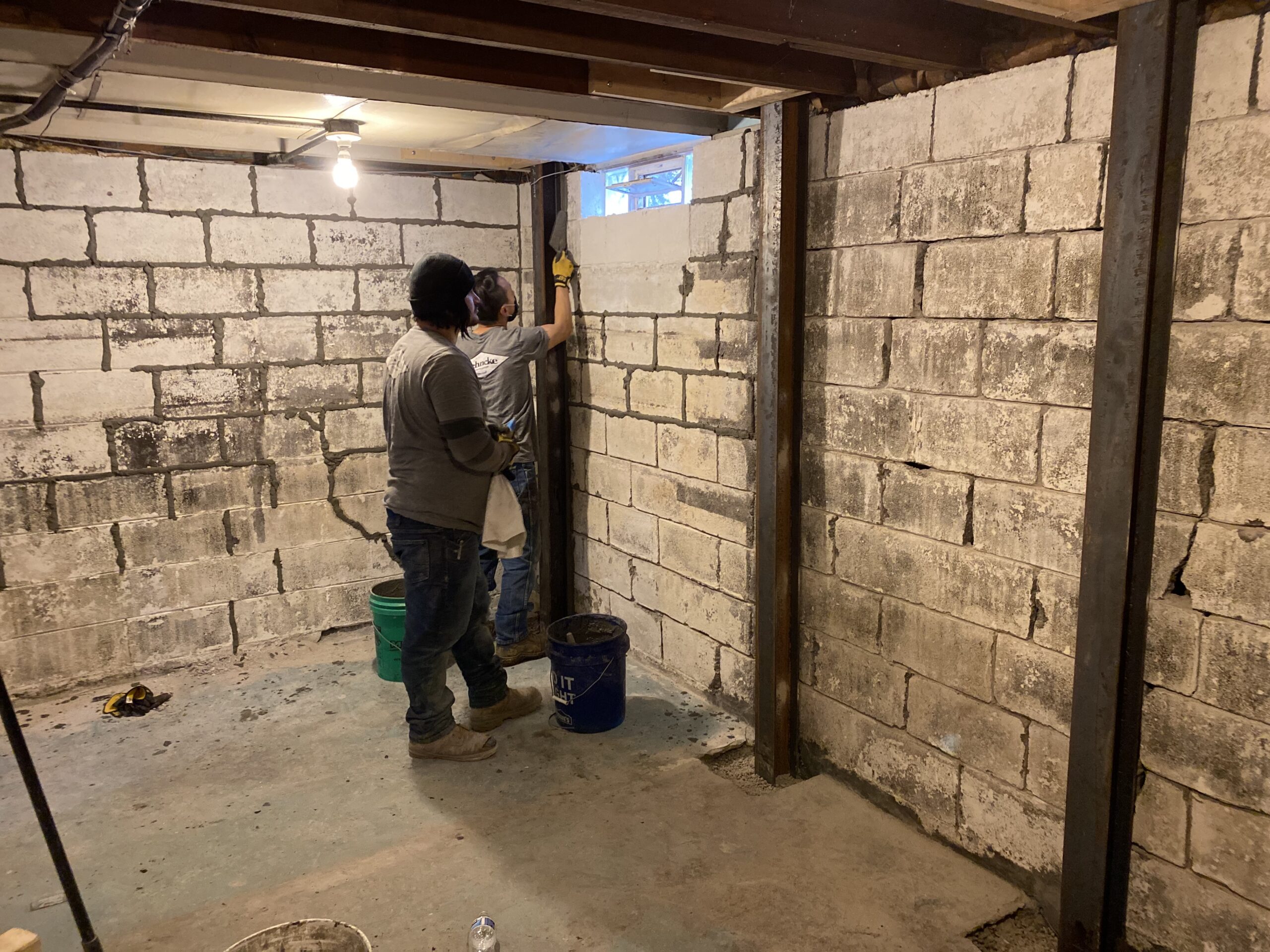
A wall that’s still sound but under too much pressure can often be reinforced in place. There’s more than one way to do that, including steel supports and carbon-fiber systems. Carbon fiber gets marketed heavily, so it’s worth being clear: it has a legitimate place on the right wall, but it isn’t right for every wall.
Straightening
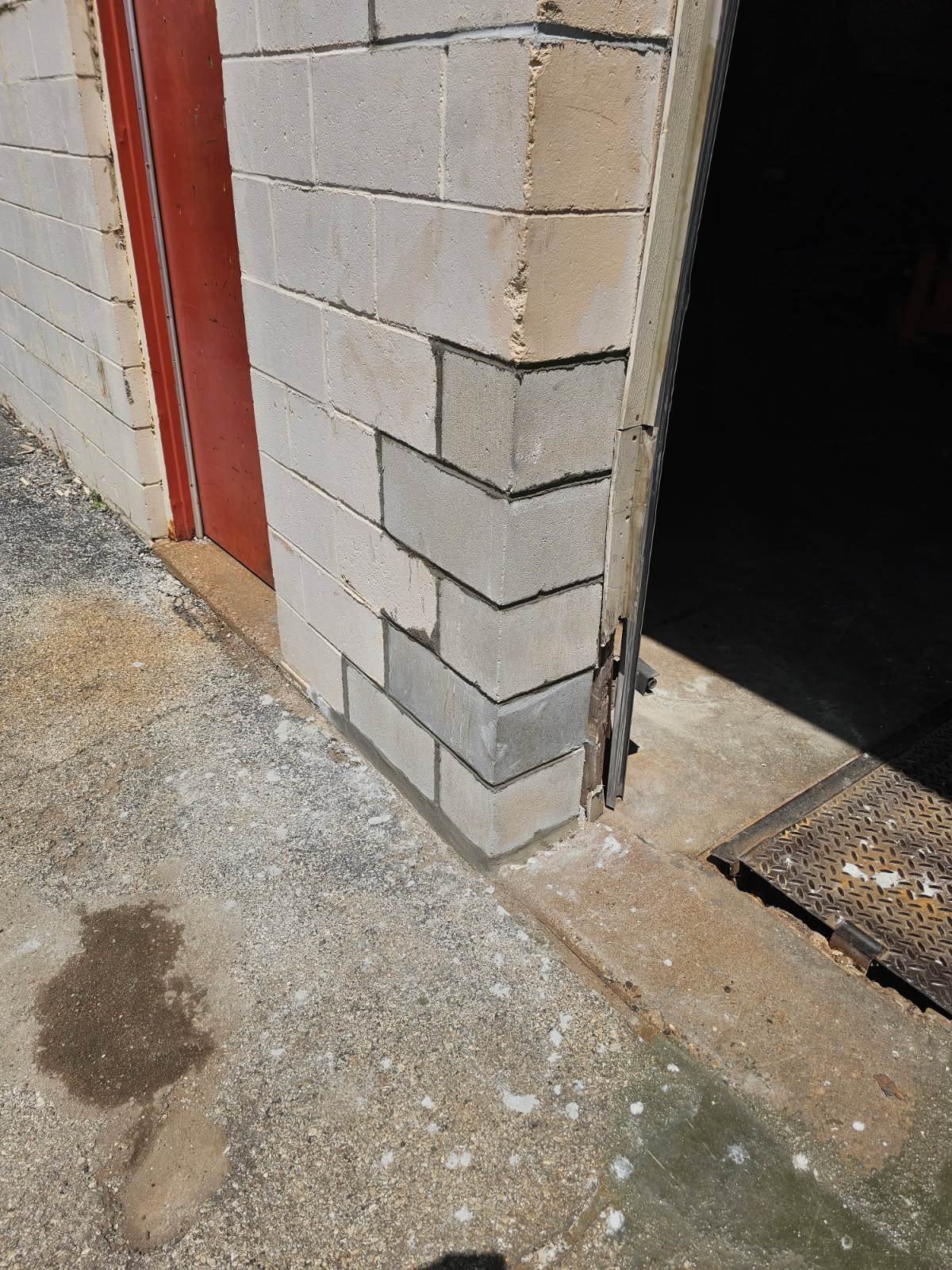
Some walls that have moved further can still be brought back toward their original position and then stabilized. It’s careful work, and whether it’s possible depends on the wall’s condition.
Rebuilding
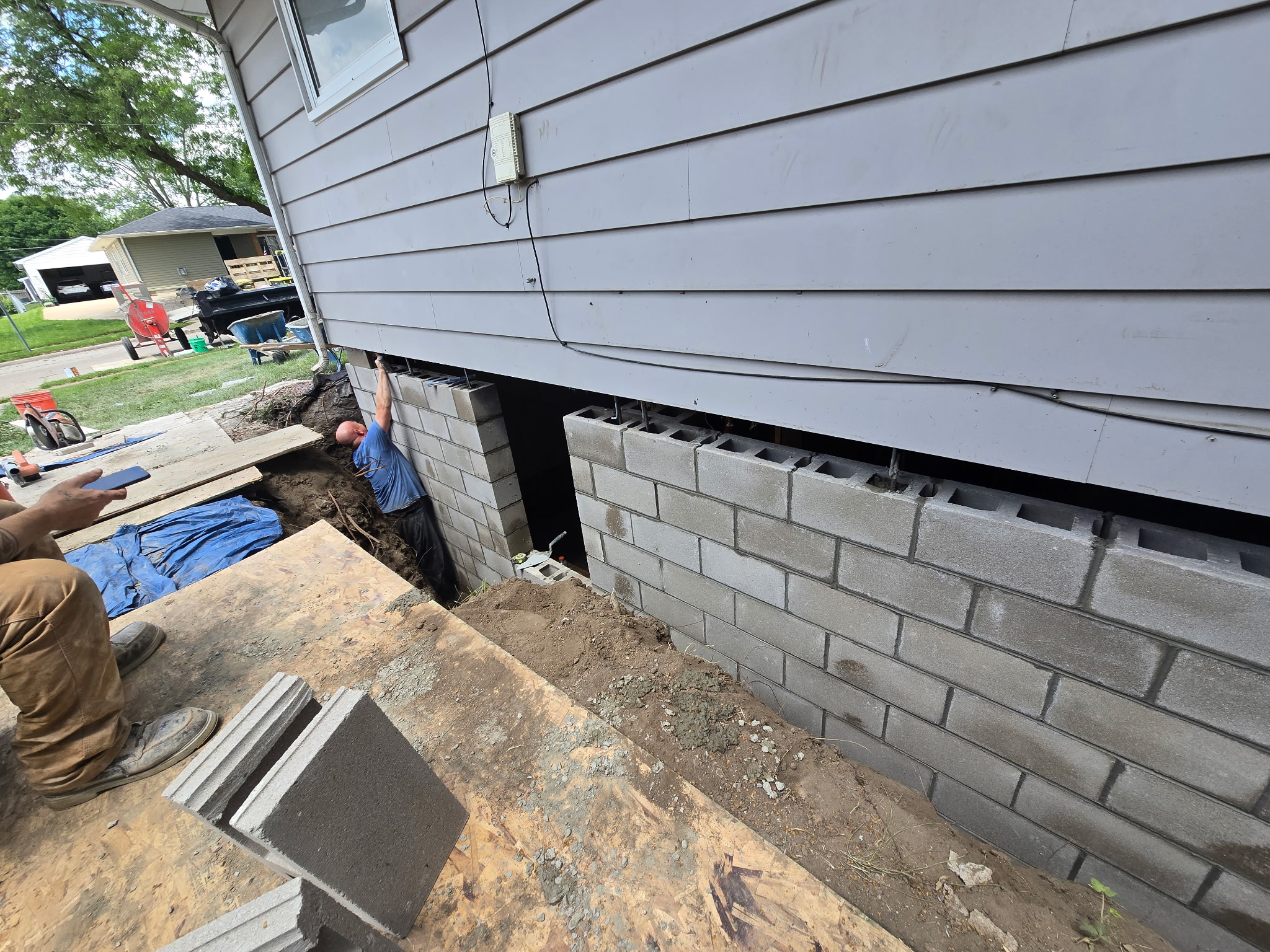
When a wall has moved too far, or moved enough to stop supporting the floor above it properly, that section needs to be rebuilt. From our files: on a Moline wall we reinforced in place and had the finished repair certified by a professional engineer — the right, durable answer for that wall’s condition.
One thing homeowners appreciate: it’s rarely all-or-nothing. On a basement with several walls, we look at each wall on its own — one may need very little, another more. Quoting a single expensive method for the whole basement is how people get oversold.
The step nobody can skip: the water
Here’s what ties every one of these repairs together. Almost every bowing wall we see has a water story behind it — saturated soil, a downspout at the corner, a driveway draining back at the house. Fix the wall and ignore the water, and the pressure that caused the problem is still there. That’s why a lasting repair addresses the drainage that caused the movement, not just the wall itself. If you do one thing before we arrive, walk your drainage first.
So how do you know which repair yours needs?
The only honest answer is that it depends on your specific wall — and the way to find out is a real evaluation of how far it’s moved, what shape it’s in, whether it’s still moving, and what’s driving it. If you’ve already been handed a single-method quote, that’s exactly what our second opinion is for: a look at whether the recommended repair actually fits the wall.
Common questions
How do you know how serious a bowing wall is?
We look at several things together — how far the wall has moved, what it’s built from, whether it’s still moving, and what’s driving water against it. No single measurement tells the story; it’s the overall picture that decides how serious it is and what it needs. That’s why we evaluate in person before making a recommendation.
Is carbon fiber as good as steel beams?
For the right wall, carbon fiber can be a good option. For a wall that’s deteriorating or still moving, it isn’t — we’ve seen it fail in exactly those conditions. The wall’s condition decides which method fits, not the marketing.
Can a bowing wall be straightened, or does it have to be rebuilt?
Many walls can be straightened and stabilized if they’re still in suitable condition. Walls that have moved too far — or stopped properly supporting the structure above — usually need that section rebuilt. Which path fits depends on the wall.
Could my bowing wall need no structural repair at all?
Sometimes. If the movement is slight, the wall is sound and stable, or the problem is shallow surface water rather than deep soil pressure, the right answer may be correcting drainage and keeping an eye on it. We’ll tell you honestly when that’s the case — a bowing wall is always worth evaluating, but it doesn’t always need the biggest repair.
Will fixing the wall stop it from happening again?
Only if the water is addressed too. Nearly every bowing wall we see is driven by water in the soil, and a repair that ignores drainage leaves the cause in place — which is why we deal with both.
Do I need an engineer?
For anything beyond minor work, an engineer’s involvement protects you: the repair is designed for your wall and documented. We work with structural engineers on repairs that call for it.
Go deeper on the steel option: how Behncke’s engineered steel I-beam bracing system works — the W4×13 beam, the top restraint, the floor embedment and the mortared wall contact.
Going deeper on one option: the problems with carbon-fiber straps for basement walls — where the strength of the material and the strength of the system part company.