Coal Tar vs. Asphalt Emulsion Sealer
The two main driveway sealers protect asphalt in different ways. Here’s how they compare — and how we pick the right one for your surface.
Get a free estimateWhen it’s time to sealcoat, there are two main products in the bucket: coal-tar sealer and asphalt-emulsion sealer. Both protect your pavement, but they behave differently — and local rules and your own priorities decide which makes sense.
Both work — they trade off differently
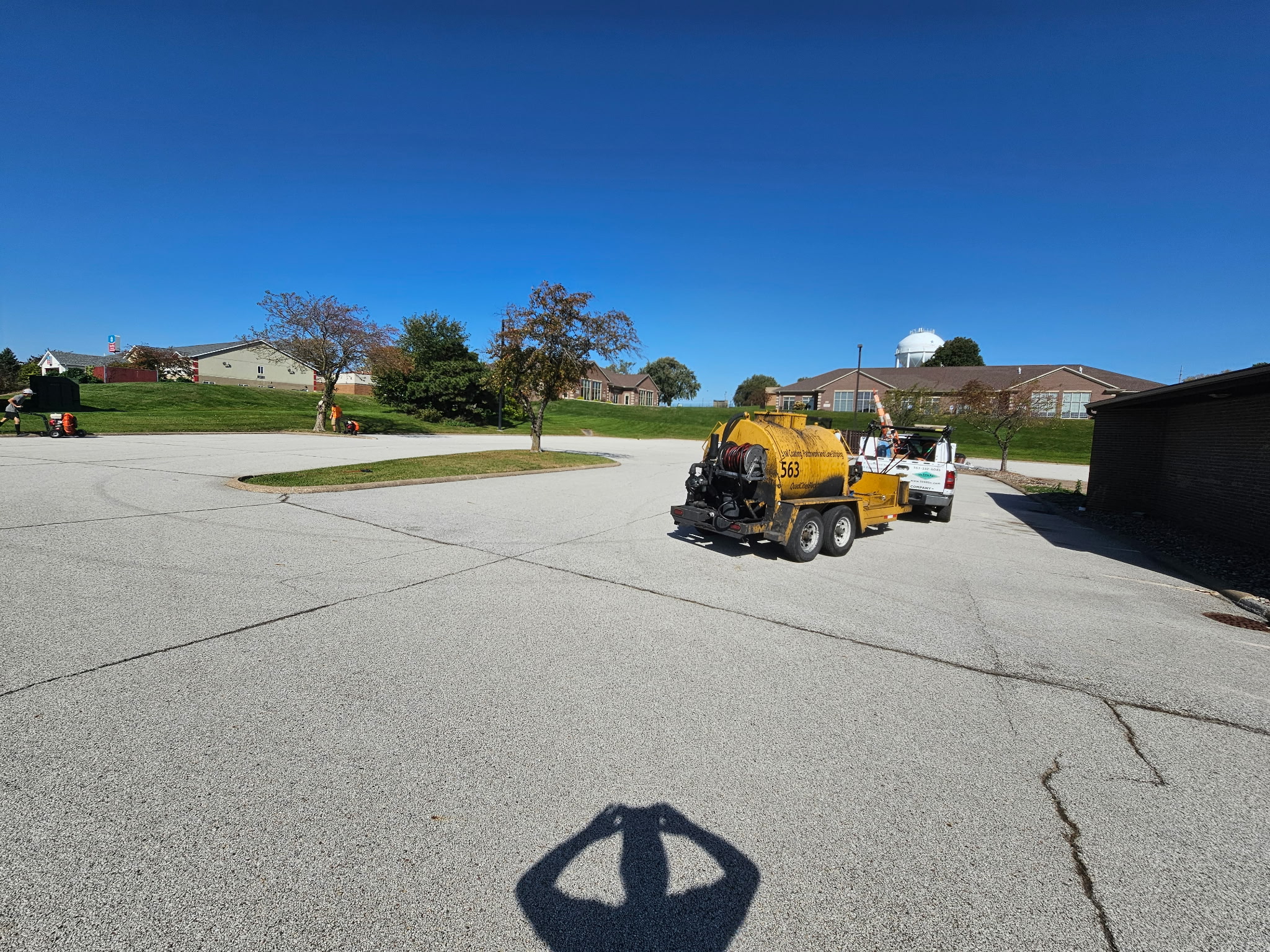
Coal-tar sealer is prized for its hardness and its resistance to gasoline and oil, which is why it’s long been popular on commercial lots. The trade-off is a stronger smell, higher VOCs, and restrictions in a growing number of places. Asphalt-emulsion sealer is water-based, lower-odor, and widely allowed, with durability that’s more than enough for most residential driveways. Neither is “better” across the board — it depends on the surface and the setting.
How the two sealers compare
Where coal-tar shines
Coal-tar sealer cures to a hard, slick surface that stands up well to the fuel and oil drips you get on commercial lots and in driveways where vehicles park and leak. That chemical resistance is its signature strength. The downsides are the odor during application, higher VOC emissions, and that some municipalities now limit or ban its use — so it isn’t an option everywhere.
Where asphalt-emulsion fits
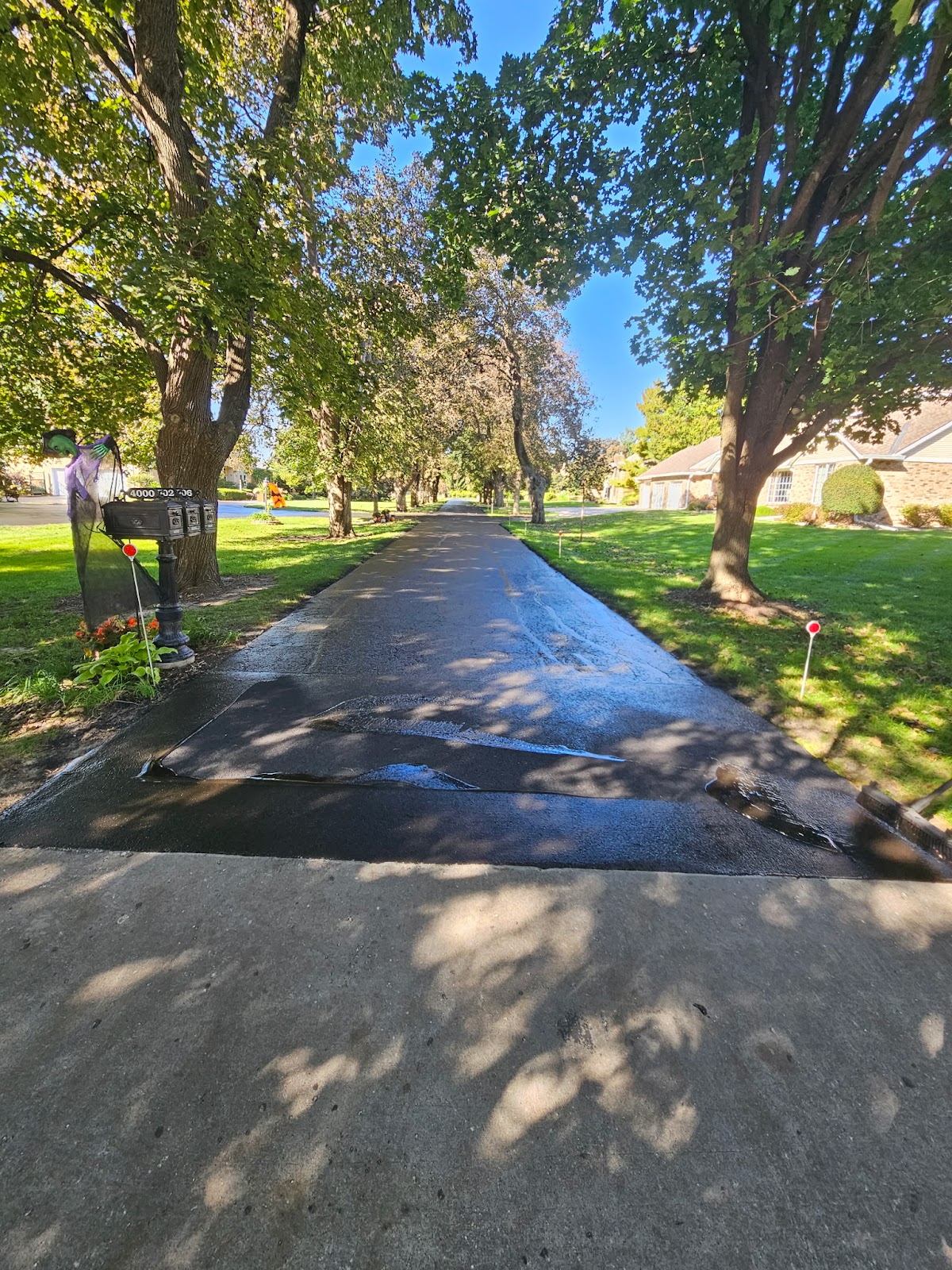
Asphalt-emulsion sealer is an asphalt-based, water-carried product. It’s lower-odor and lower-VOC, friendlier to apply around homes and landscaping, and allowed just about everywhere. It flexes well with the pavement and protects against the sun and water that do most of the aging. For the typical Quad Cities driveway, it’s a great fit.
Not sure which sealer your driveway needs?
We’ll recommend the right product for your surface, your setting, and local rules — and explain why.
Get a free estimate →Common questions
Which sealer lasts longer, coal tar or asphalt emulsion?
Coal tar cures harder and resists fuel and oil better, which can mean a slightly longer life on surfaces exposed to those. On a normal driveway protected from leaks, a properly applied asphalt-emulsion coat holds up very well. Prep and application matter more than the product.
Is coal-tar sealer being banned?
A growing number of states and municipalities restrict or ban coal-tar sealer over environmental and health concerns. Availability varies by area, so it isn’t an option everywhere. We’ll use what’s allowed and appropriate where you are.
Is asphalt-emulsion sealer as good as coal tar?
For most residential driveways, yes. It protects against sun and water just as well; the main difference is lower resistance to gasoline and oil, which matters more on commercial lots than on a typical home driveway.
Which one smells less?
Asphalt-emulsion sealer is water-based and much lower in odor and VOCs, which makes it easier to apply around homes, landscaping, and occupied buildings.