
How Long Does Sealcoating Last?
A good sealcoat protects your driveway for a couple of years — but traffic, sun, and prep all move that number. Here’s what to expect in the Quad Cities.
Get a free estimateSealcoating is the cheapest way to add years to an asphalt driveway or lot — but only if it’s reapplied on the right schedule. So how long does a coat actually last, and what makes one job outlast another?
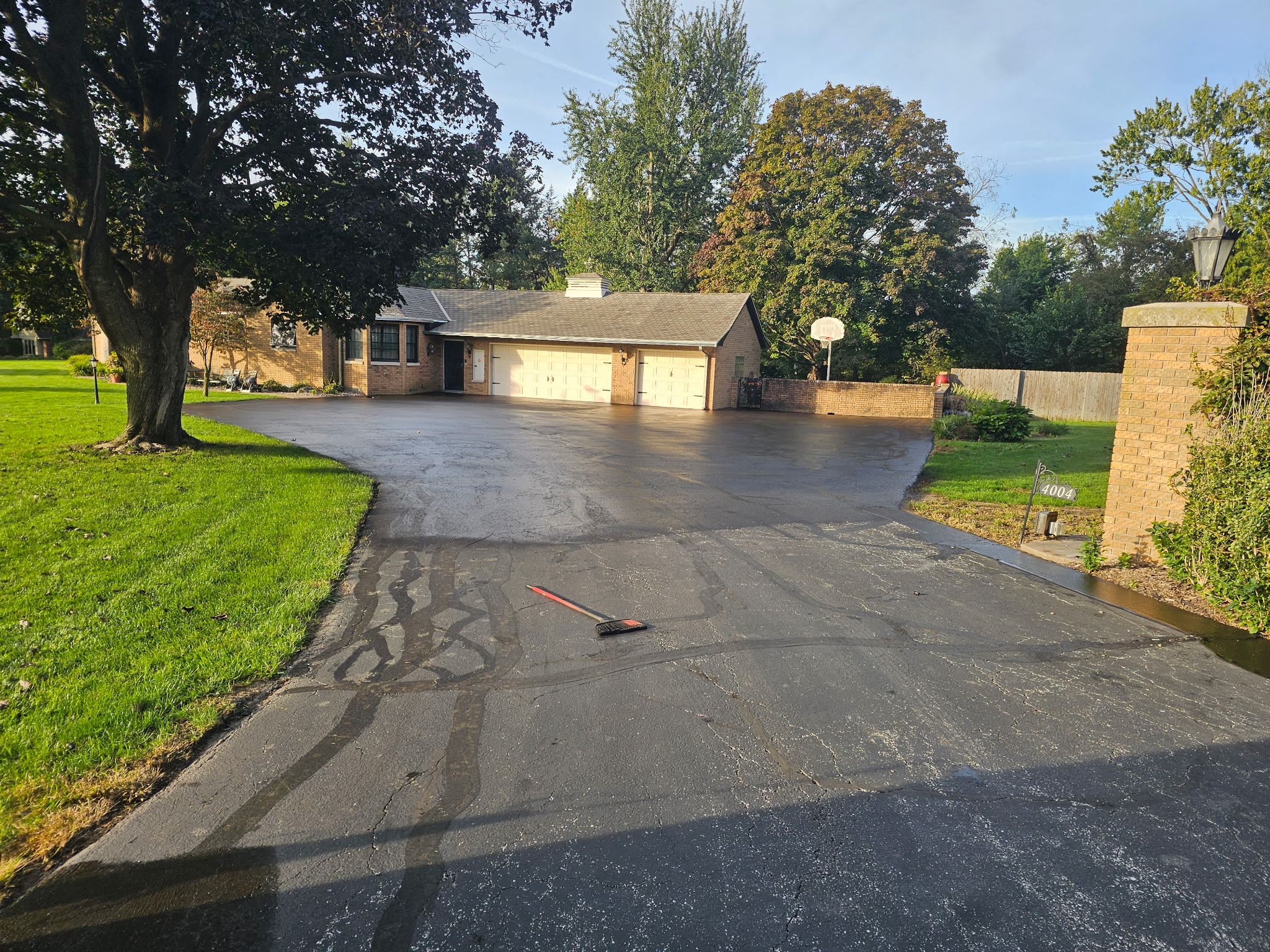
Two to three years for most driveways
For a typical residential driveway, plan on resealing every two to three years. Busy commercial lots and anything that sees constant traffic, turning tires, or standing water wear faster — closer to every one to two years. The clearest signal isn’t the calendar, though: it’s the color. When the surface fades from black to gray, the sealer has worn thin and it’s time.
What the wear looks like
A fresh coat goes on deep black and slightly glossy. Over the first year it dulls; by two years it’s fading to gray as sun and traffic grind the sealer down. Once you can see the stone aggregate and the color is clearly gray, the asphalt underneath is exposed again and resealing is due.
How a sealcoat wears over time
What makes a sealcoat wear faster
Not every job lasts the same. A coat wears out sooner when there’s heavy or turning traffic, full-day sun with no shade, standing water from poor drainage, or when the prep was rushed — sealer laid over a dirty or damp surface never bonds right. Two thin, properly applied coats on a clean surface outlast one thick coat every time.
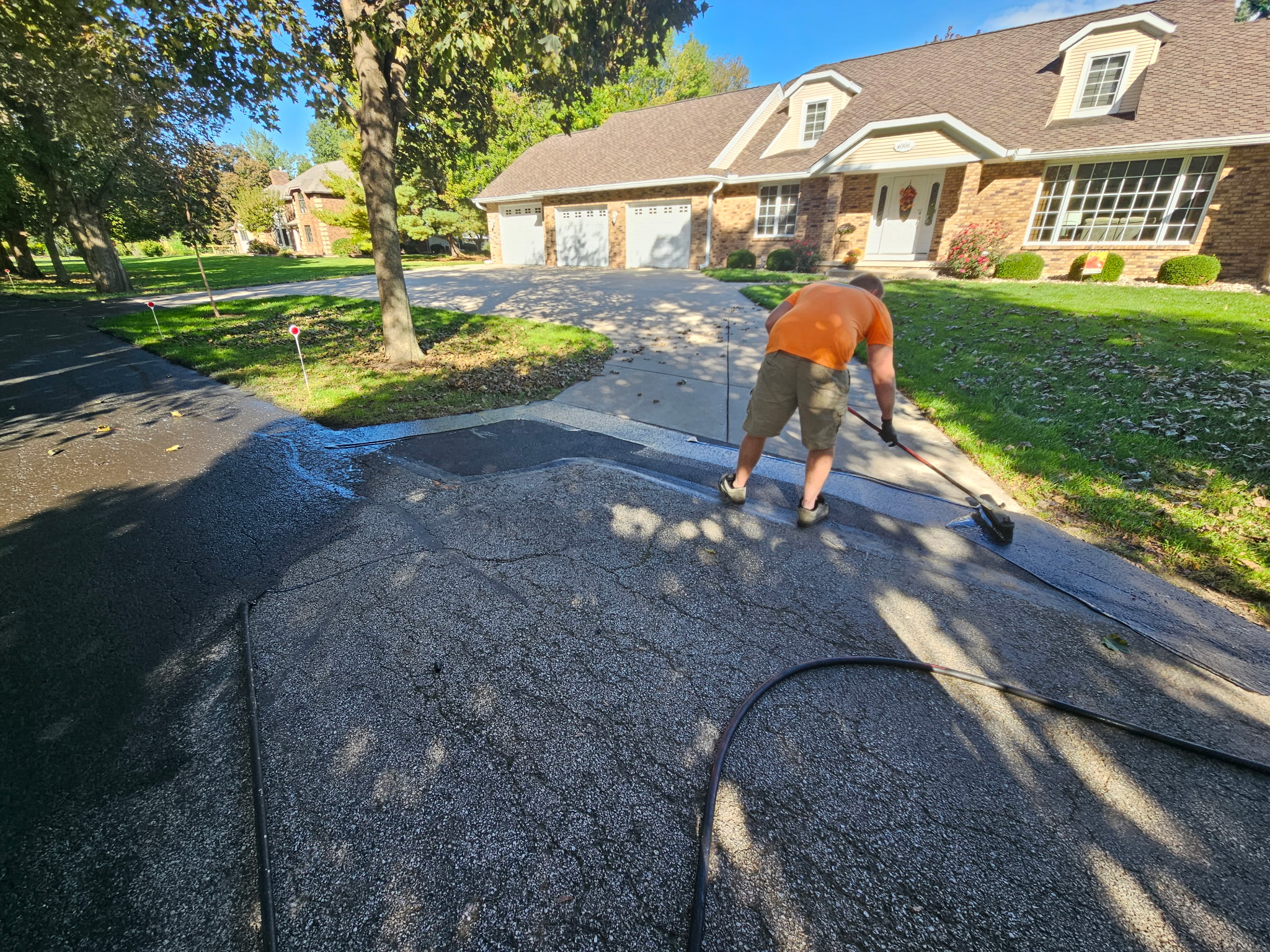
How to get the most out of every coat
- Fill cracks first — sealer won’t bridge open cracks; water gets in and undoes the job.
- Keep water draining away — standing water is the fastest way to wear a coat through.
- Don’t reseal too often — piling on coats before the last has worn leads to cracking and peeling.
- Reseal on color, not habit — black is protected, gray is exposed. Watch the surface, not just the calendar.
Not sure if your driveway is due?
We’ll take a look and tell you honestly whether it needs resealing now or can wait — no pressure either way.
Get a free estimate →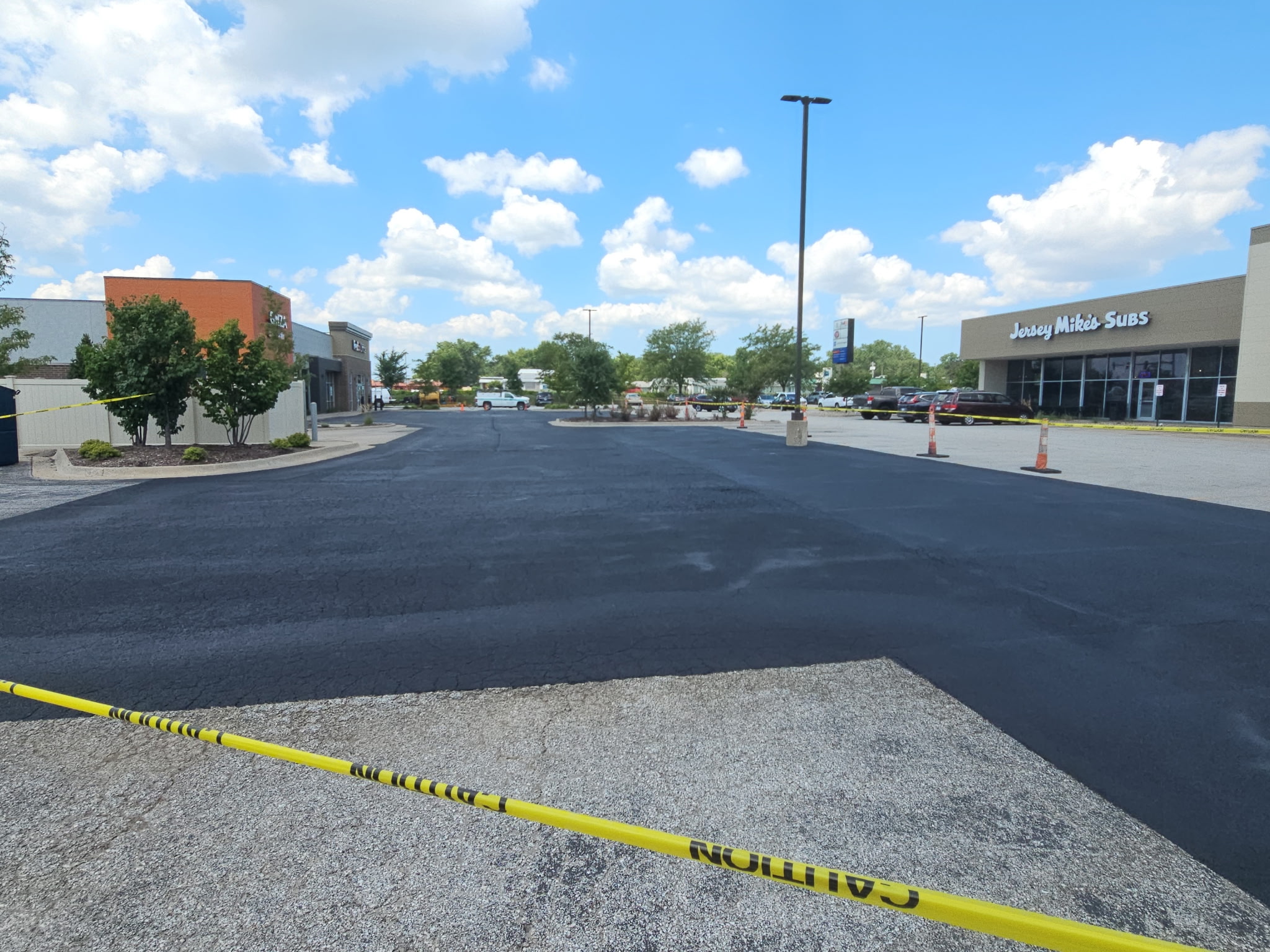
Common questions
How often should I sealcoat my driveway?
Every two to three years for most residential driveways in the Quad Cities. High-traffic or commercial surfaces may need it every one to two years. Reseal when the color fades from black to gray.
Can you sealcoat too often?
Yes. Adding a new coat before the previous one has worn builds up too much sealer, which can crack and peel. It’s better to reseal based on how worn the surface actually is.
How long before I can drive on fresh sealcoat?
Usually 24 to 48 hours, depending on temperature and humidity. We’ll give you the exact window for your job, since cooler or damp weather needs more time.
Does sealcoating make old asphalt last longer?
Yes — it shields the binder from sun and keeps water out, which slows the cracking and crumbling that ages asphalt. It won’t fix a failed base, but on sound pavement it buys years.