Why Asphalt Cracks (and How to Stop It)
Sun, water, and Quad Cities freeze-thaw winters all work against your driveway or lot. Here’s what’s really happening — and how to slow it down.
Get a free estimateAsphalt is flexible and tough, but it doesn’t last forever. Every driveway and parking lot in the Quad Cities is fighting the same three things: ultraviolet sun, water, and our constant winter freeze-thaw swings. Understanding why asphalt cracks is the first step to making it last years longer.
Why asphalt cracks
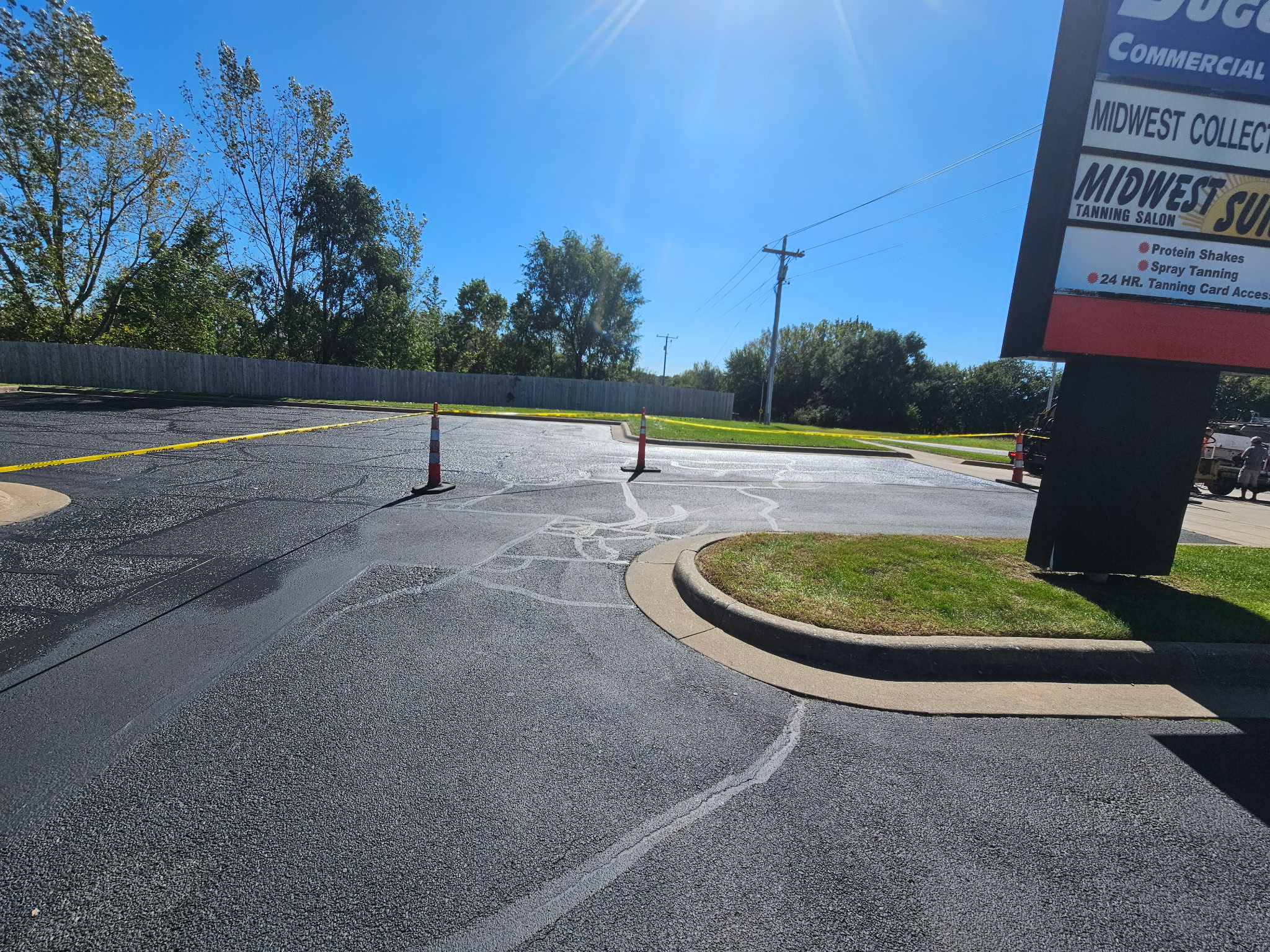
Two things do most of the damage: the petroleum binder that holds asphalt together dries out and hardens with age and sun, and water works its way underneath and freezes. Sealcoating slows the drying; prompt crack filling keeps the water out. Do both and you dramatically extend the life of the pavement.
Sun and age dry out the binder
Asphalt is stone and sand held together by a black petroleum binder. Sunlight and oxygen slowly harden that binder — the same way an old rubber band turns brittle. You can see it happen: fresh asphalt is deep black and flexible, while old asphalt fades to gray and cracks under the smallest stress. Once it’s brittle, it can no longer flex with the daily temperature swings, so it splits.
Water and freezing finish the job
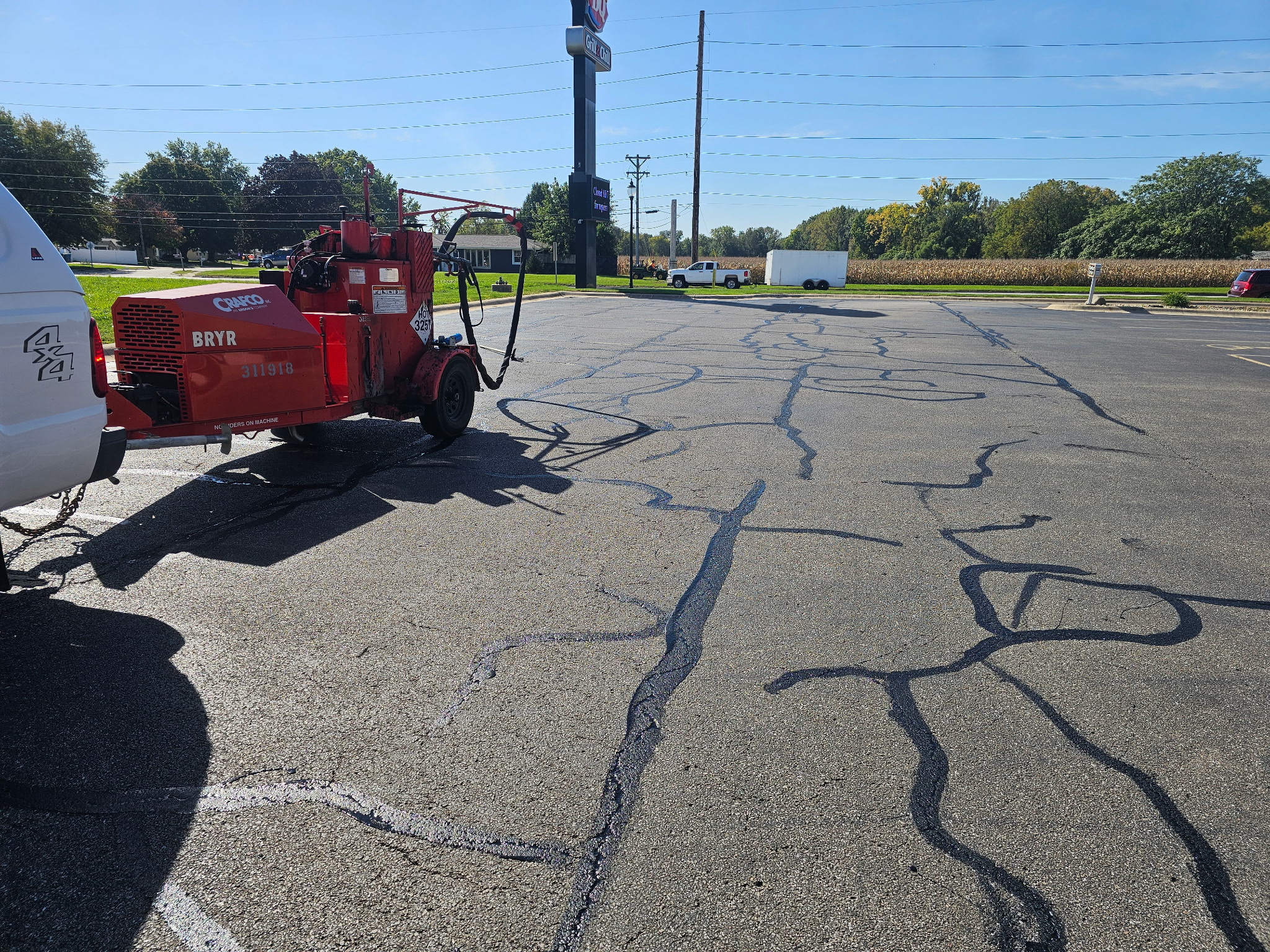
The moment a hairline crack opens, water gets in. In a Quad Cities winter that water freezes, expands about nine percent, and pries the crack wider — then melts and does it again on the next cold snap. Repeated cycles turn a hairline into a network of “alligator” cracks, and eventually into potholes once the base underneath washes out.
How freeze-thaw widens an asphalt crack
What speeds cracking up — and how to slow it
Some pavement cracks faster than others. The usual culprits:
- A thin or weak base — not enough gravel under the asphalt lets it flex and break.
- Standing water and poor drainage — water that can’t run off soaks in and undermines the base.
- Heavy loads — trucks and dumpsters concentrate stress and fatigue the surface.
- Skipped maintenance — no sealcoat and unfilled cracks let the sun and water win.
The fix is simple and cheap compared to repaving: sealcoat every two to three years, fill cracks as soon as they appear, and keep water draining away from the pavement. Caught early, most cracks are a quick fill; left alone, they become a replacement.
Cracks spreading on your driveway or lot?
We’ll tell you honestly whether it needs crack filling, sealcoating, or repair — and get you on the schedule before it gets worse.
Get a free estimate →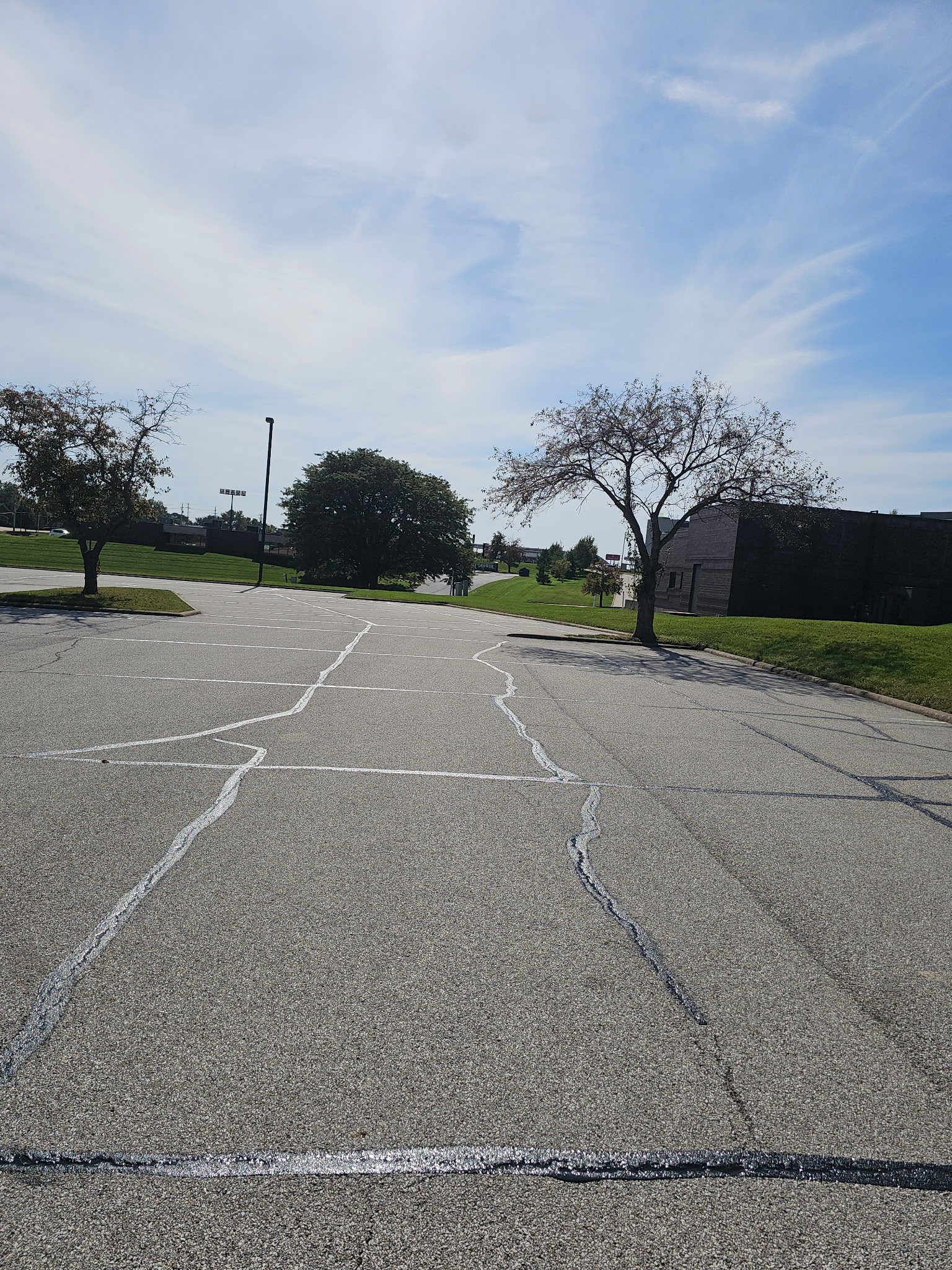
Common questions
Why is my brand-new asphalt already cracking?
A few fine cracks in the first year or two are usually surface shrinkage as the asphalt cures, and they seal up well. Wider or fast-spreading cracks on new pavement point to a base or drainage problem worth looking at.
Can cracked asphalt be repaired, or does it need replacing?
Most cracking is repairable. Individual cracks get cleaned and filled; widespread alligator cracking may need a patch or an overlay. Full replacement is only necessary when the base itself has failed. We can tell you which you’re looking at.
Does sealcoating fix existing cracks?
No — sealcoat protects the surface and slows new cracking, but open cracks are filled first with a flexible crack sealant, then the whole surface is sealed over the top. They work together.
How often should I sealcoat to prevent cracks?
Every two to three years for most Quad Cities driveways and lots. Sooner if the surface is already fading to gray or sees heavy traffic.