
Roof water rerouted with about 75 feet of underground downspout drainage in Davenport, Iowa — plus tuckpointing and rebar-and-mortar reinforcement to repair and strengthen a garage wall the water had weakened.
PROJECT SUMMARY
Date posted: July 12, 2026
Service: Drainage & masonry tuckpointing repair
Location: Davenport, Iowa
Problem: Deteriorated mortar joints and stair-step cracking in a garage wall, worsened by a downspout discharging water against it
Solution: ~75 ft of underground downspout drainage, tuckpointing, and reinforcement of the rear garage wall with rebar and mortar in the block cavities
Foundation / wall type: Concrete block
Drainage: ~75 ft underground downspout extension
Reinforcement: Rebar and mortar in block cavities
Completion status: Completed
Project photos
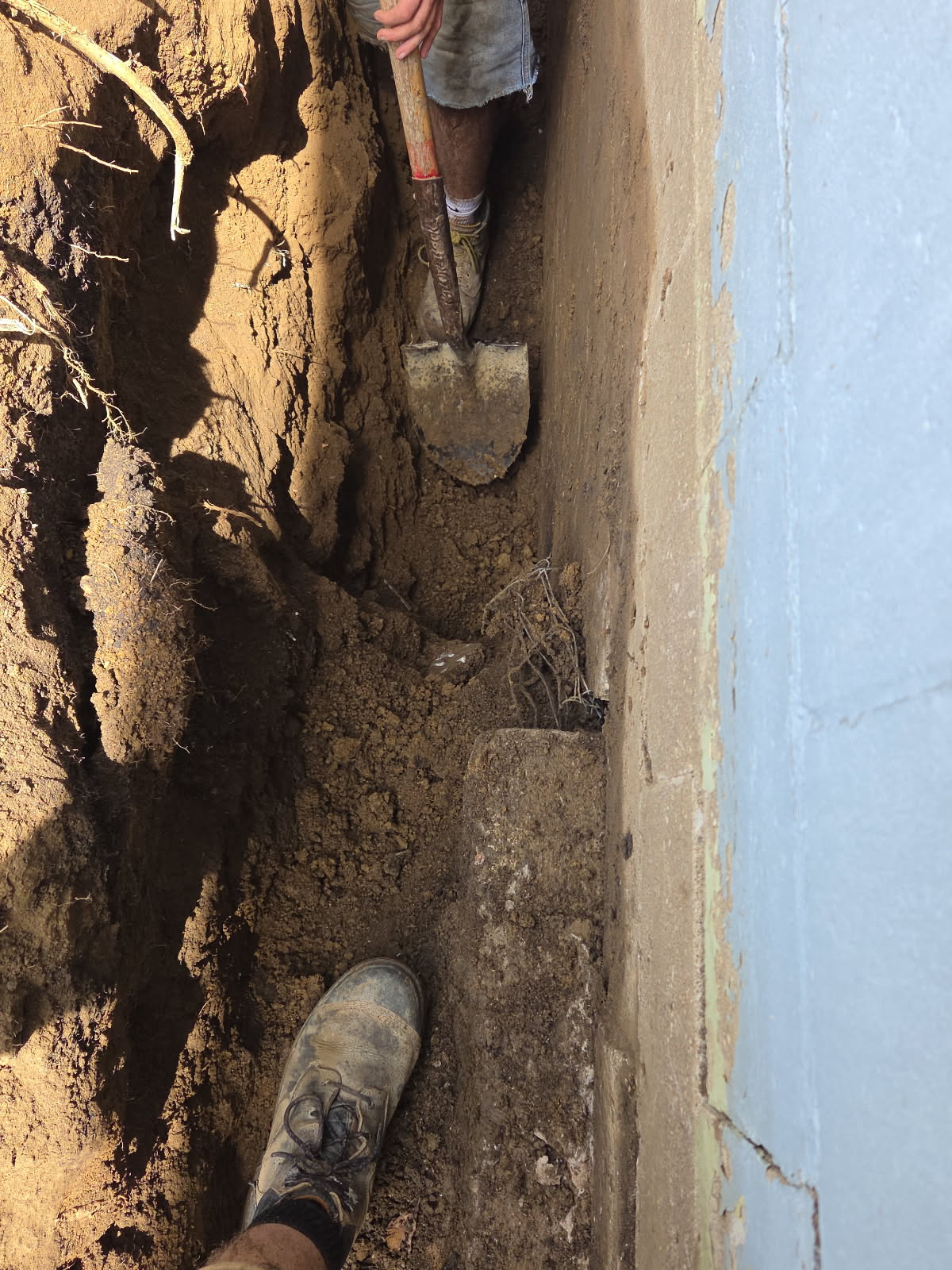
Project overview
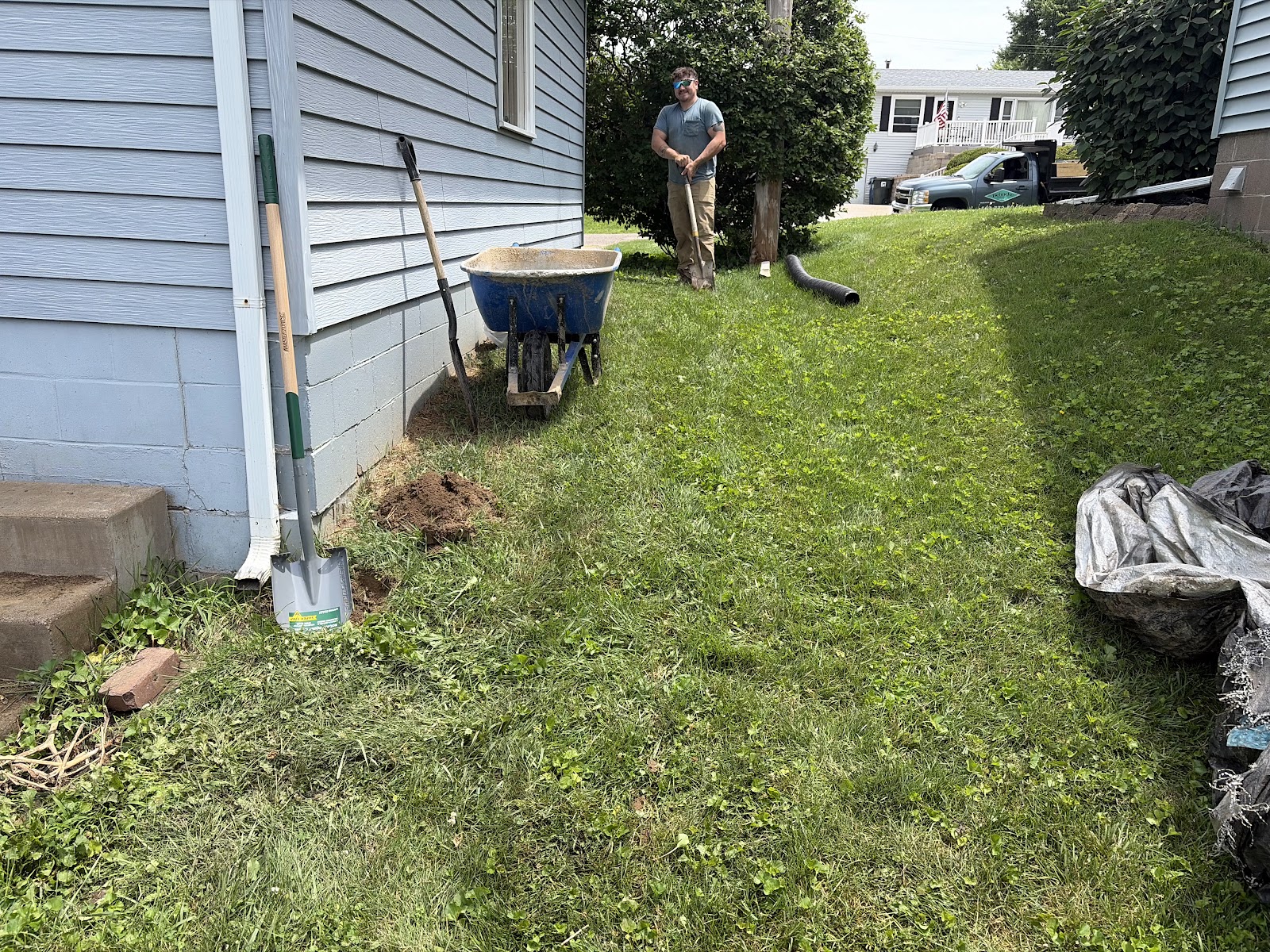
Water management is one of the most important parts of protecting a home’s foundation and masonry. On this project in Davenport, Iowa, our crew installed approximately 75 feet of underground downspout drainage to redirect roof water away from the home and completed structural tuckpointing repairs.
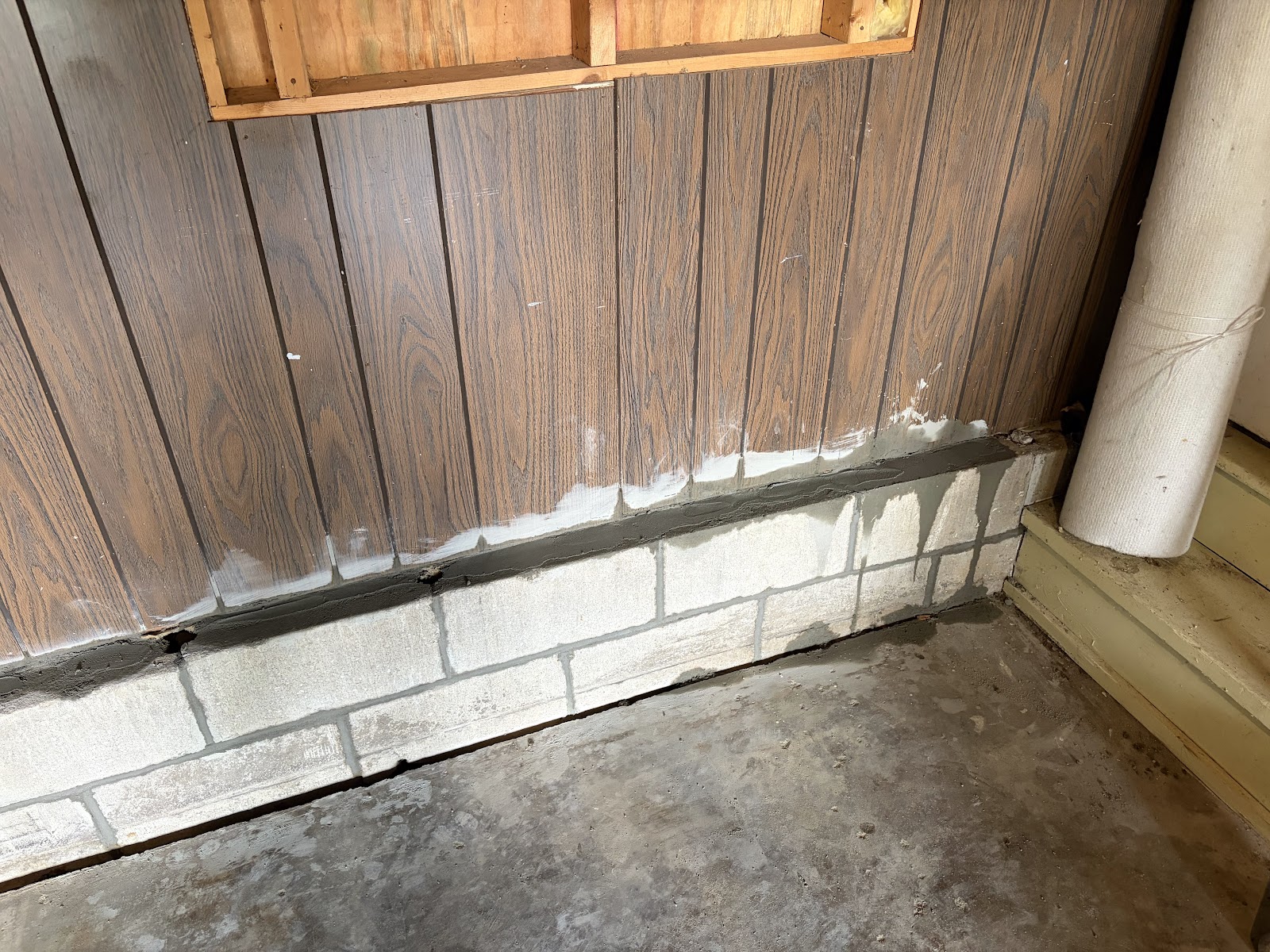
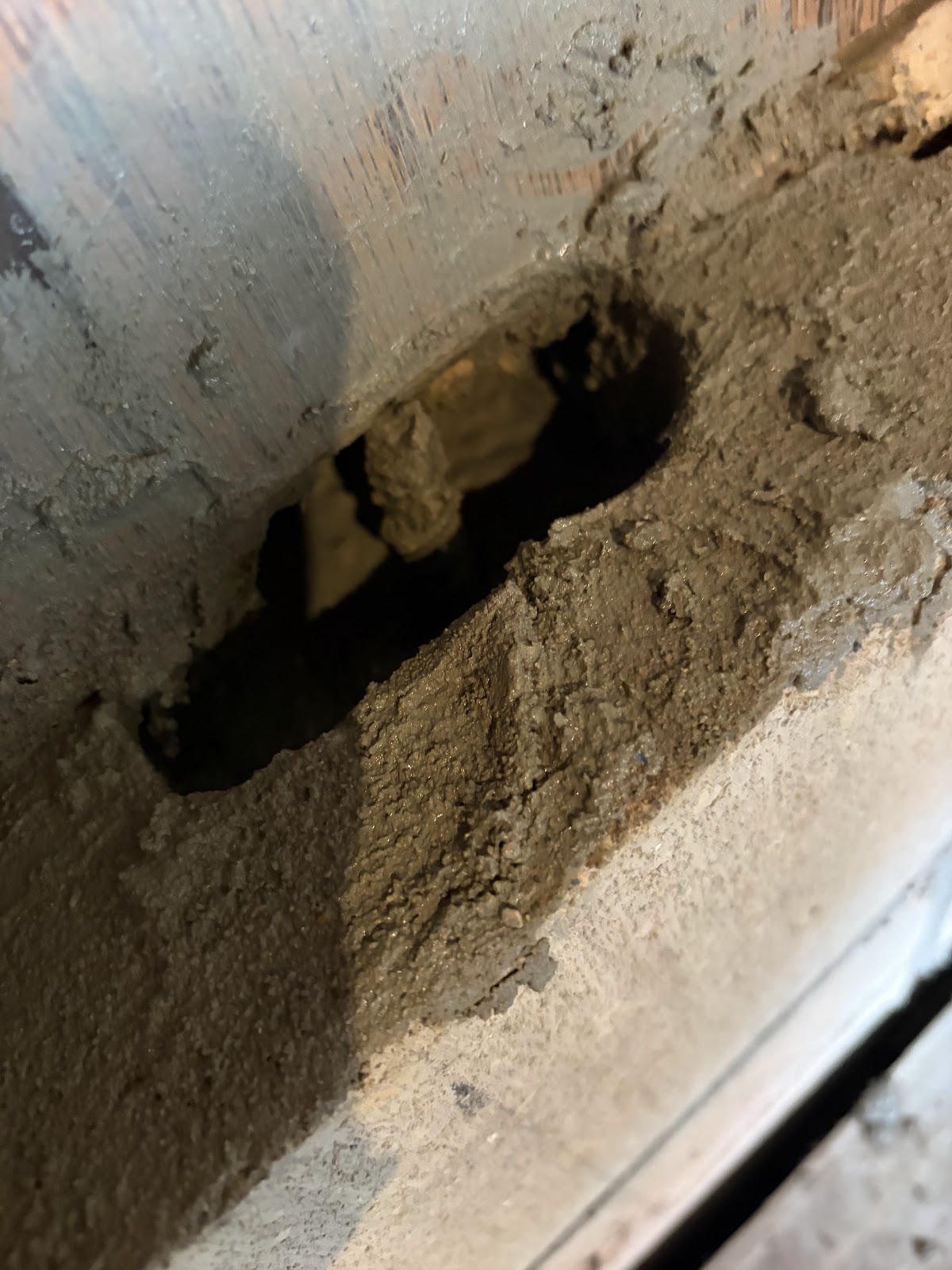
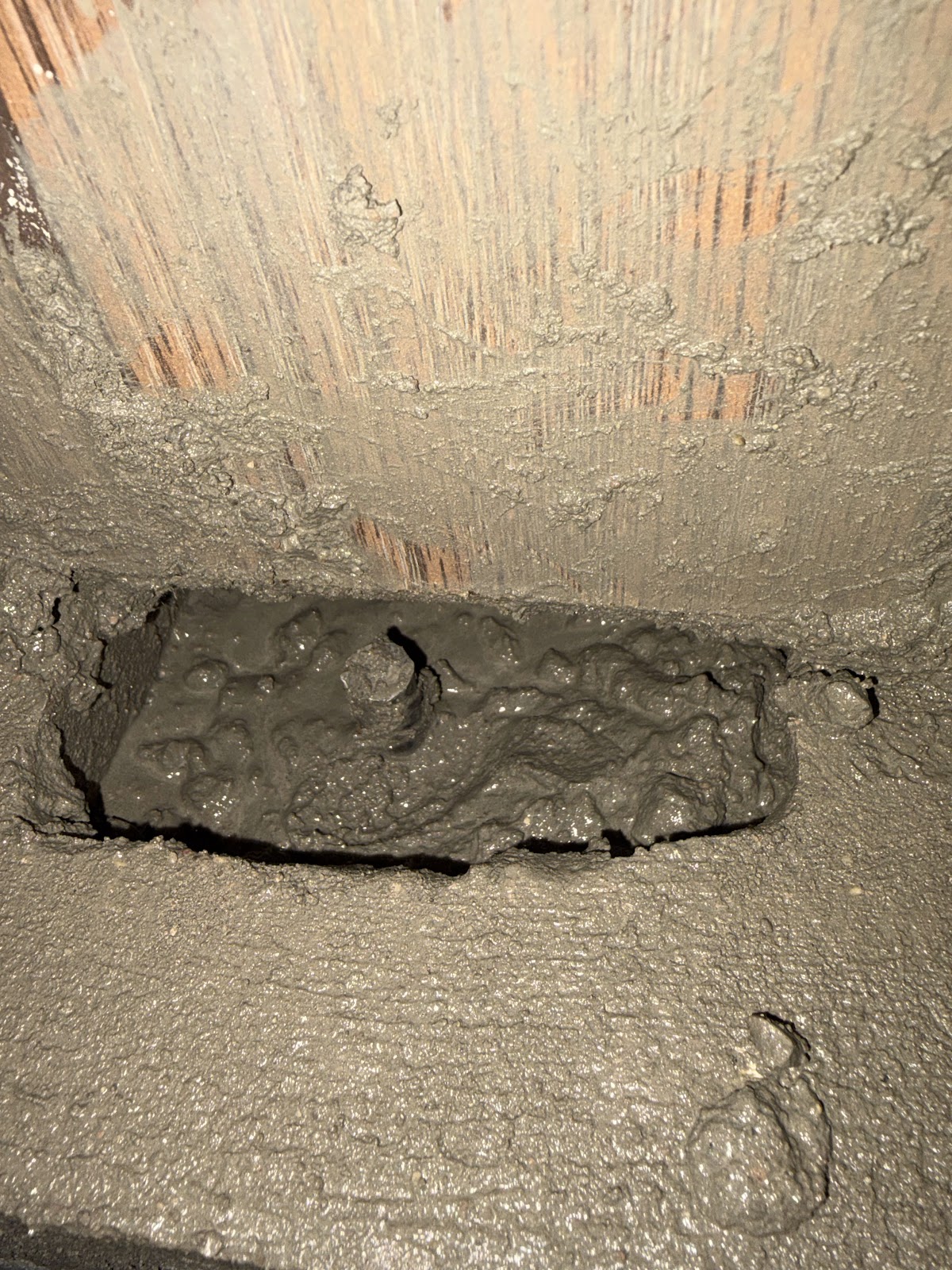
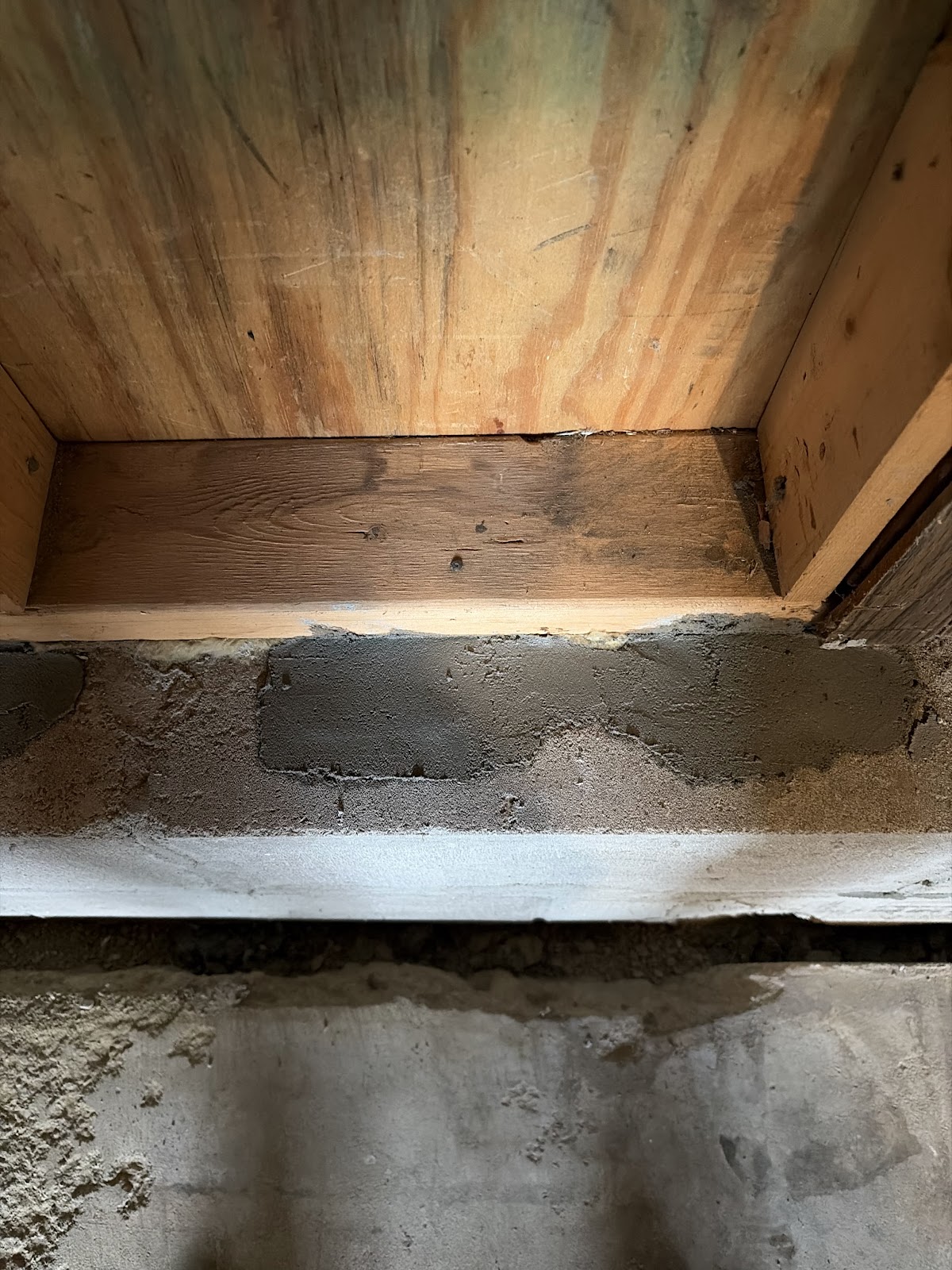
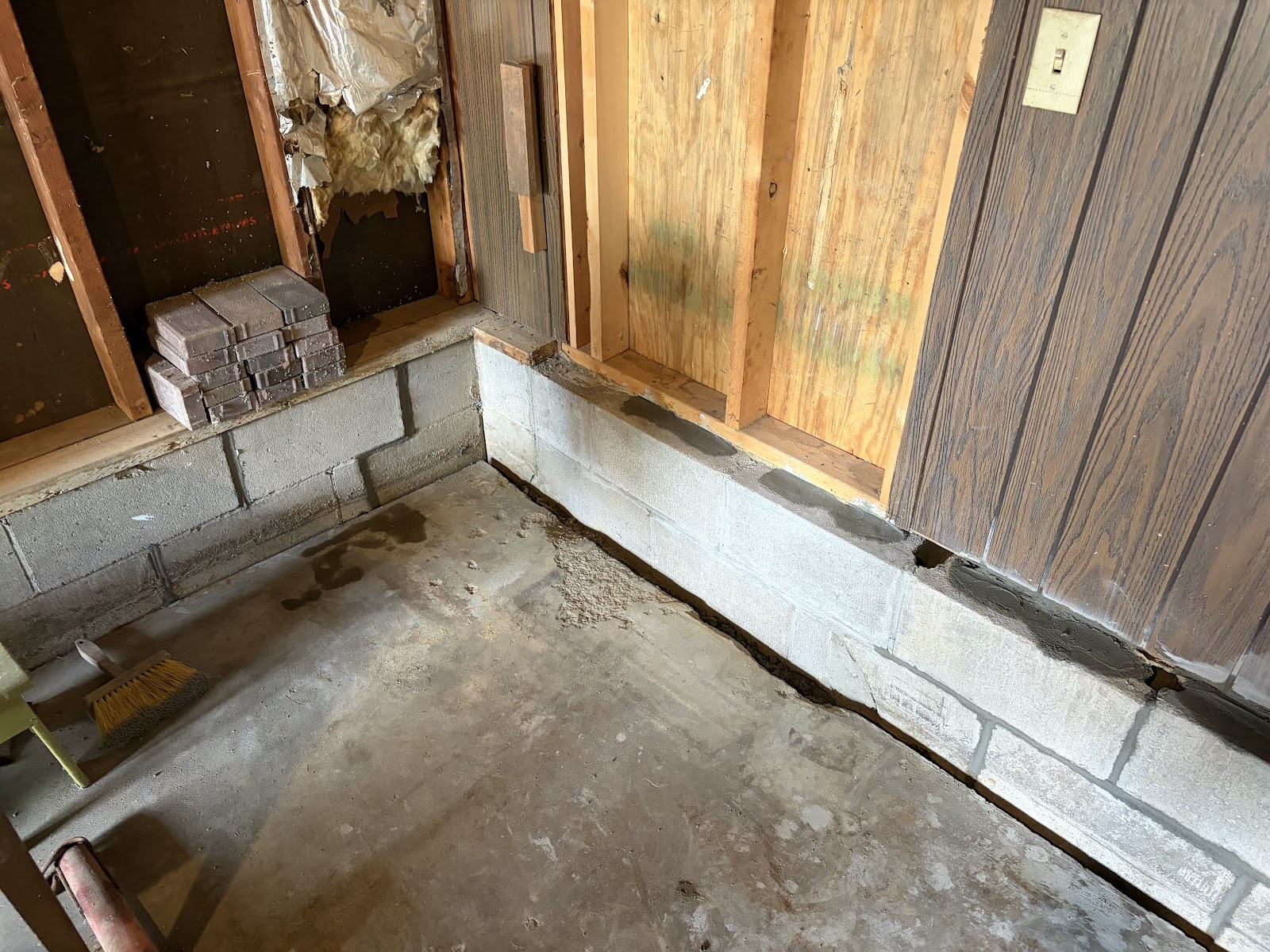
We repaired deteriorated mortar joints, fixed stair-step cracking, and reinforced the rear garage wall after tuckpointing by installing rebar and mortar inside the concrete block cavities. This added strength to a wall that had been weakened over time.
The nearby downspout was identified as the likely cause of the damage, allowing large amounts of water to discharge next to the garage wall. To help prevent future deterioration, we rerouted the downspout underground and discharged it safely away from the structure.
At Behncke Construction, we believe in correcting the cause of the problem—not just repairing the damage. Since 1948, we’ve provided foundation repair, tuckpointing, drainage solutions, basement waterproofing, and masonry restoration throughout Davenport, Bettendorf, Moline, Rock Island, and the Quad Cities.
Project details
The visible damage was in the masonry — deteriorated mortar joints and stair-step cracking in the rear garage wall — but the cause was a downspout dumping roof water right next to it. The wall was tuckpointed and then reinforced by placing rebar and mortar inside the concrete block cavities, and the downspout was rerouted underground and discharged safely about 75 feet away so the wall stays dry going forward.
What homeowners should know
Stair-step cracking in a block wall and crumbling mortar are classic signs of water and movement working together. Very often the trigger is roof water: a downspout discharging right at the foundation saturates the soil, and that moisture drives freeze-thaw damage and pressure against the wall.
That’s why a lasting fix treats the water and the wall. Rerouting downspouts underground and discharging them well away from the structure removes the source, while tuckpointing and, where needed, rebar-and-mortar reinforcement inside the block cavities restore the wall’s strength. Fix only the masonry and the same downspout will undo the repair.
Related services
Learn more about our foundation repair, masonry repair, and basement waterproofing, or browse more recent projects.
Photo highlights
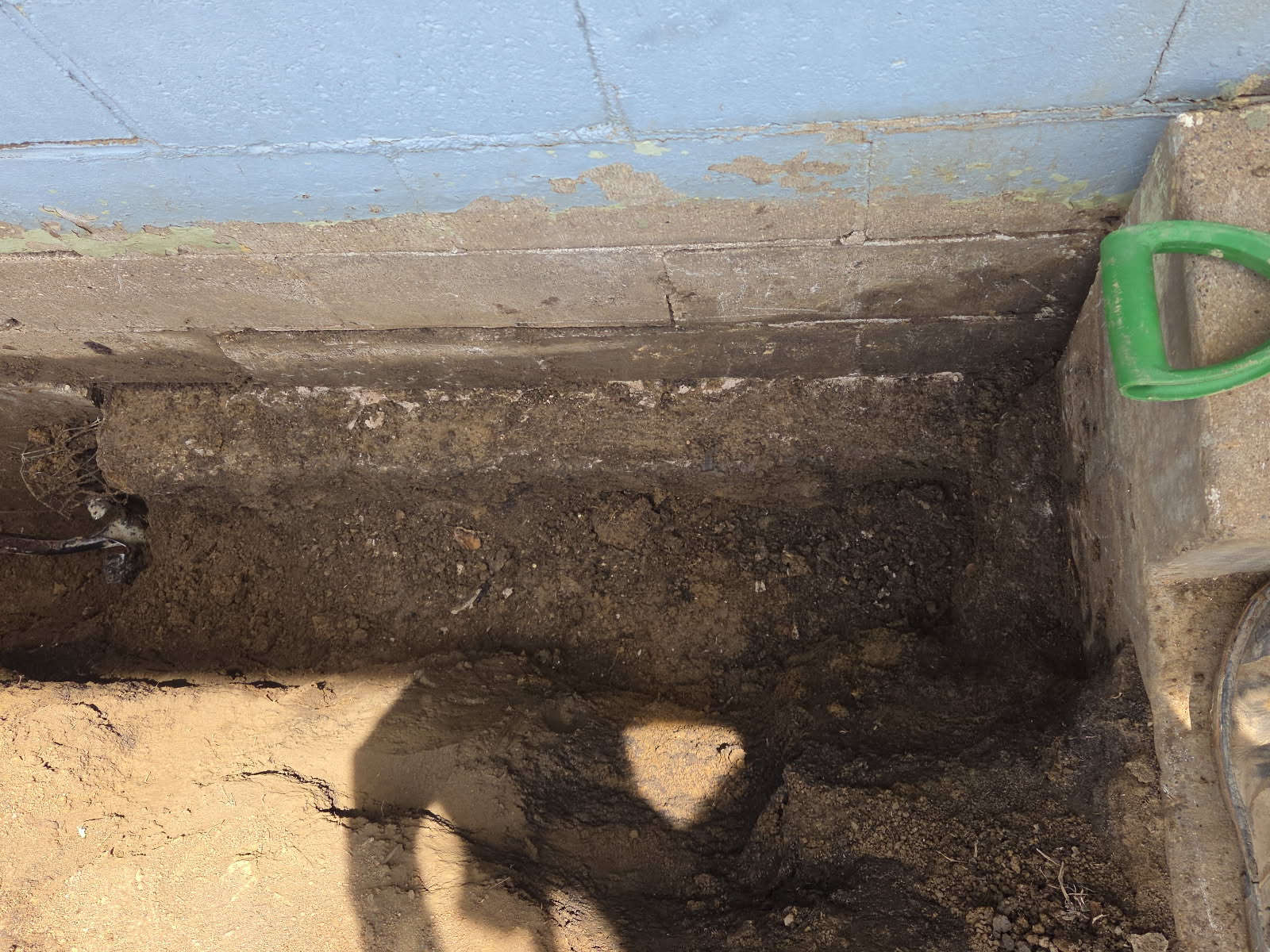
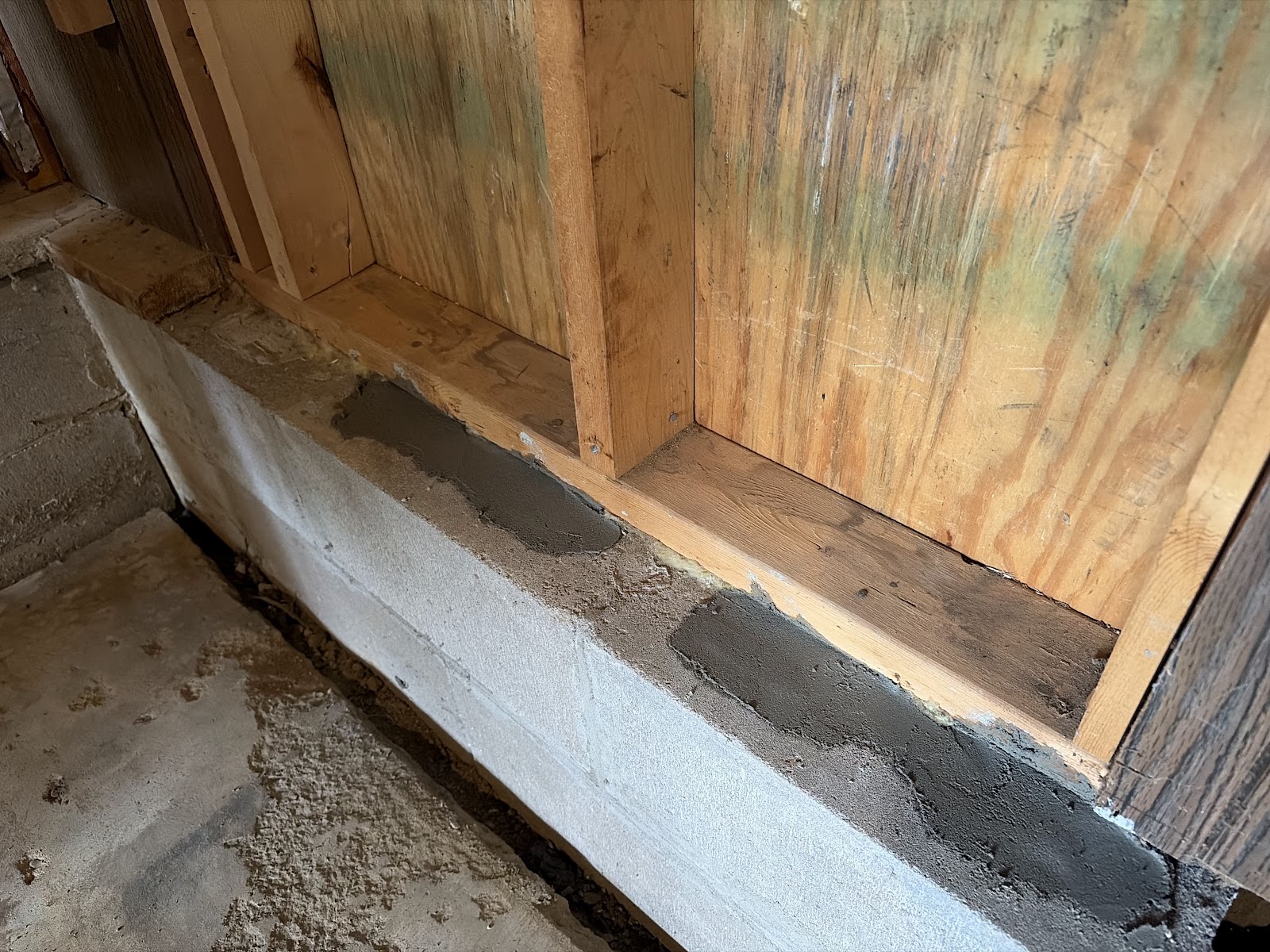
The finished photo shows the rear garage wall with fresh, tight mortar joints and the downspout rerouted away from the base. The other images show the underground drainage line being run out across the yard, the excavation along the foundation, the concrete block cavities being reinforced with rebar and mortar, and the parged, repaired wall base.
Related services & reading
Downspout dumping against your foundation?
If roof water is pooling against a wall or your mortar is starting to crack, we’ll take an honest look and tell you what it actually needs — starting with the cause. Serving Davenport and the Quad Cities since 1948.
Call (563) 332-6045