Foundation Cracks · Quad Cities
Stair-Step Cracks in Block & Brick: Minor or Structural?
Those diagonal, staircase-shaped cracks in a block or brick wall worry everyone. Some are minor. Some aren’t. Here’s the one tell that separates the two.
Based on more than 1,200 written inspections and nearly 10,000 estimates across the Quad Cities in the last ten years.
What a stair-step crack is
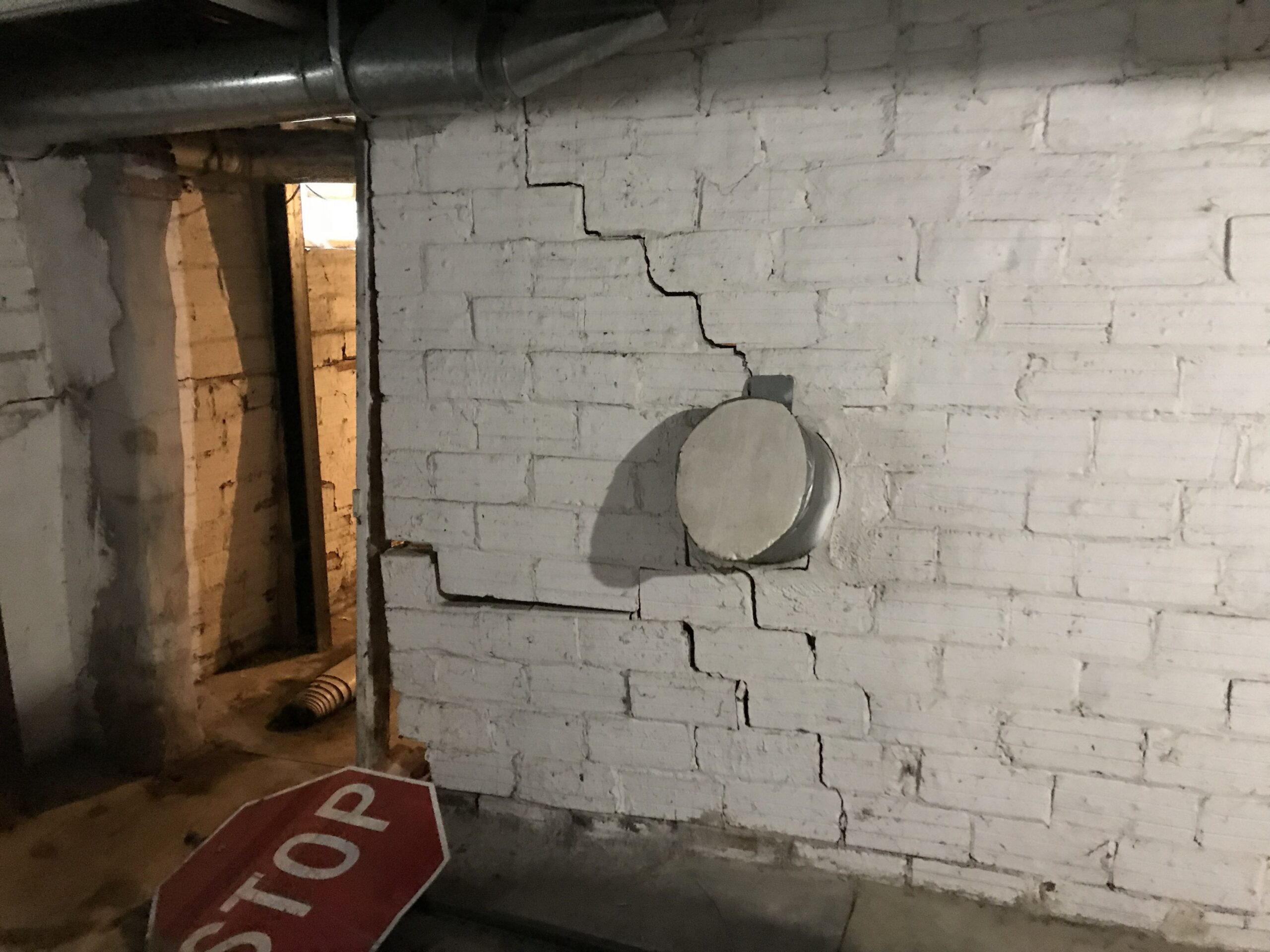
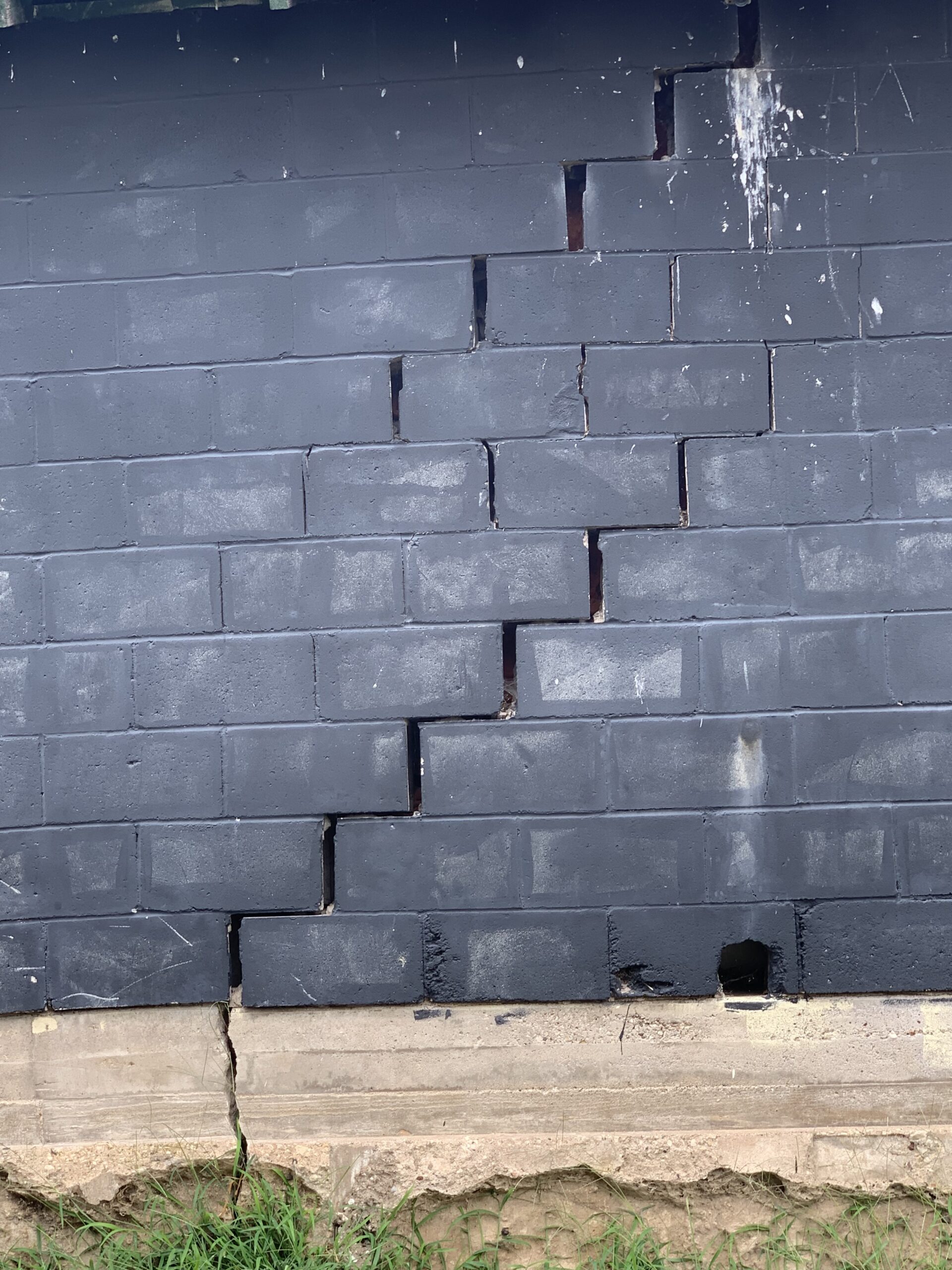
A stair-step crack is exactly what it sounds like: a crack that climbs a block or brick wall in a diagonal, staircase pattern, stepping from one joint to the next. It usually means part of the wall has moved relative to another part — a corner settling, or one section shifting. The pattern itself is a clue, but the pattern alone doesn’t tell you how serious it is. For that, you have to look closer at where the crack actually runs.
The one tell that matters most
Here’s the distinction we use, and it’s one any homeowner can understand. If the crack follows the mortar joints — stepping around each block or brick without breaking the units themselves — it can be on the minor end. Mortar is the weakest path, and a crack that stays in the mortar may reflect modest, often old movement. But if the crack runs straight through the block or brick units — splitting the masonry itself, not just the joints — that tells you the wall is being pulled apart with real force, and that’s structural. The units breaking is the difference between “keep an eye on it” and “get this evaluated.”
Is it still moving — or did it stop years ago?
Just as important as how a crack runs is whether it’s still moving. Plenty of stair-step cracks opened up decades ago and have been stable ever since. A crack that was painted over long ago, or siding that was trimmed to clear a door years back, can be evidence that the movement already finished. When it’s unclear, the honest approach is to establish a reference and watch it over time rather than guess. A stable, historic crack and an actively-widening one can look identical on the day you first notice them — but they call for very different responses.
What’s usually behind it
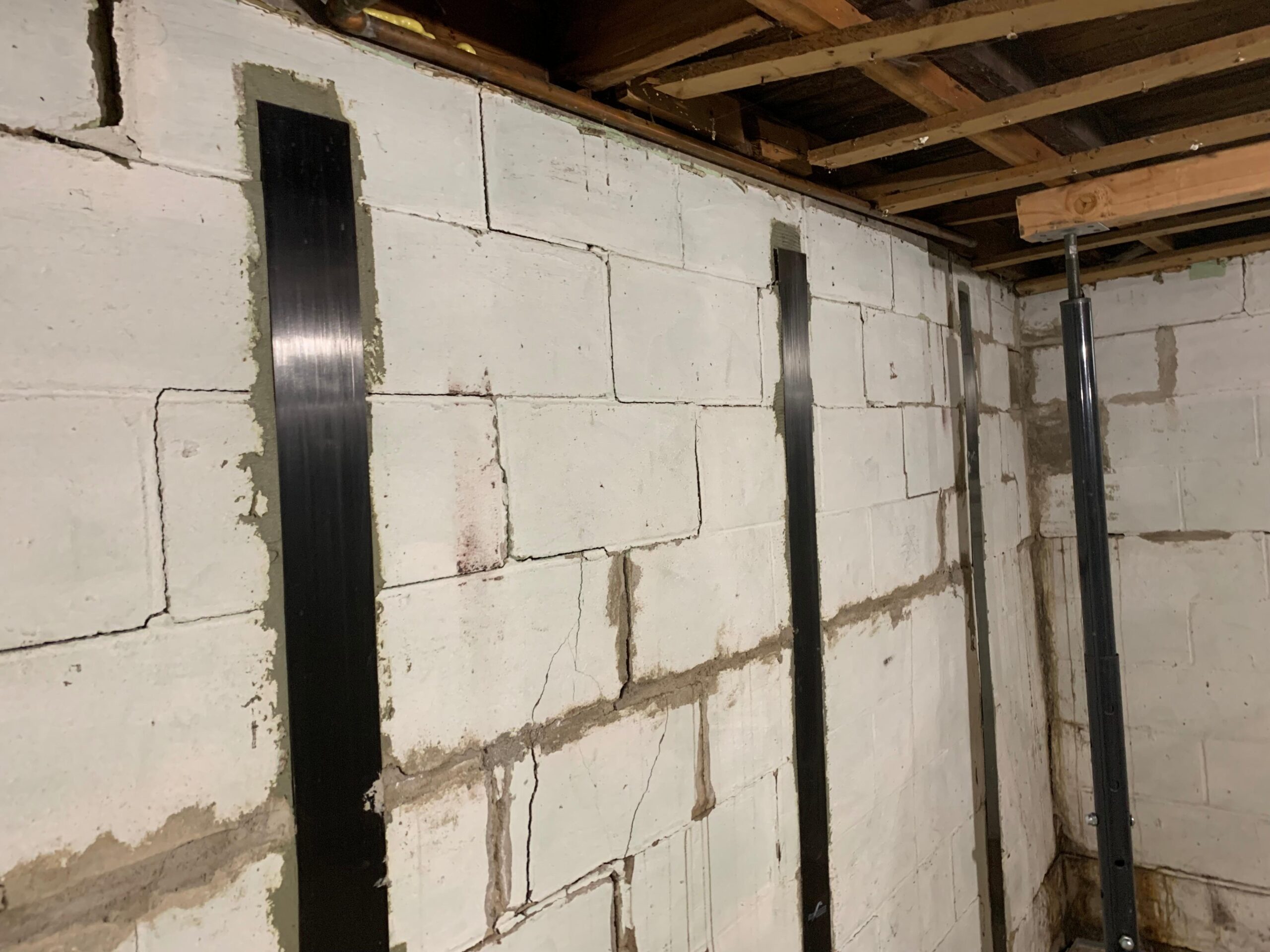
Stair-step cracks generally trace back to one of two things: a footing that has settled unevenly (one corner dropping), or lateral pressure pushing a wall — and behind both, more often than not, is water in the soil. Sometimes a single building shows two different problems at once, which is why a real diagnosis looks at the whole wall and the drainage around it, not just the crack. Reading the crack is the start of the answer, not the end of it.
So how worried should you be?
If your cracks follow the joints, aren’t changing, and the wall is otherwise sound, you may be looking at monitoring and cosmetic repair. If the cracks run through the units, are widening, or come with a corner that’s visibly dropped or a wall that’s leaning, it’s worth a real look. Either way, an evaluation tells you which camp you’re in — and if you’re already holding a repair quote that feels oversized for what you’re seeing, that’s exactly what a second opinion is for. You can also read more about why one corner settles and how foundation cracks are evaluated.
Common questions
Are stair-step cracks always serious?
No. Cracks that follow the mortar joints without breaking the block or brick can be on the minor end, especially if they’re old and stable. Cracks that run through the units themselves are the ones that signal real structural movement.
How can I tell if a stair-step crack is structural?
Look at whether the crack breaks the blocks or bricks or just steps around them through the mortar. Through the units means the wall is being pulled apart with force — structural. Along the joints may be minor. Widening over time or a dropped corner also point to structural.
My crack was there when I bought the house — is that bad?
Not necessarily. Many stair-step cracks moved years ago and then stopped. Signs of old, finished movement — paint over the crack, trimmed siding — are reassuring. When it’s unclear, measuring and watching over time settles it.
What causes stair-step cracks?
Usually uneven footing settlement or lateral soil pressure on the wall — and behind both is often water in the soil. That’s why a good evaluation looks at the drainage and the whole wall, not just the crack.
Should I just fill the crack?
Filling seals it but doesn’t stop whatever is causing it. If the wall is still moving, a filled crack reopens or a new one appears. Sealing makes sense once the cause is understood and addressed — not as a substitute for it.