
Why Basements Leak During Winter Thaws and Snowmelt
A basement can stay dry all summer and then leak in the dead of winter. Snowmelt, frozen ground, and freeze-thaw all gang up on your foundation. Here’s what’s happening — and how to stop it.
Winter leaks surprise people because it’s cold and “it’s not even raining.” But winter has its own ways of driving water against your foundation, and in the Quad Cities the freeze-thaw swings make it worse. Understanding why is the first step to keeping your basement dry.

Why a dry basement suddenly leaks
In winter, melting snow has nowhere to go — the ground is frozen and can’t absorb it — so water pools against your foundation and finds any crack or weak spot. Add freeze-thaw widening those cracks and frozen discharge lines backing water up, and a basement that seemed fine suddenly leaks.
Frozen ground can’t soak up the melt
When snow melts during a thaw or a sunny afternoon, that water normally soaks into the soil. But frozen ground is like pavement — it sheds water instead of absorbing it. The melt runs along the surface and collects right where the ground slopes toward your house: against the foundation.
Why winter melt ends up in your basement
The freeze-thaw cycle pries cracks open
Water that seeps into a foundation crack expands about 9% when it freezes, widening the crack a little each cycle. Our winters swing above and below freezing constantly, so a hairline crack gets worked wider all season — giving the next round of meltwater an easier path inside.
Snow against the house — and frozen discharge lines
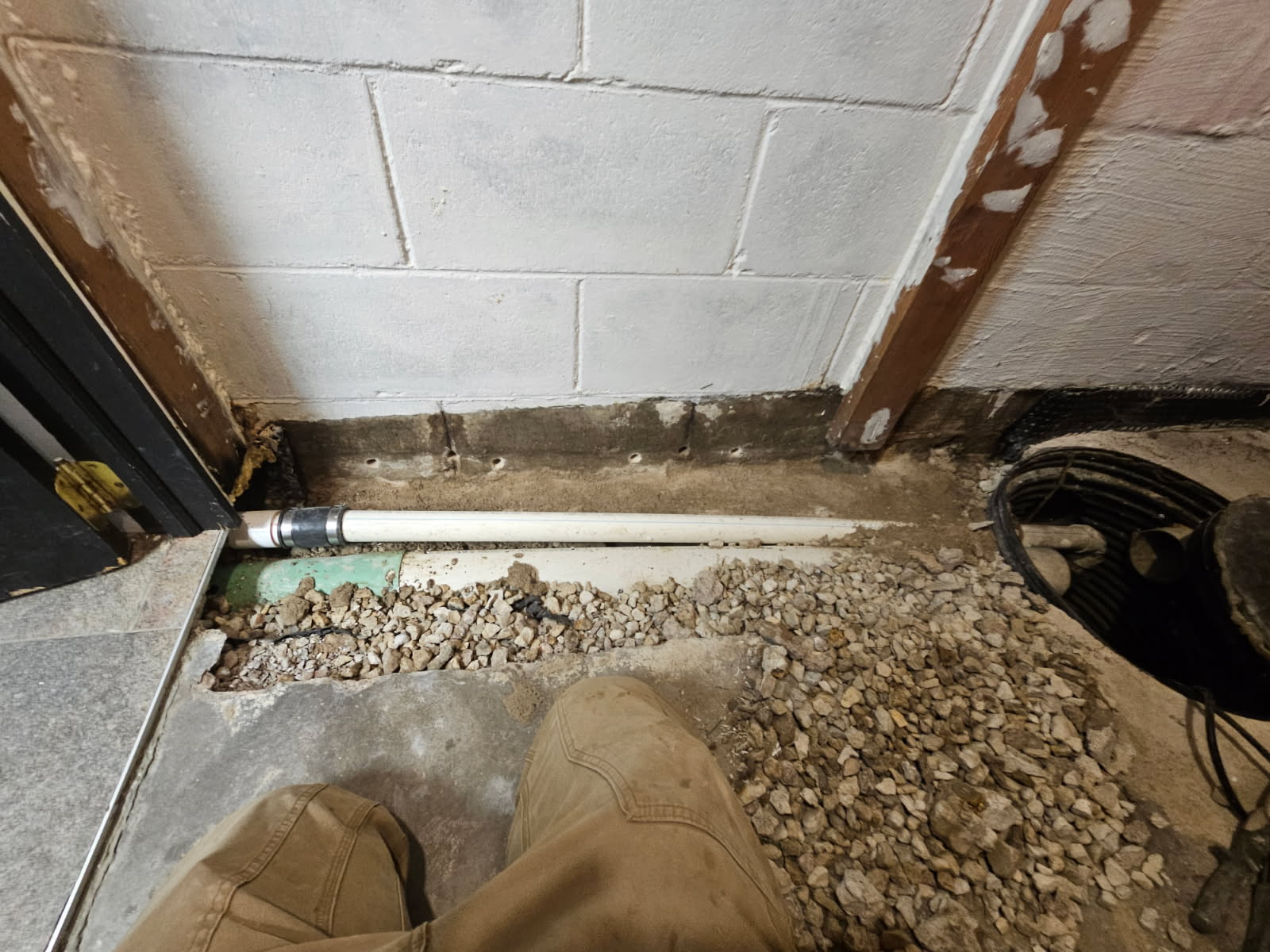
Shoveled or plowed snow banked against the foundation is a reservoir waiting to melt, saturating the soil next to your basement wall. Ice dams and clogged gutters make it worse by dumping roof melt straight down at the foundation. And if your sump pump or downspout discharge line freezes or is buried in snow, the water backs up and can overwhelm the system right when you need it.
10% off interior foundation & waterproofing work — book by April 1
Interior foundation repair and basement waterproofing. Book by April 1 — winter spots are limited and filling up.
How to stop winter leaks
- Keep snow shoveled away from the foundation, not piled against it.
- Make sure gutters are clear and downspouts carry water several feet from the house.
- Keep sump pump and drain discharge lines clear of ice and snow.
- Fix the real source: proper drainage, interior drain tile, and crack repair stop water before it gets in — and winter is a great time to do it.
Common questions
Why is my basement leaking in winter when it’s not raining?
Melting snow can’t soak into frozen ground, so it pools against your foundation and finds cracks — the same way rain would. Freeze-thaw also widens those cracks all winter.
Does snow against the house cause basement leaks?
It can. Snow banked against the foundation melts and saturates the soil right next to your basement wall, so it’s best kept shoveled away from the house.
Can my sump pump freeze?
The discharge line can freeze or get buried in snow, which backs water up. Keeping that line clear and draining well away from the house is important in winter.
Can a winter leak be fixed in winter?
Yes. Interior waterproofing, drain tile, and sump systems are installed from inside the basement, so we can solve a winter leak without waiting for spring.