
Vehicle Impact Foundation Wall Rebuild — Rock Island, Illinois
A vehicle struck this Rock Island, Illinois home and damaged roughly 22 feet of foundation wall. Behncke Construction rebuilt the damaged east and south wall sections with reinforced masonry and bond beam block on a structural engineer’s recommendation.
PROJECT SUMMARY
Date posted: August 15, 2026
Service: Structural foundation and masonry repair
Location: Rock Island, Illinois
Problem: A vehicle struck the house, damaging approximately 22 feet of foundation wall
Solution: Damaged sections of the east and south walls rebuilt with reinforcing steel in the block cavities, bond beam block where required, a replaced sill plate, and repaired mortar joints
Foundation type: Concrete block
Completion status: Completed
Project photos
Project overview
A home in Rock Island, Illinois was struck by a vehicle, damaging roughly 22 feet of its foundation wall. After evaluating the damage, the structural engineer on the project recommended Behncke Construction to carry out the repairs. Given the nature of the damage, the work was scheduled and completed as quickly as the crew could arrange it.
Project details
The crew rebuilt the damaged sections of the east and south foundation walls. Reinforcing steel was installed within the block cavities, bond beam block was used where required, the damaged sill plate was replaced, and cracked mortar joints were repaired. The rebuilt sections were reconstructed as reinforced masonry and tied back into the surrounding wall.
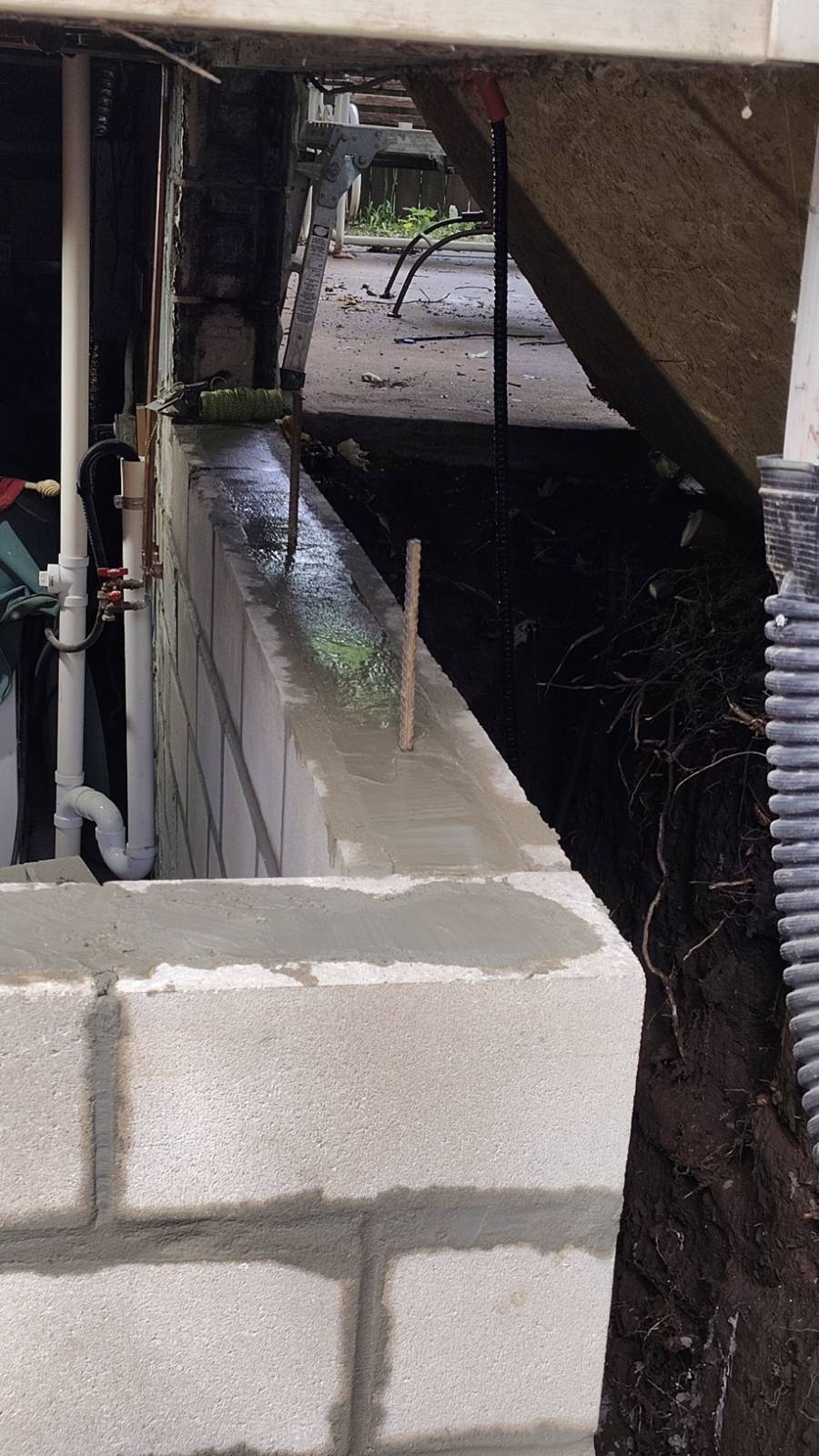
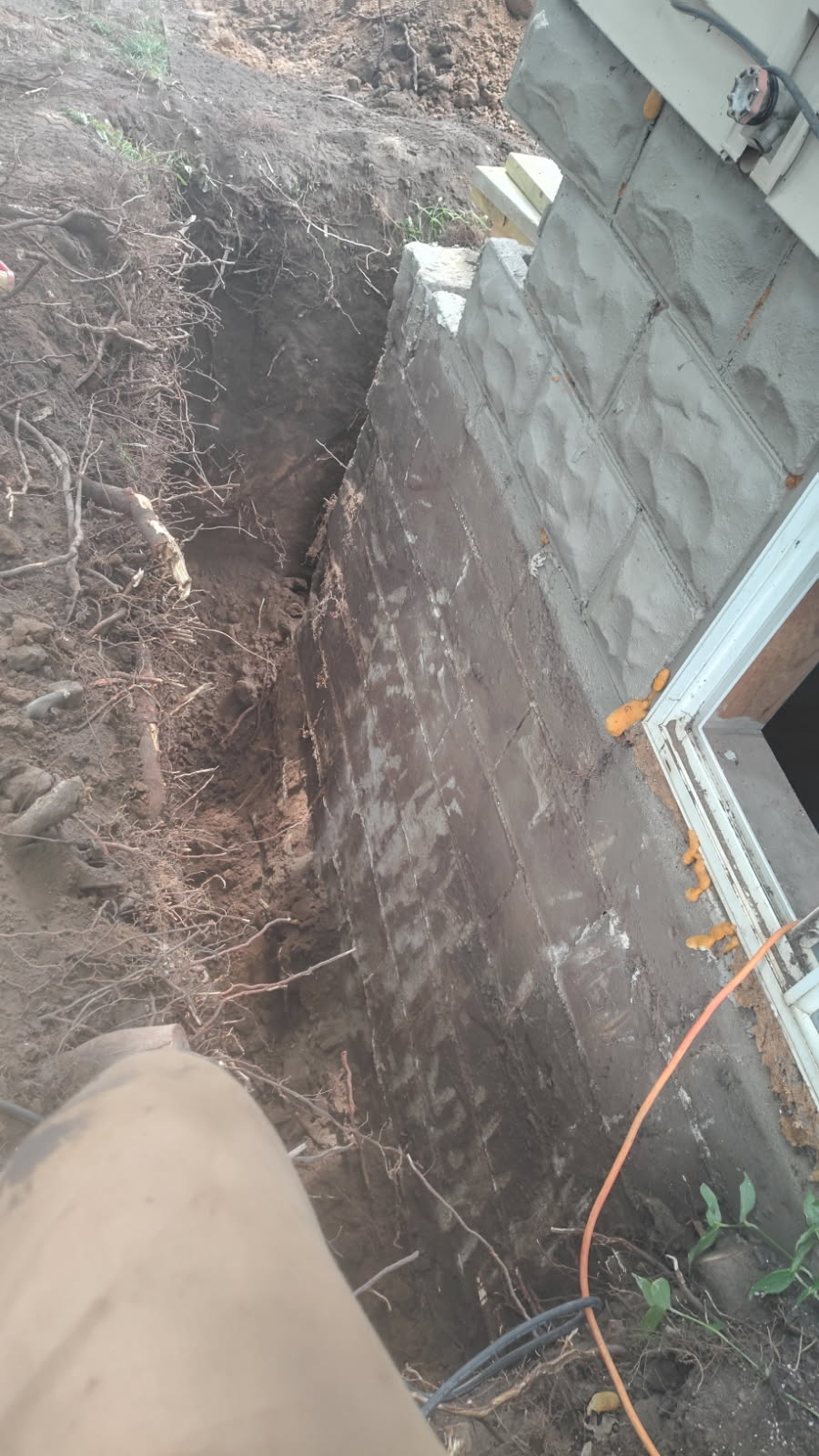
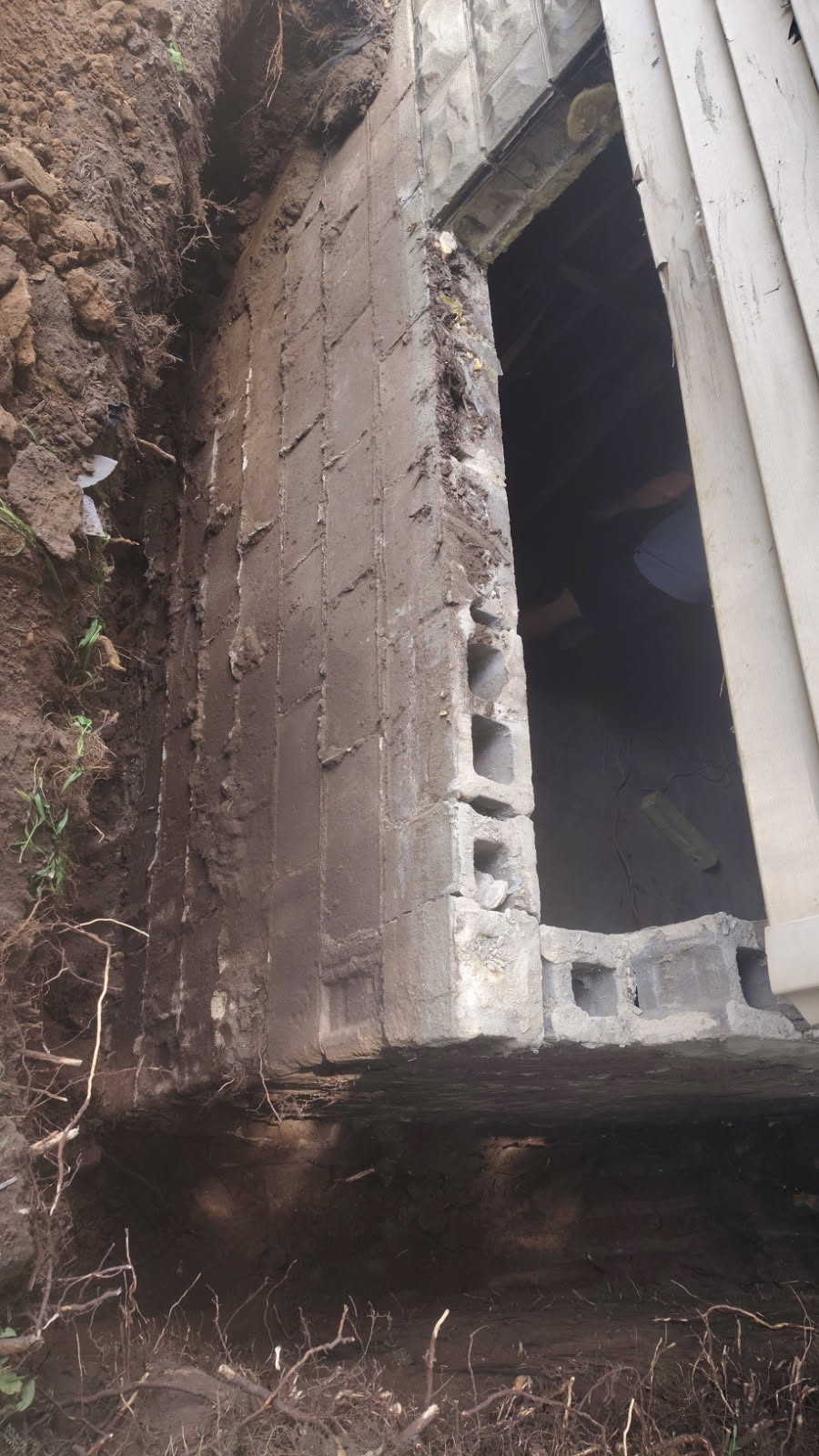
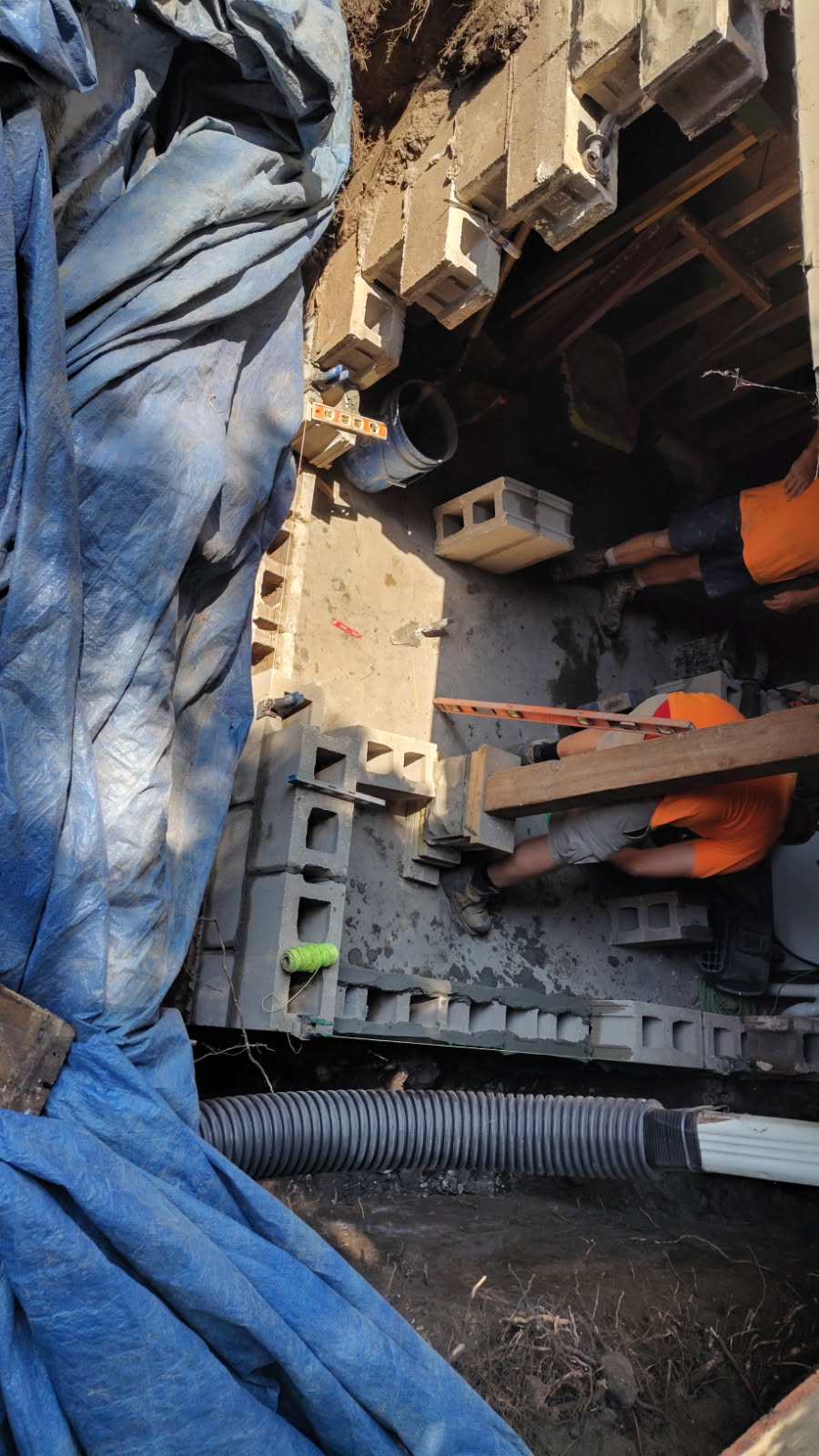
Temporary shoring carried the load above the work area while the damaged courses were removed and the new wall was laid up. The photos below show the sequence: shoring in place, block staged alongside the open excavation, vertical steel set in the block cavities, bond beam courses grouted so horizontal reinforcing runs continuously, and the rebuilt wall tied back in.
What homeowners should know
Impact damage is a different problem from the foundation failures most homeowners read about. Settlement, bowing, and cracking develop over years as soil and water act on a wall, and the repair is usually about arresting or reversing that movement. A vehicle strike does something else entirely: it removes a section of wall that was carrying load, all at once, and the wall above and beside it is left spanning a gap it was never designed to span.
That changes the priorities. The house typically has to be temporarily supported before damaged material comes out, and the rebuilt section has to be tied into the existing wall so the two behave as one wall again rather than as two pieces meeting at a seam. In reinforced masonry this is often done with steel set vertically in grouted block cells and with bond beam courses — block laid so that horizontal reinforcing can run continuously through the wall. Our Learning Center article on how wall reinforcement works covers the general principle in more detail.
If a vehicle, tree, or equipment has hit your house, treat it as urgent even if the wall appears to be standing normally. Sudden damage to a load-bearing wall is one situation where a structural engineer’s evaluation before repair is genuinely worthwhile.
Photo highlights
- A new course of block going in, with a temporary shoring post carrying the structure above.
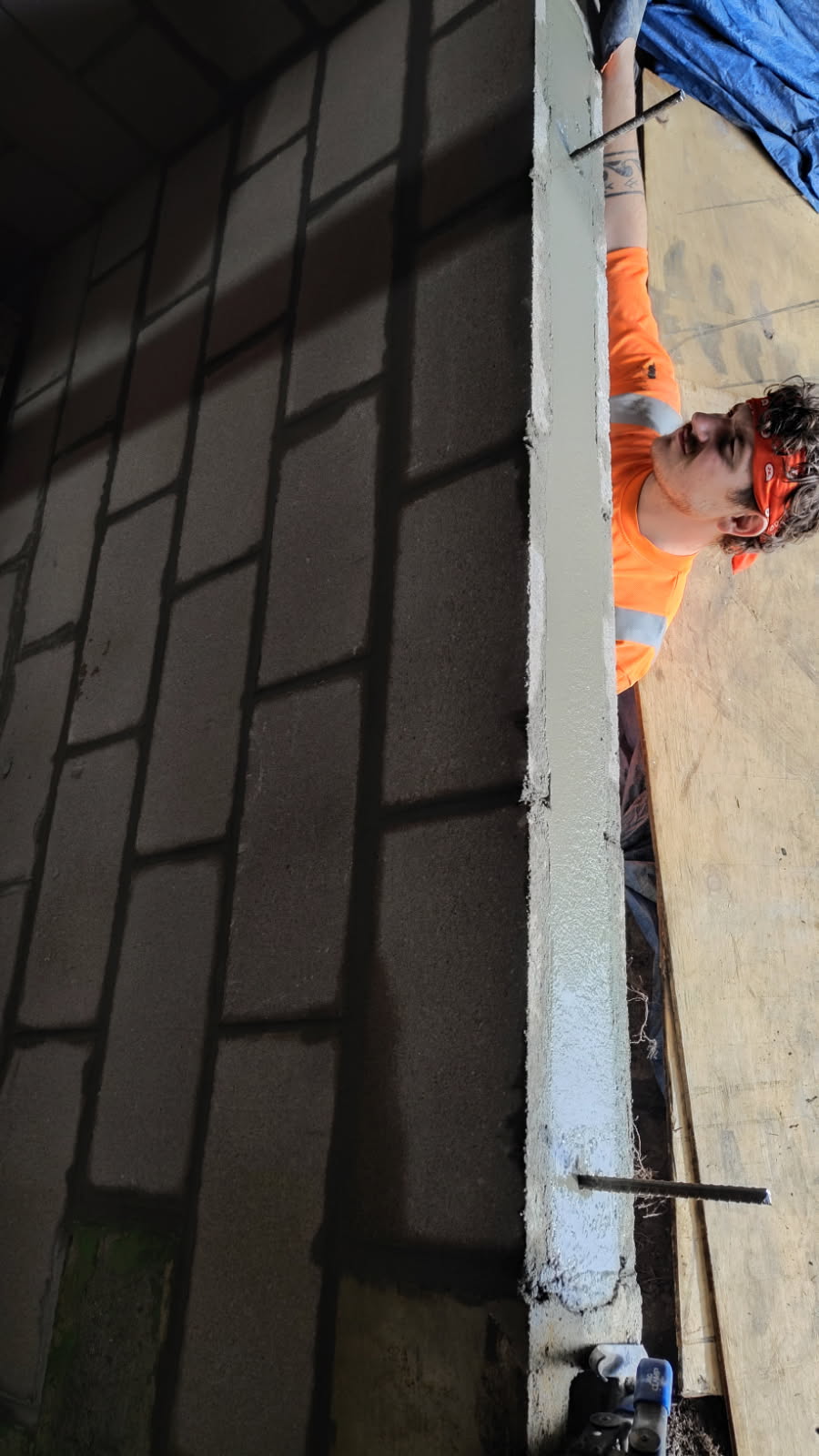
- The rebuilt block foundation wall with fresh mortar joints, seen from the open excavation.
- The excavation opened along the length of the damaged wall.
- Block staged and bracing set up alongside the open excavation.
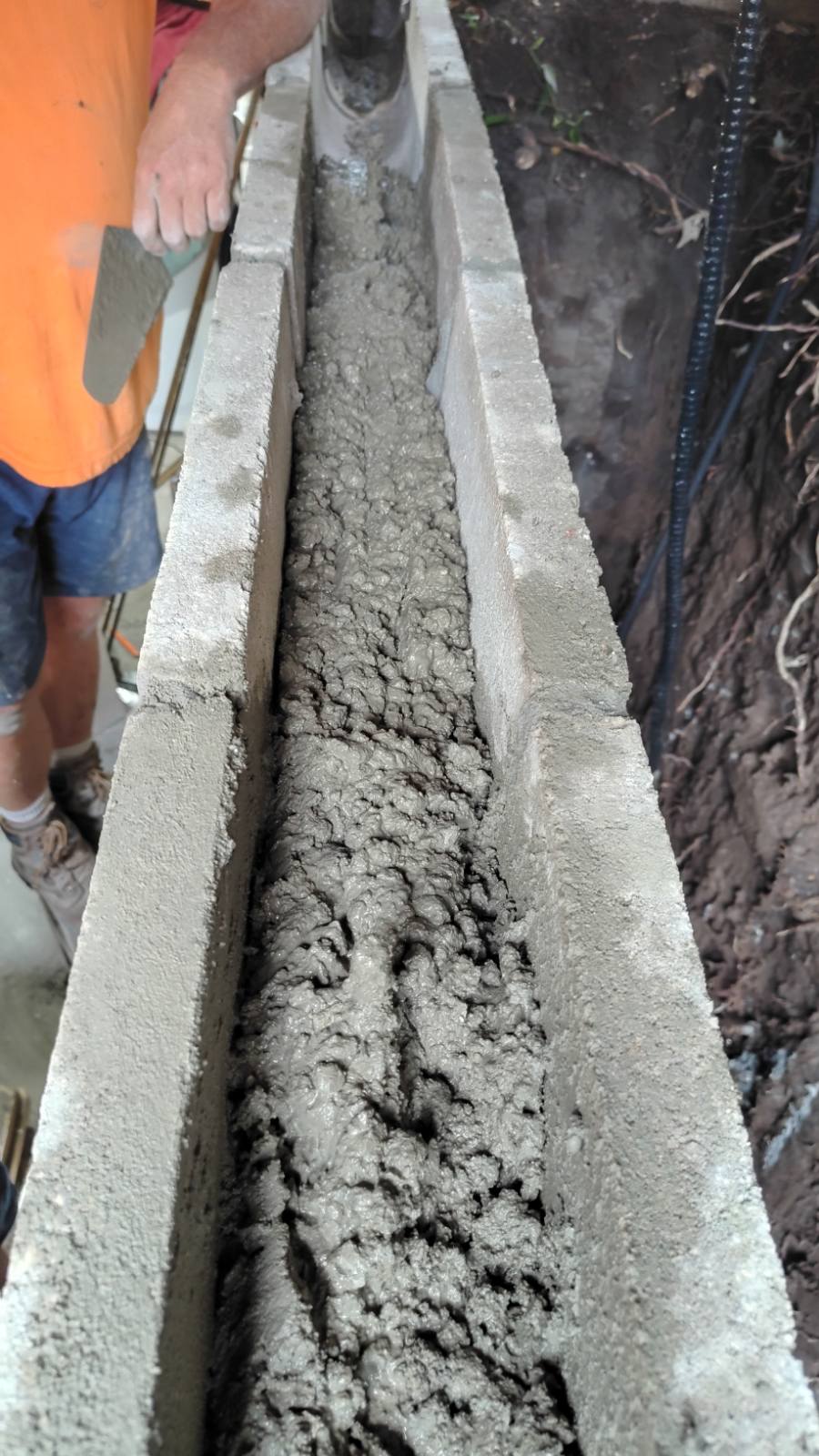
- A bond beam course filled with grout so horizontal reinforcing runs continuously through the wall.
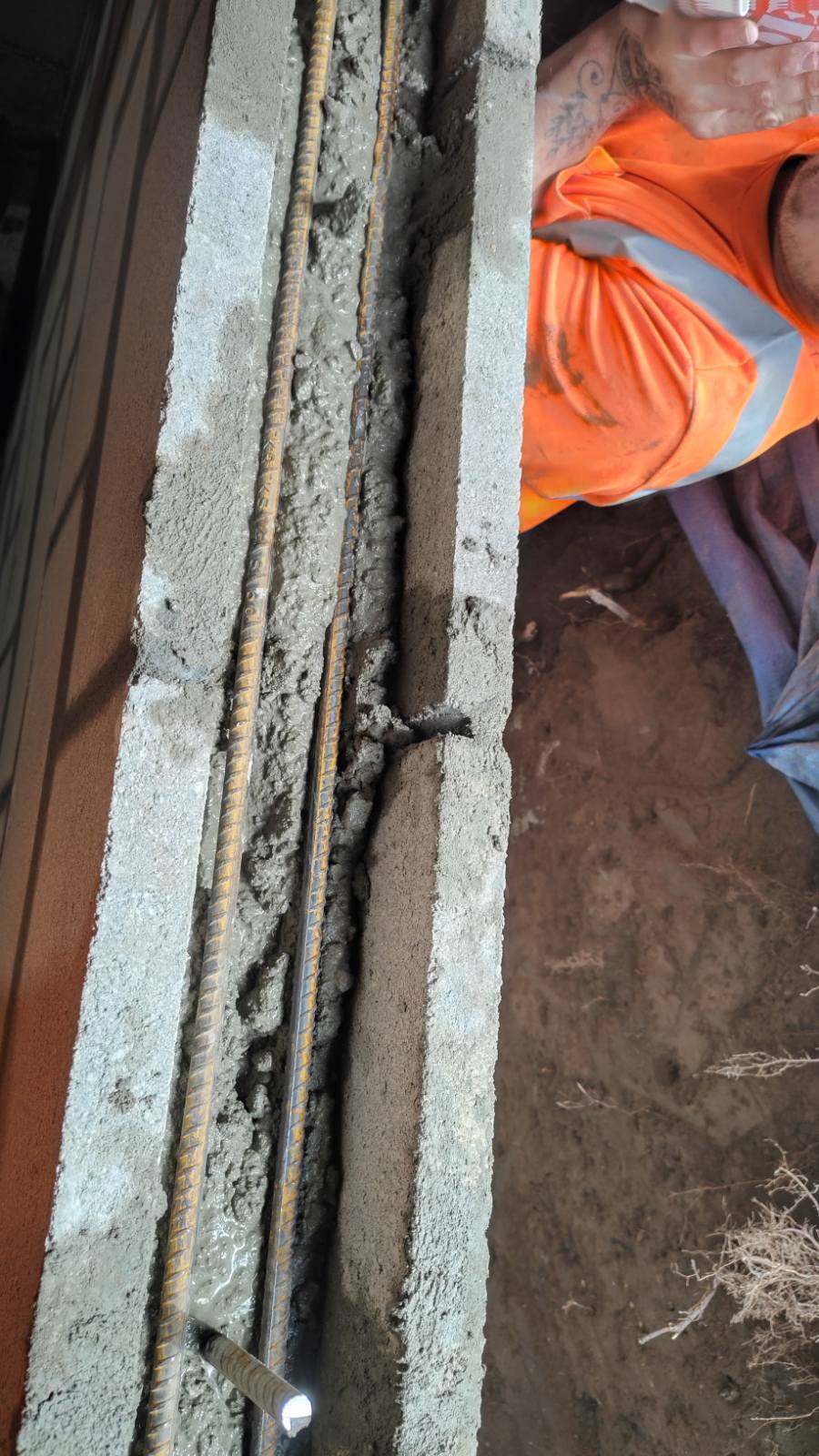
- A grouted vertical cell tying the new courses together.
- Reinforcing steel set vertically inside a block cavity before grouting.
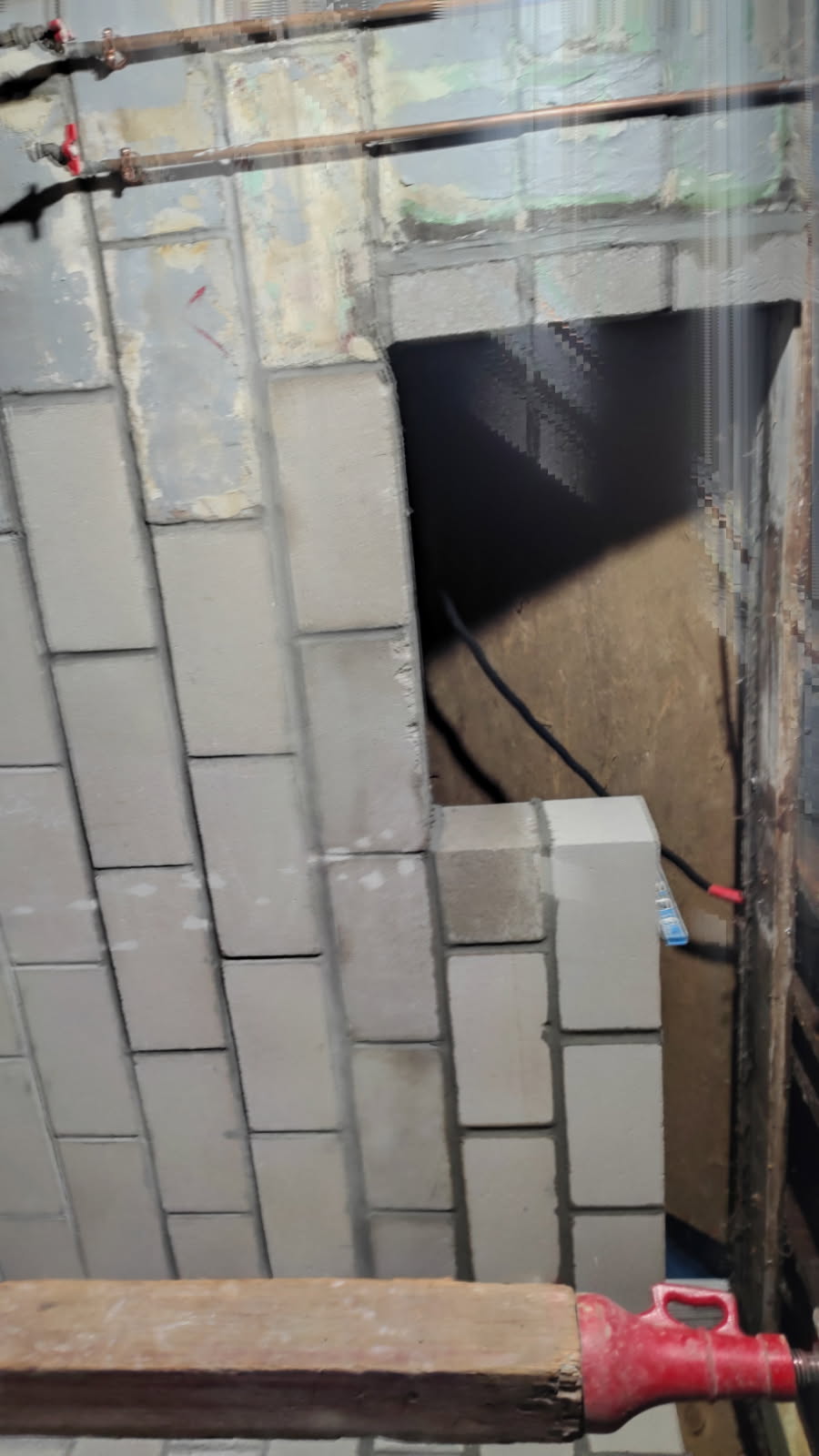
- The rebuilt wall seen from inside, with the new courses tied in around the opening.
Related services
Sudden damage to a foundation wall?
Impact damage to a load-bearing wall should not wait. Behncke Construction works with homeowners and engineers across the Quad Cities. Contact us or call (563) 332-6045.