
Exterior Stucco Repair & Surface Bonding Cement — Bettendorf, Iowa
Cracked and failing exterior stucco in Bettendorf, Iowa removed and rebuilt with premium surface bonding cement — restoring a strong, uniform finish that keeps moisture out.
PROJECT SUMMARY
Date posted: July 16, 2026
Service: Exterior stucco repair & surface bonding
Location: Bettendorf, Iowa
Problem: Cracked, loose, and deteriorated stucco allowing moisture behind the finish
Solution: Removed all failing material, repaired damaged sections, filled voids, and applied premium surface bonding cement
Materials used: Premium surface bonding cement
Completion status: Completed
Project photos
Project overview
We recently completed another exterior stucco repair in Bettendorf, restoring both the appearance and durability of this home’s exterior. Cracked, loose, and deteriorated stucco not only takes away from a home’s appearance but can also allow moisture to penetrate behind the finish if left unrepaired.
For this project, we removed all failing material, repaired damaged sections, filled voids, and applied a premium surface bonding cement to create a strong, uniform finish that blends with the existing exterior. Proper preparation is essential to achieving a long-lasting repair, which is why we never apply new material over loose or deteriorated stucco.
At Behncke Construction, we take pride in delivering quality masonry and stucco repairs that stand up to Iowa’s changing weather. Whether your stucco is cracking, flaking, or separating from the wall, repairing it early can help prevent more extensive damage and restore your home’s curb appeal.
If you’re looking for professional stucco repair in Bettendorf, Davenport, Moline, Rock Island, Muscatine, or the surrounding Quad Cities, contact Behncke Construction. We’ve been providing quality masonry craftsmanship since 1948.
Project details
Because new material only lasts if it is bonded to sound substrate, all the loose and deteriorated stucco was removed first. Damaged sections were repaired and voids filled, then a premium surface bonding cement was applied to create a strong, uniform finish that blends with the existing exterior and sheds water.
What homeowners should know
Stucco and surface-bonded masonry finishes protect the wall behind them, so when they crack, flake, or separate the problem isn’t only cosmetic — moisture gets behind the finish and works on the wall itself, and freeze-thaw widens every crack.
The single most important step is preparation. New material can’t bond to loose or deteriorated stucco, so the failing material has to come off first; then voids are filled and a bonding cement is applied for a uniform, weather-resistant finish. Catching it early keeps a small repair from turning into a full re-coat or wall repair.
Related services
Learn more about our masonry repair, or browse more recent projects.
Photo highlights
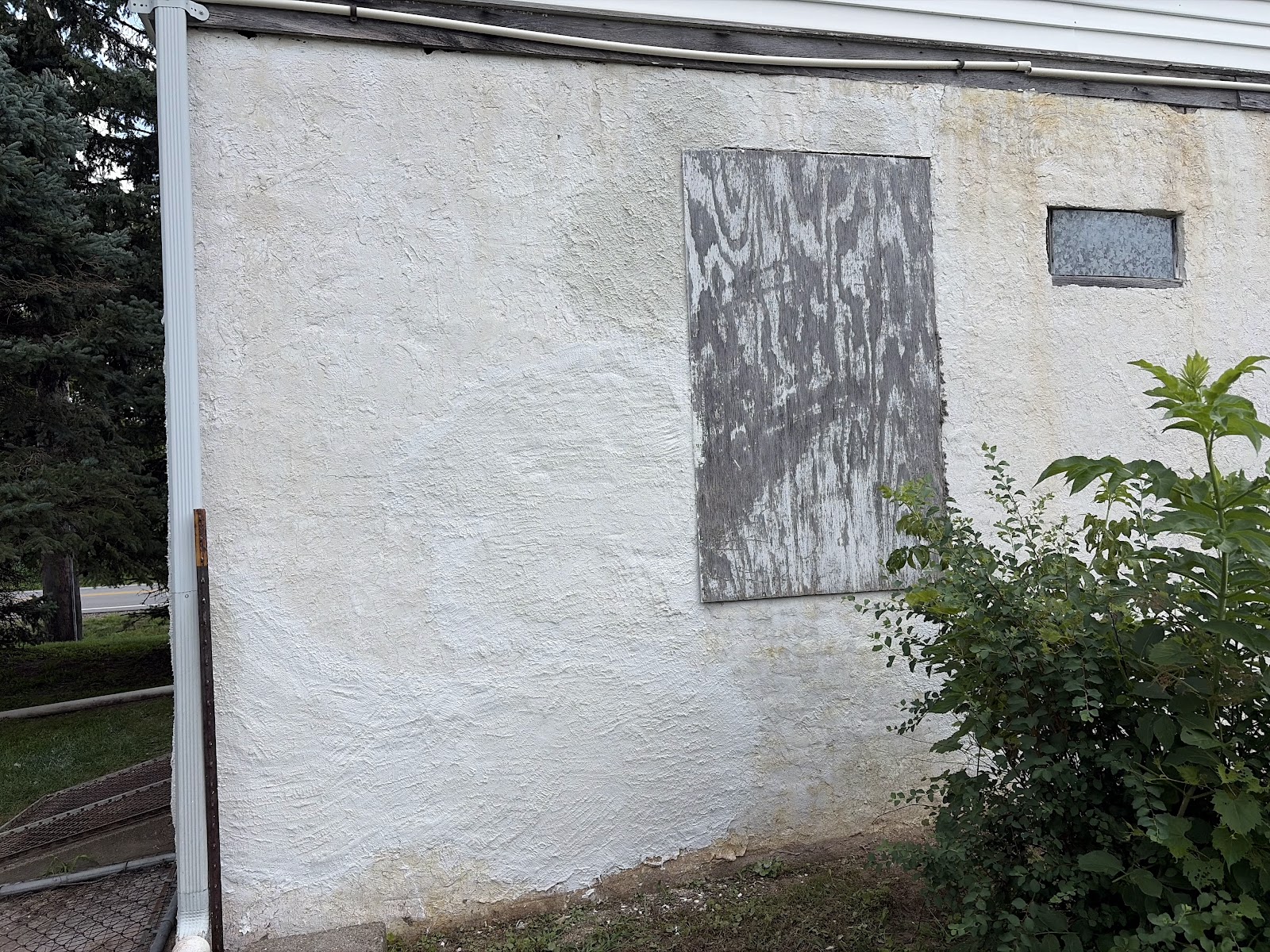
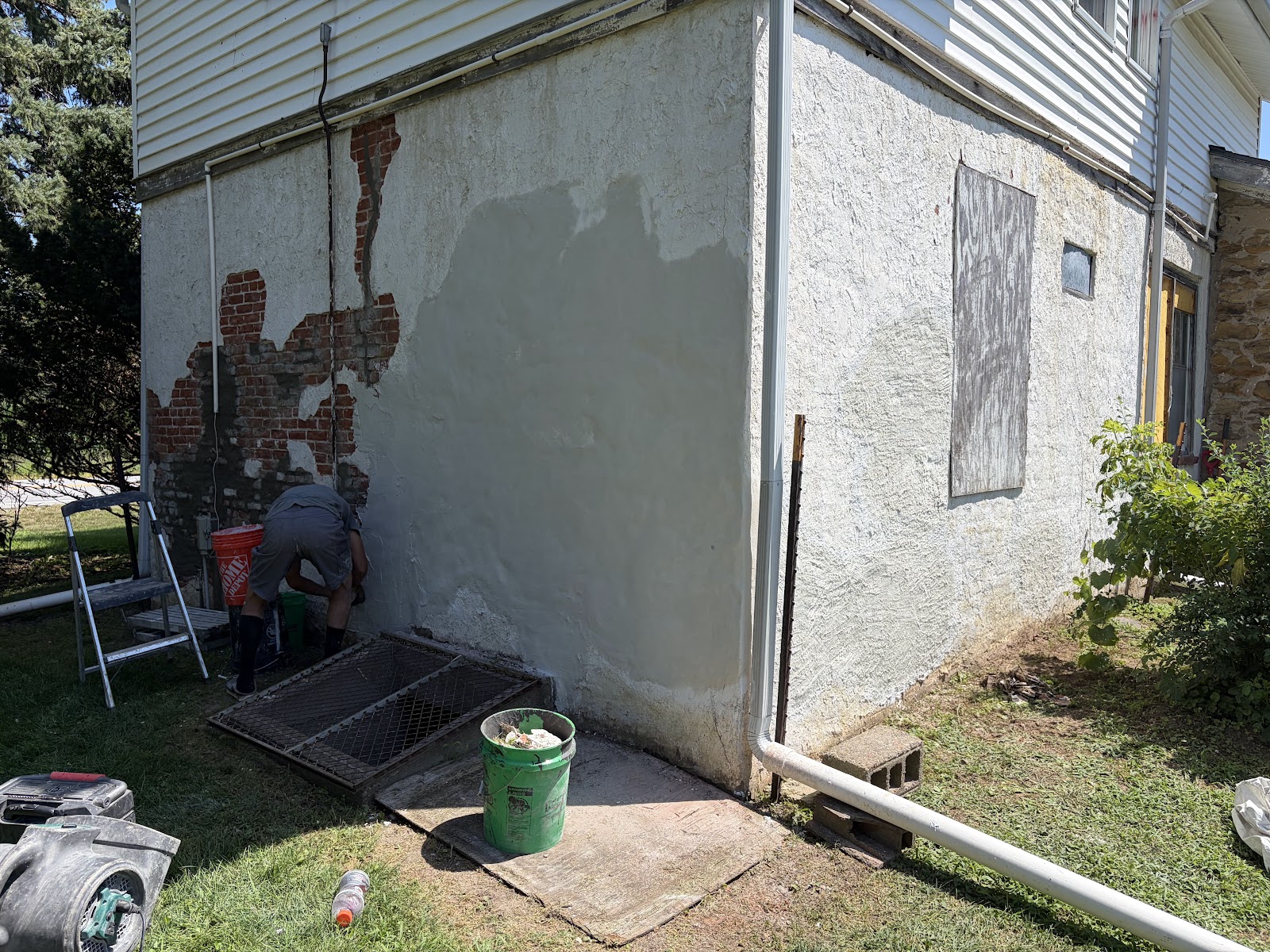
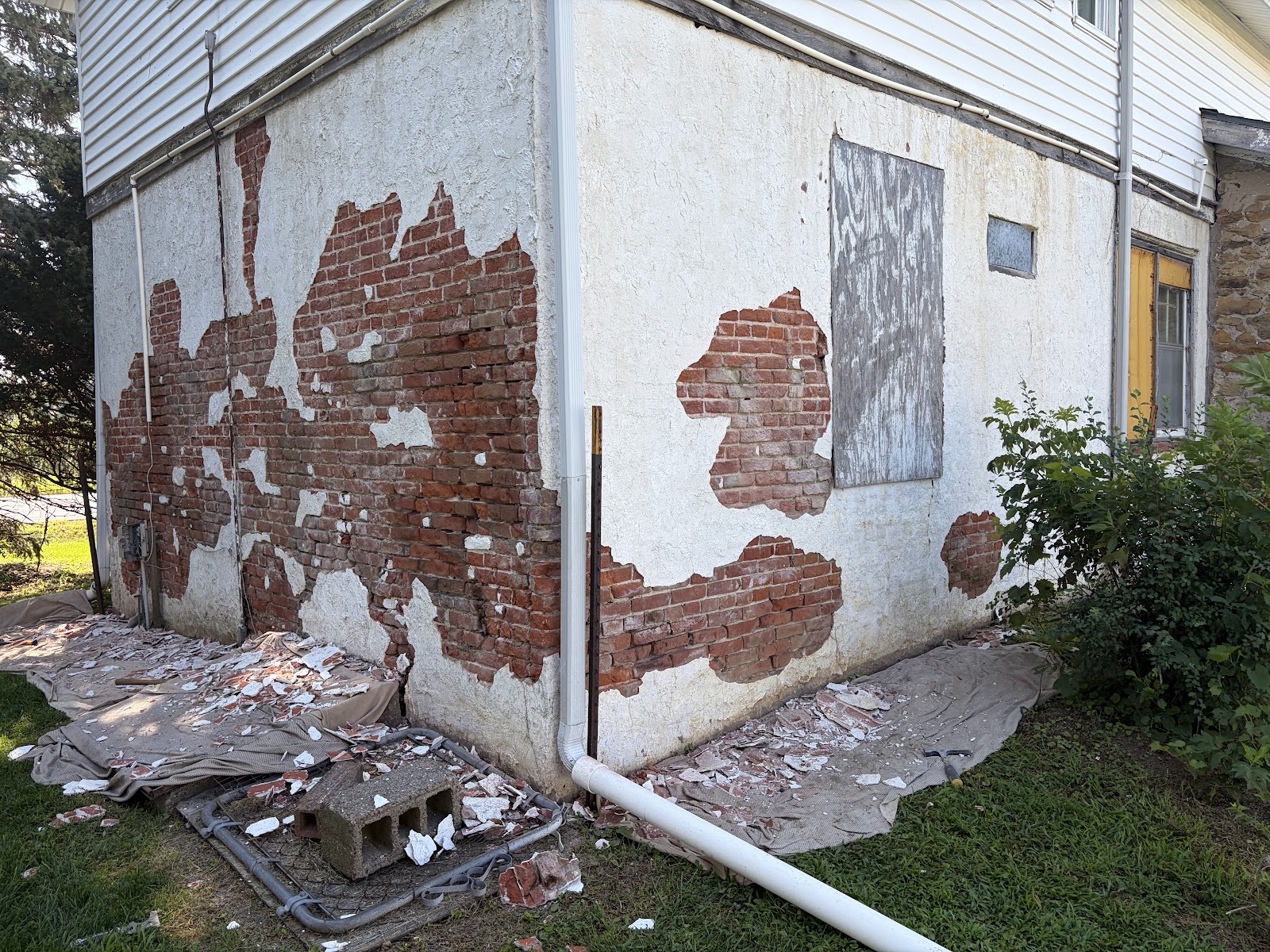
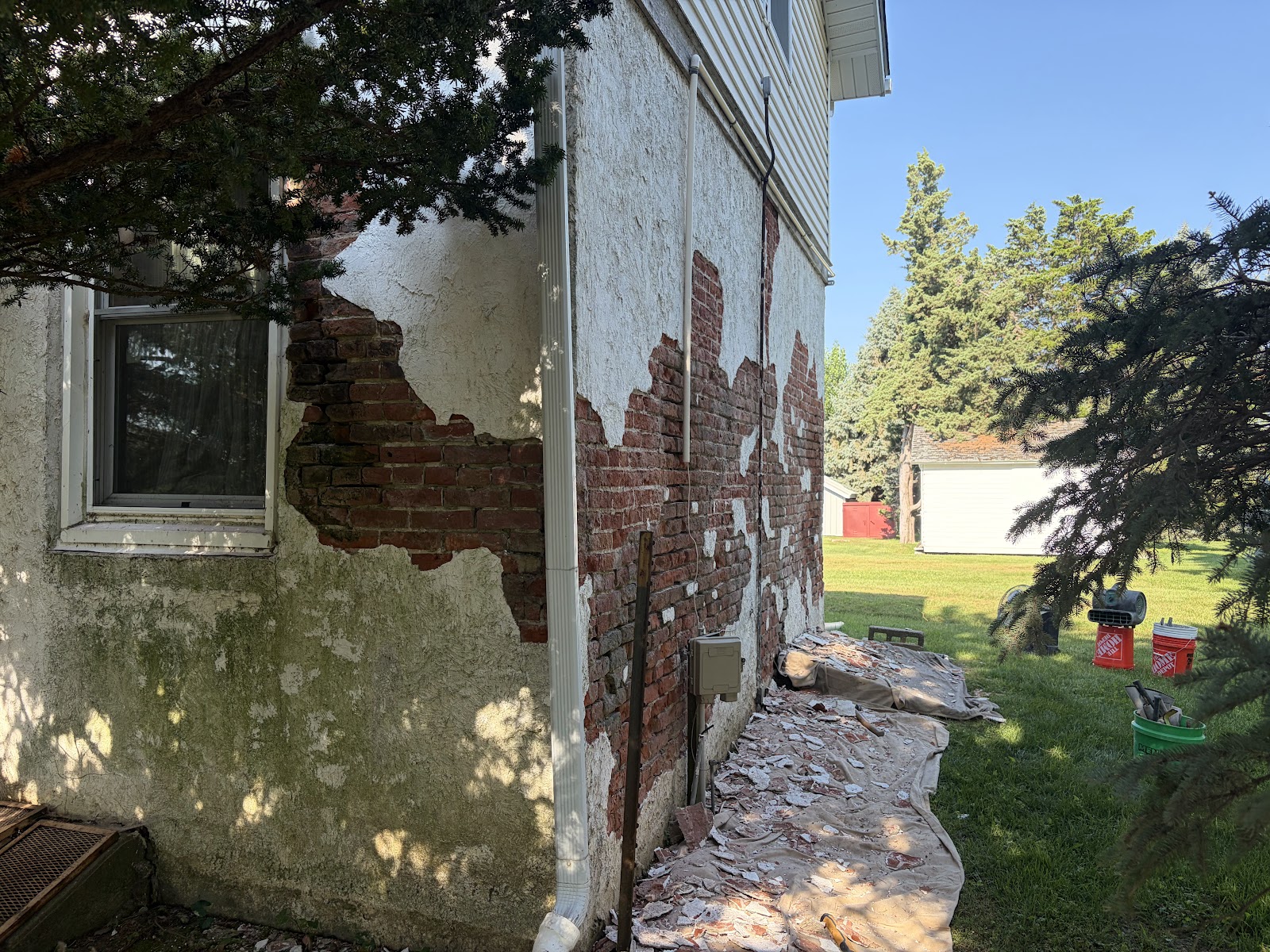
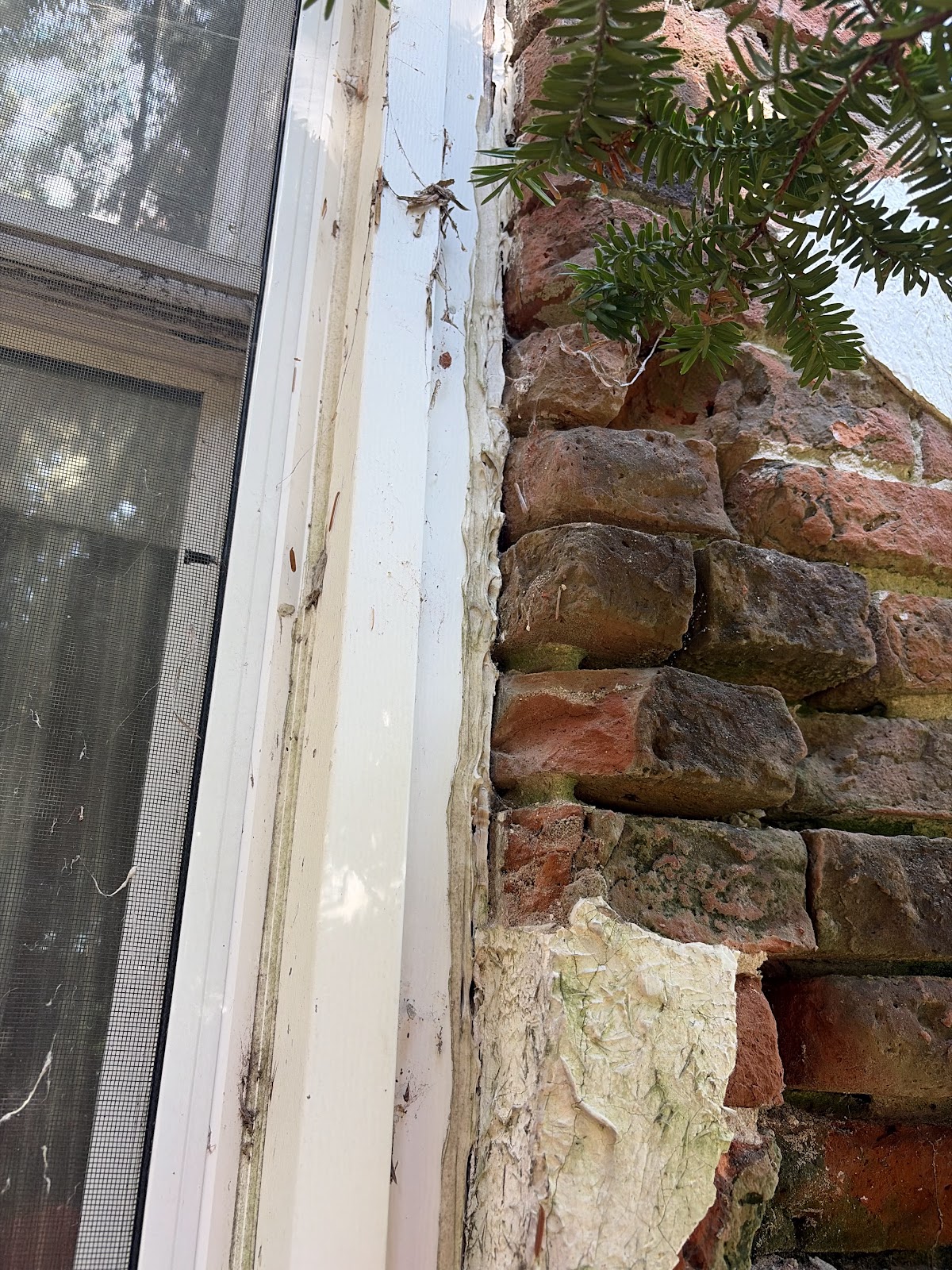
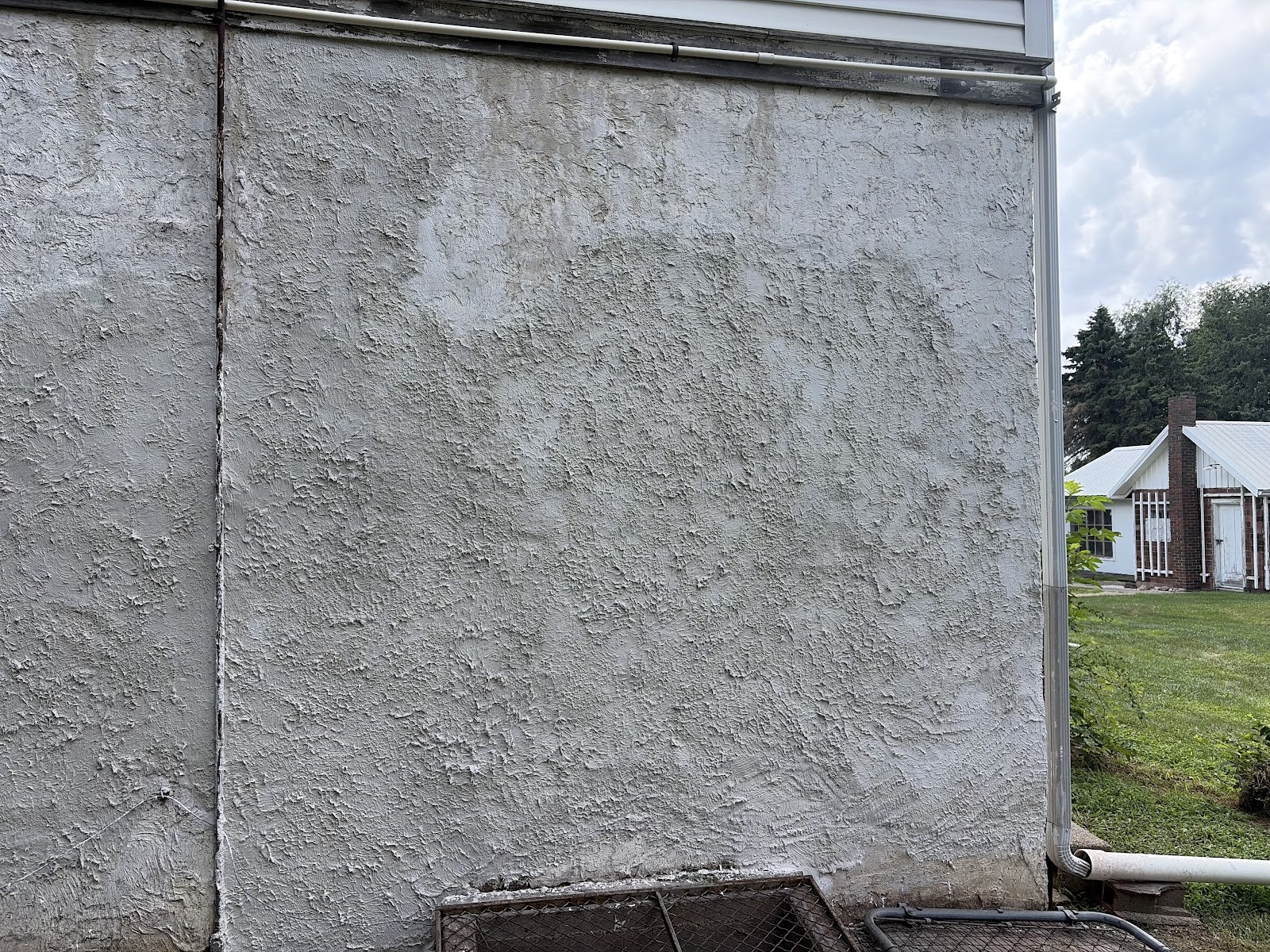
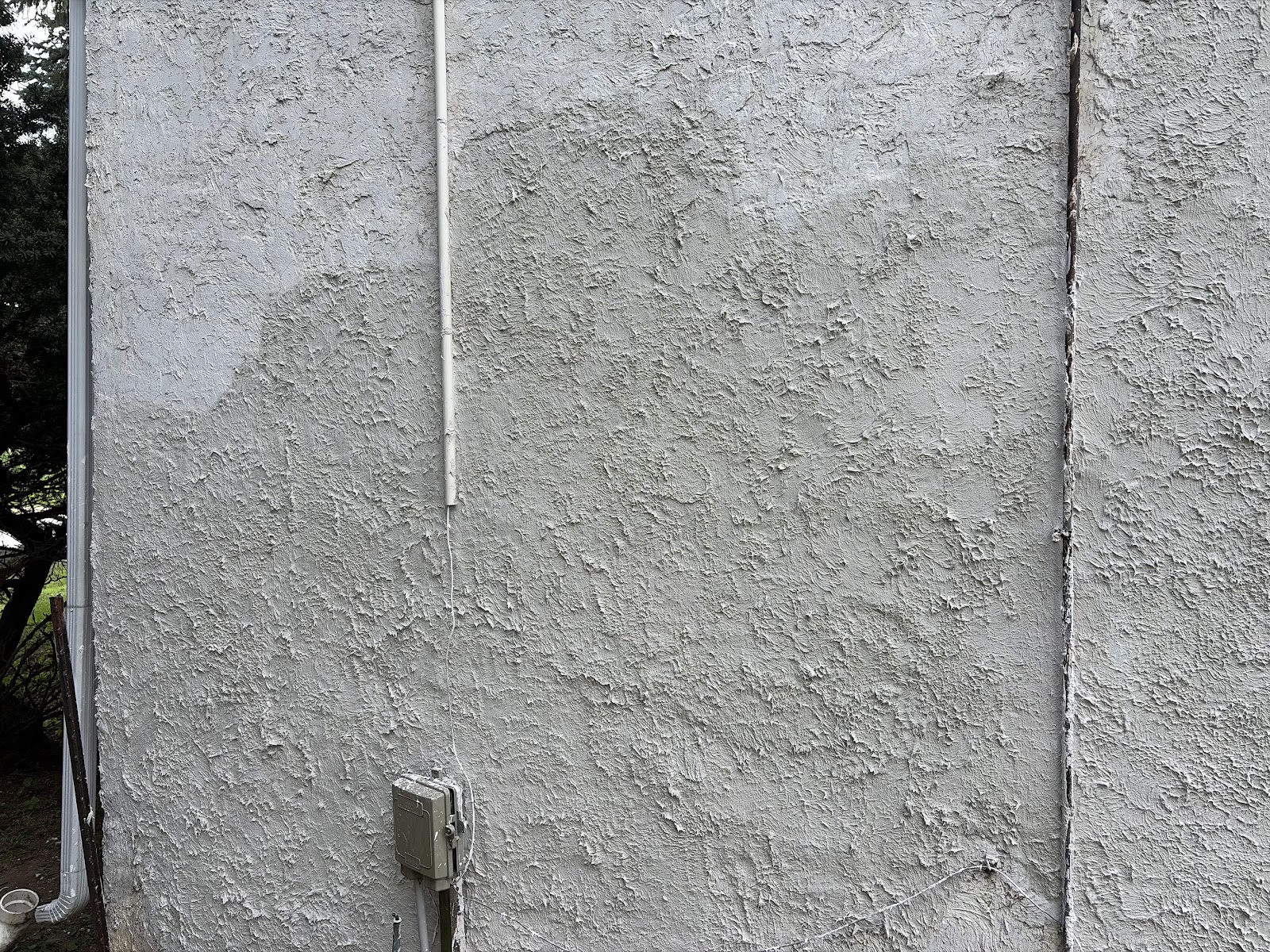
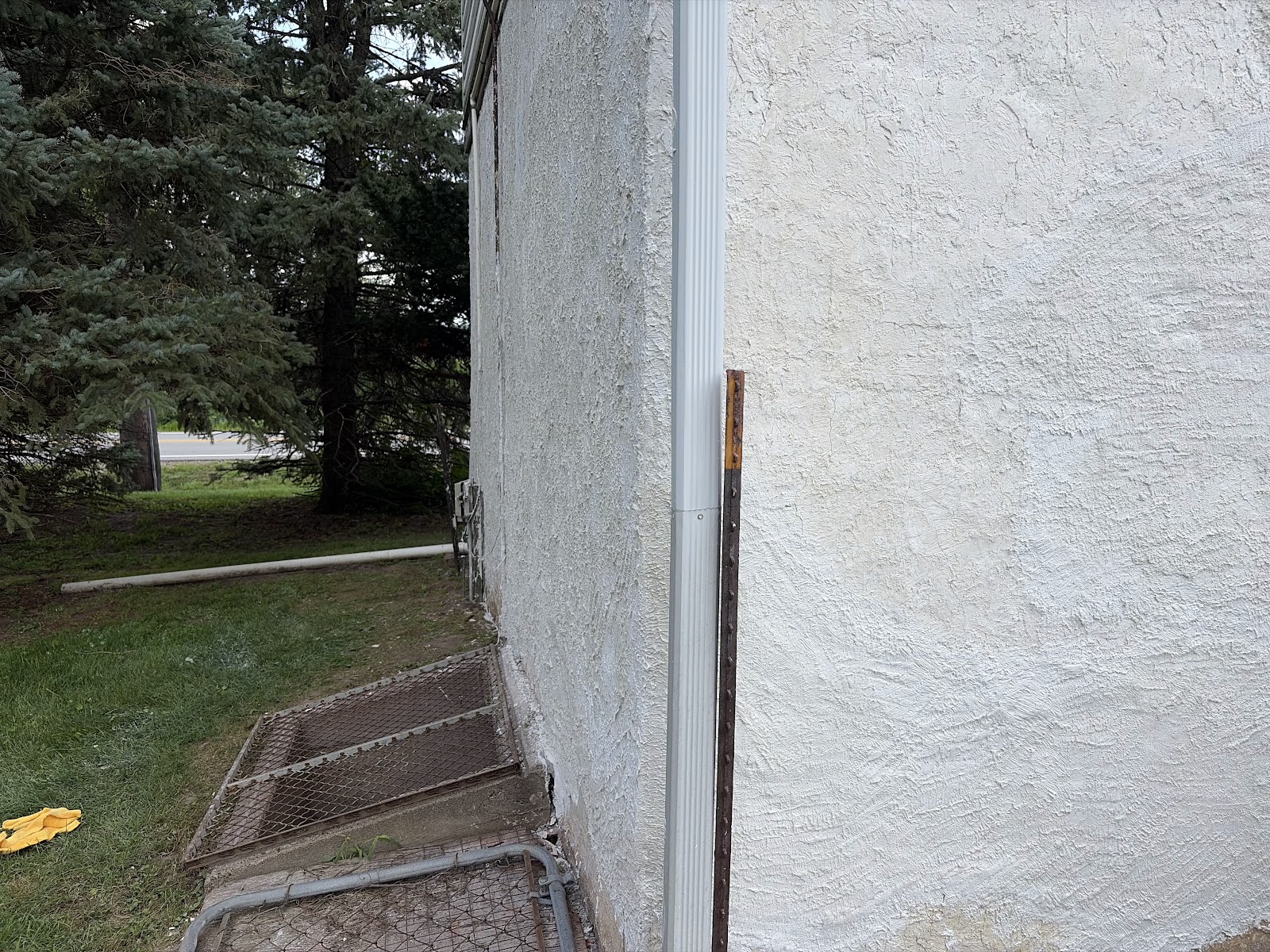
The first photo shows the completed wall — one continuous, uniform finish across the repaired area. The second catches the surface bonding cement going on over the prepared surface, and the third is the condition the crew began with: broad sections where the stucco had come away from the brick beneath it, with the failed material piled along the base of the wall. The remaining photos show the failing stucco along the side elevation, a close-up at a window edge where the removal exposed the brick and stone masonry sitting behind the finish, and the newly coated wall sections carrying their fresh, uniform surface.
Related services & reading
Stucco cracking, flaking, or pulling away?
If your stucco is cracking, bulging, or coming away from the wall behind it, Behncke Construction has been doing masonry work in the Quad Cities since 1948. Book an inspection and we will sound out how much of the finish is still bonded, then tell you honestly how far the repair has to go.
Schedule an inspection