
How Thick Should Concrete Be?
Slab thickness and the base under it decide whether concrete lasts for decades or cracks in a few years. Here are the numbers that matter.
Get a free estimateWhen people ask what makes concrete last, they usually think about the concrete itself. But two things matter just as much: how thick the slab is, and what’s underneath it. Get those right and concrete lasts a generation.
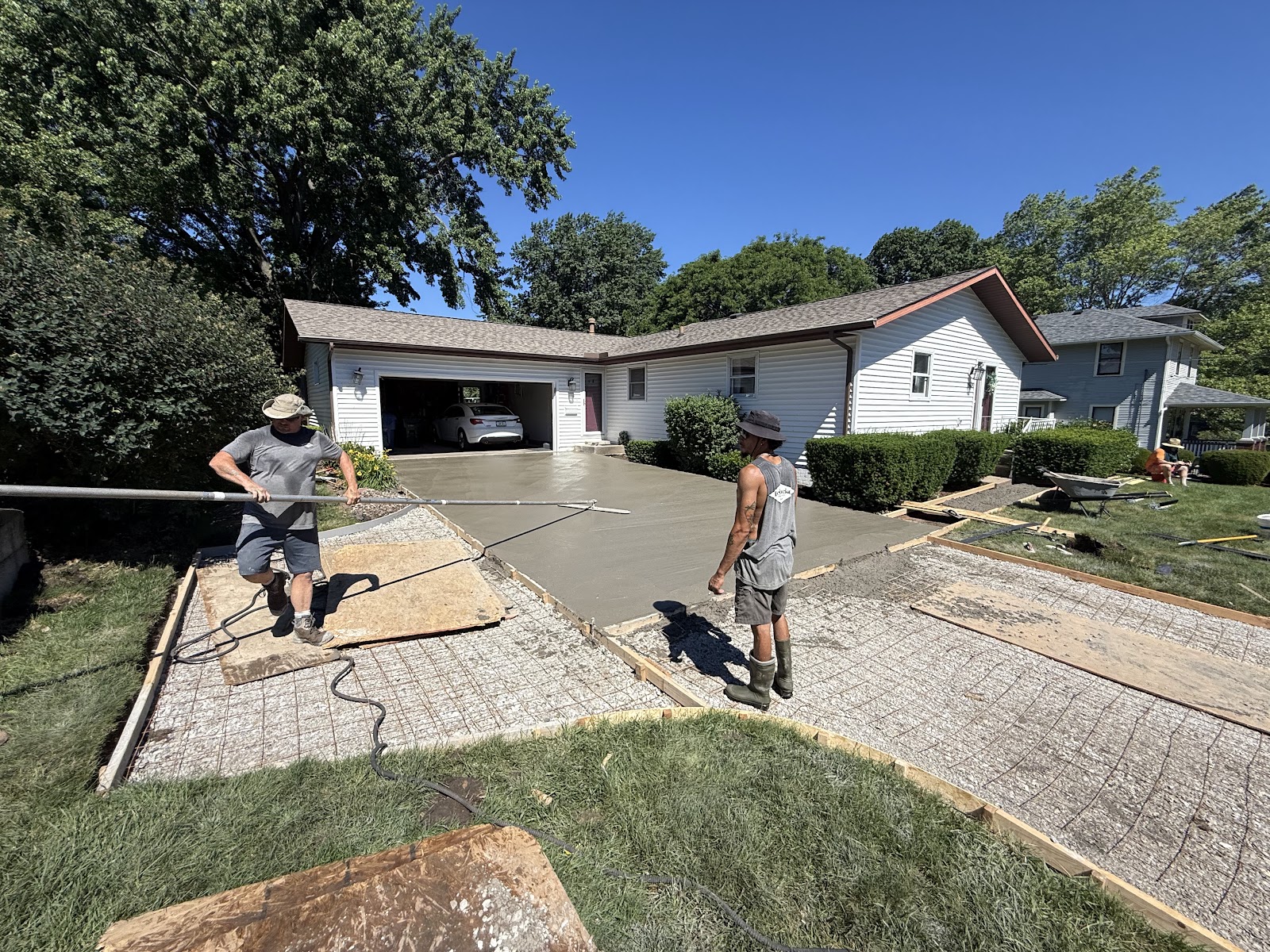
Four inches for most, more for heavy loads
Four inches is the standard for residential driveways, sidewalks, and patios. Step up to five or six inches where heavy vehicles park or drive — RVs, work trucks, or dumpsters. Just as important: that slab needs to sit on a few inches of compacted gravel base, not bare dirt.
How thick, and on what
Why what’s underneath matters as much
A four-inch slab on a solid, compacted gravel base will outlast a six-inch slab poured on soft dirt. The base spreads the load, drains water away, and gives the concrete a stable surface that doesn’t shift with the seasons. Skimp on the base and you get settlement cracks no amount of concrete thickness can prevent. This is the step that separates a driveway that lasts from one that doesn’t.
Rebar, wire, and control joints
For driveways and heavier slabs we add steel — rebar or wire mesh — to hold the concrete together and keep any cracks tight if the ground moves. Combined with properly spaced control joints, reinforcement is how a slab handles stress without falling apart. Thickness, base, and steel work together; no single one does the job alone.
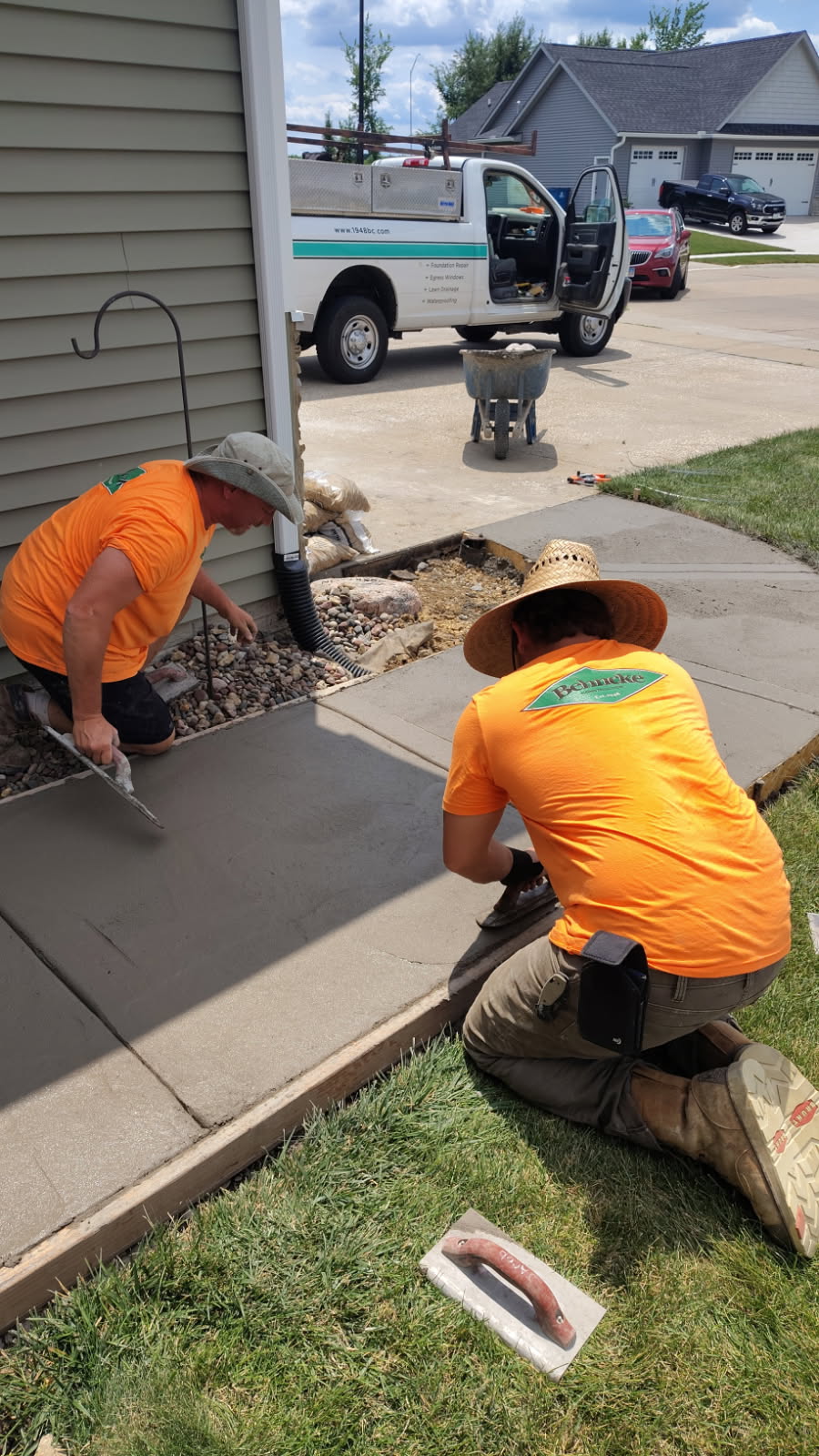
Planning a driveway, patio, or pad?
We’ll spec the right thickness, base, and reinforcement for how you’ll actually use it — and give you a free estimate.
Get a free estimate →Common questions
How thick should a concrete driveway be?
Four inches is standard for passenger vehicles. Step up to five or six inches if heavy vehicles like RVs, trucks, or dumpsters will use it. The slab should sit on a compacted gravel base.
How thick should a concrete patio or sidewalk be?
Four inches is typical for patios and sidewalks, since they only carry foot traffic. A solid, well-drained base still matters for keeping it from settling.
Does concrete need rebar or wire mesh?
Driveways and heavier slabs benefit from rebar or wire mesh, which holds the concrete together and keeps cracks tight if the ground moves. Thin walkways sometimes skip it, but reinforcement adds durability.
Why does the gravel base matter so much?
The base spreads the load, drains water, and gives the slab a stable surface. A thinner slab on a good base outlasts a thicker slab poured on soft dirt — most settlement cracks trace back to poor base prep.