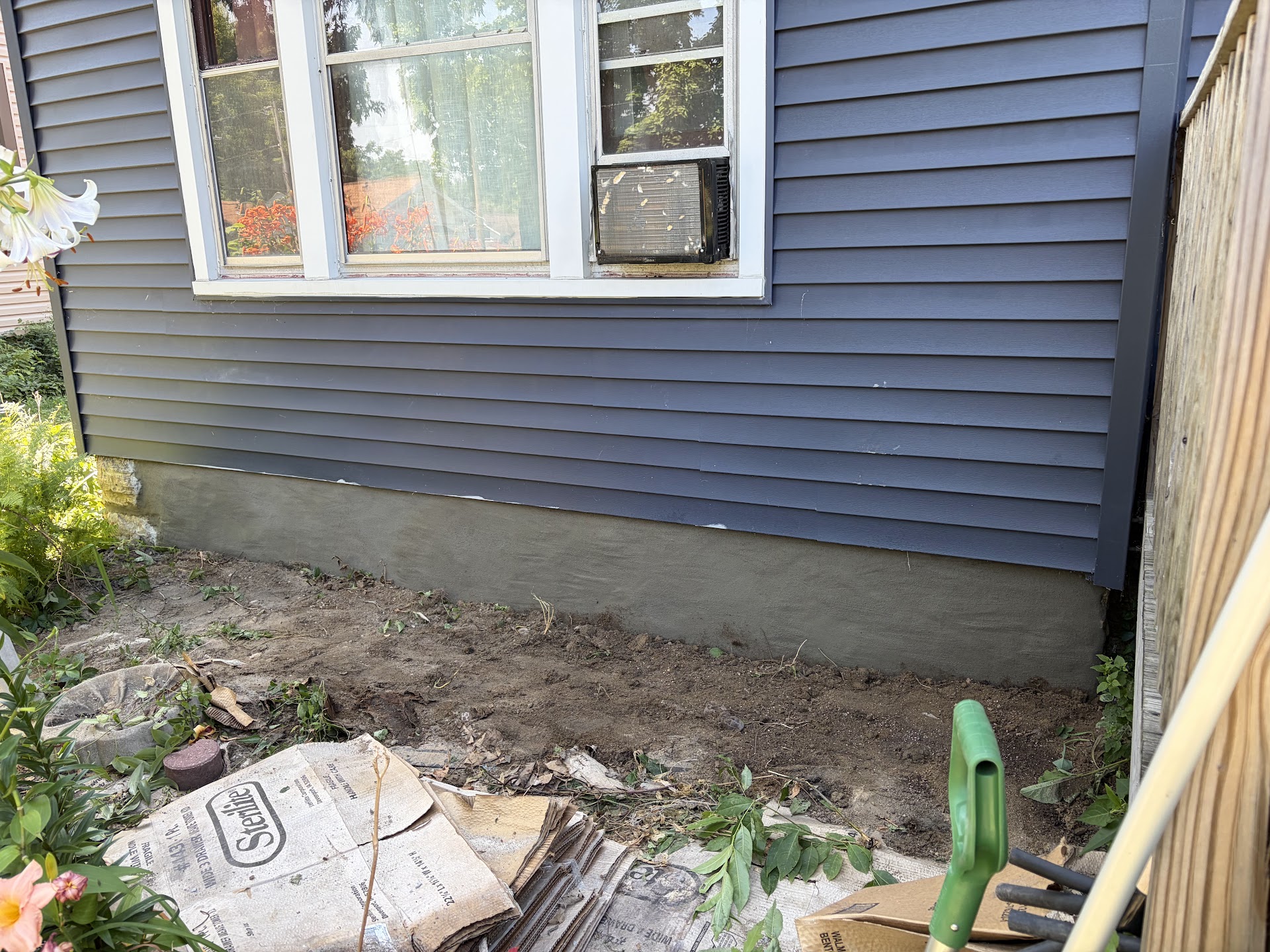
A weathered masonry foundation in Davenport, Iowa repaired and re-parged — open mortar joints and voids filled, weak areas rebuilt, and a fresh exterior parge coat applied to seal out moisture.
PROJECT SUMMARY
Date posted: July 14, 2026
Service: Foundation parge coating & masonry repair
Location: Davenport, Iowa
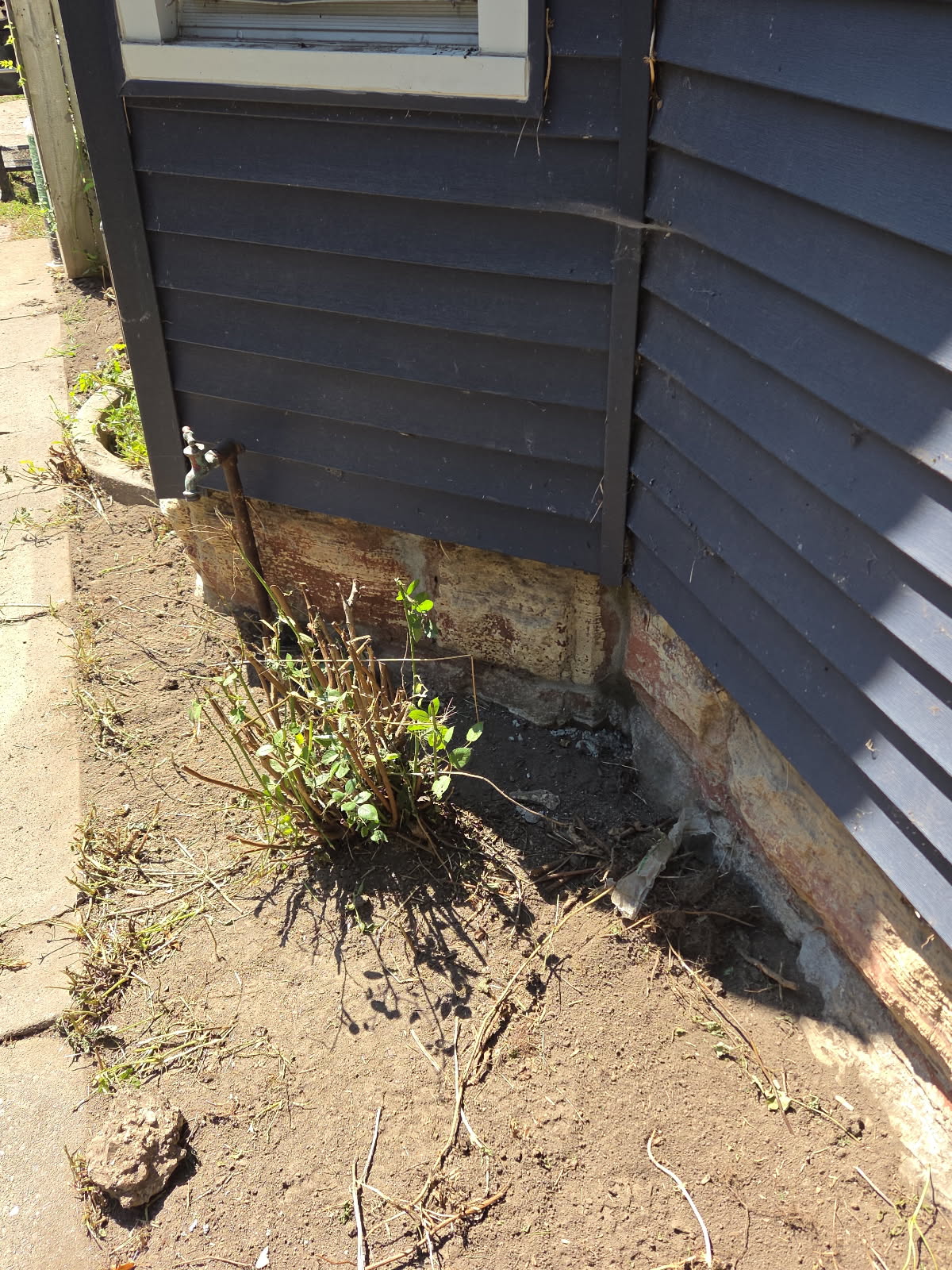
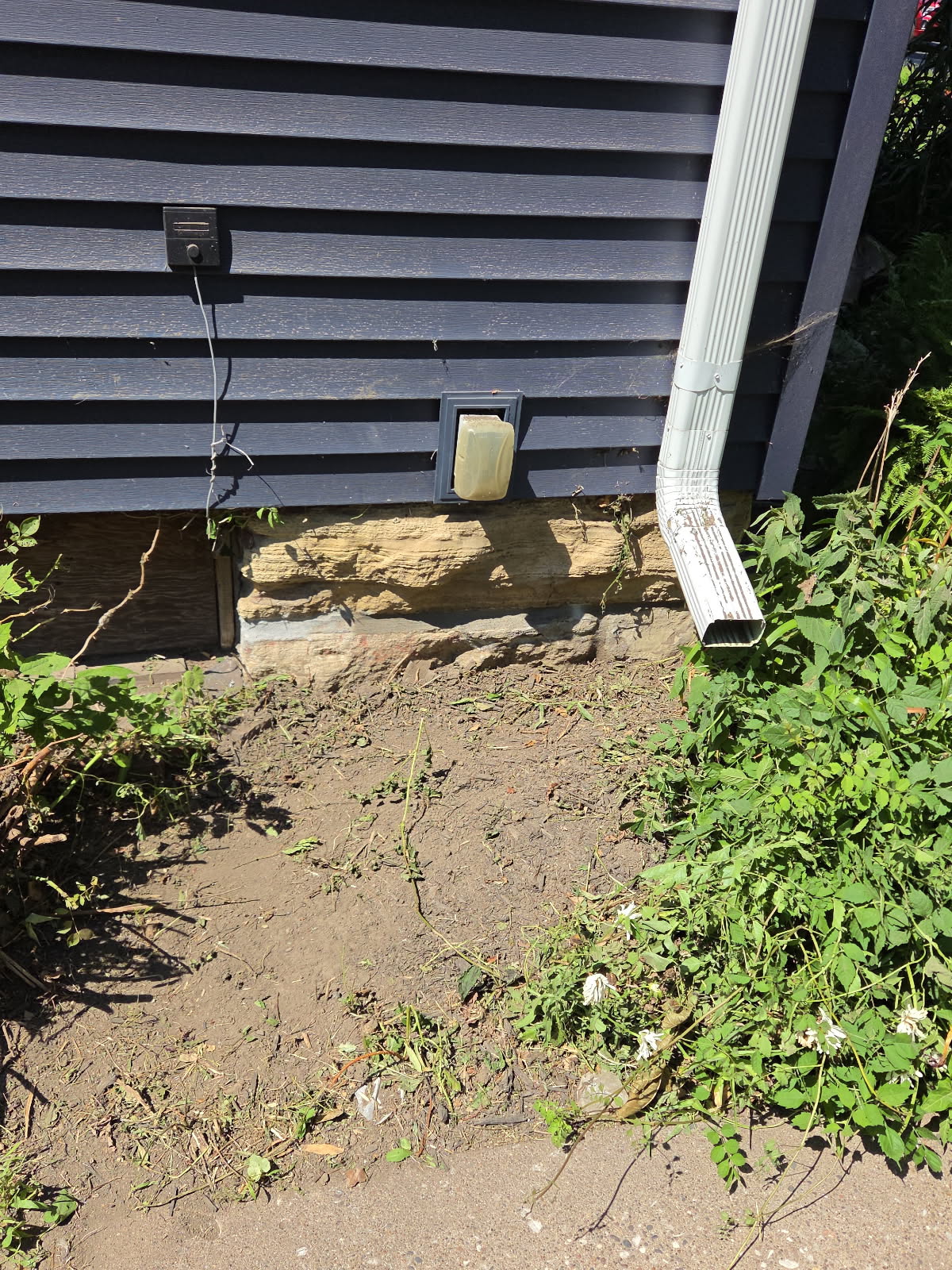
Problem: Deteriorated mortar joints, open voids, and worn parging on the exterior masonry foundation
Solution: Repaired mortar joints and voids, rebuilt weakened areas, completed a localized stone foundation repair, and applied a new exterior parge coating
Foundation type: Masonry (with localized stone repair)
Completion status: Completed
Project photos
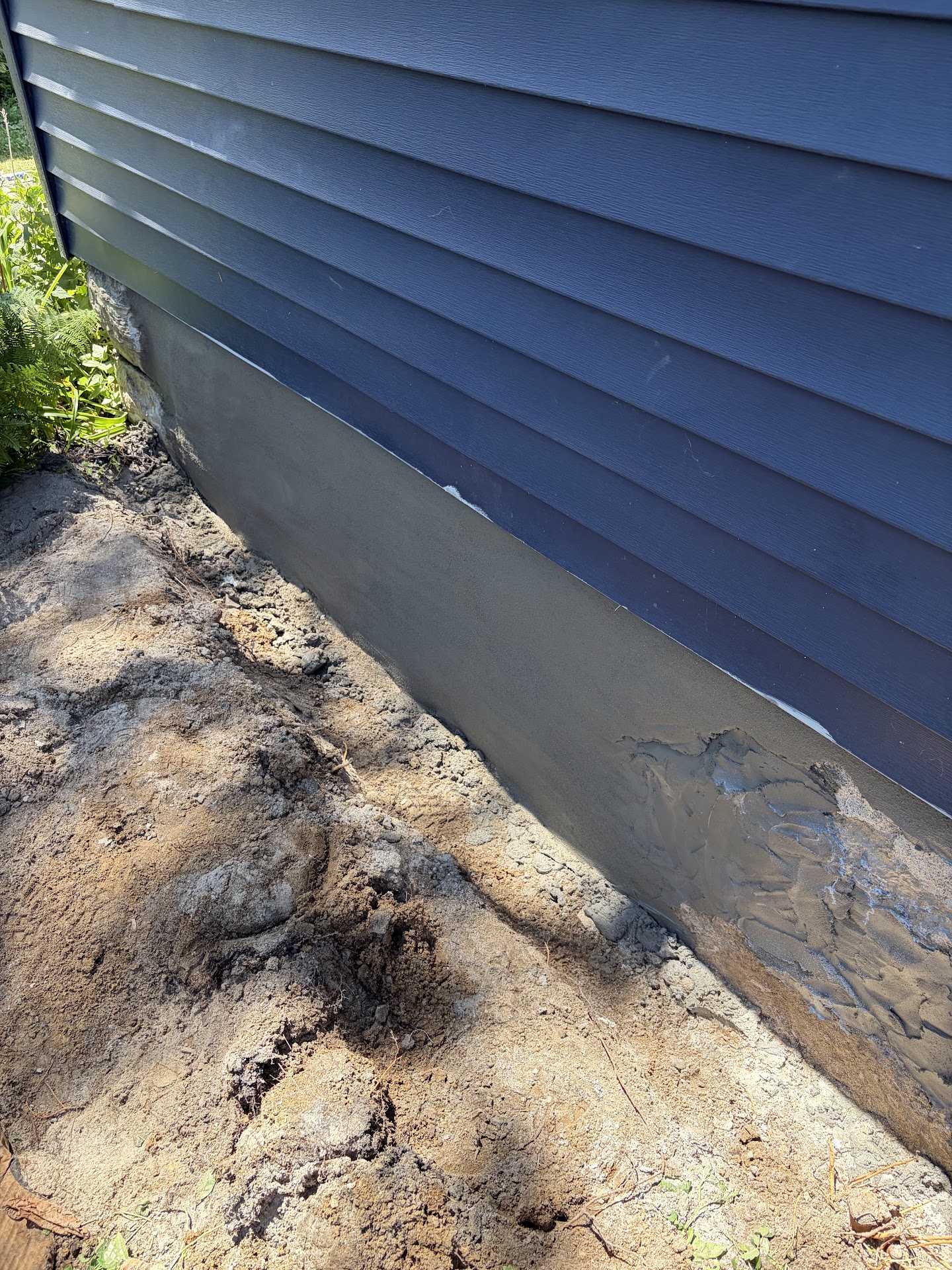
Project overview
A properly applied foundation parge coat does more than improve appearance, it helps protect and preserve your home’s masonry foundation. On this Davenport project, our crew repaired deteriorated mortar joints and open voids before applying a new parge coating to help seal the exterior foundation against moisture infiltration and weather exposure.
When mortar joints are left open, water can penetrate the masonry, accelerating deterioration through freeze-thaw cycles. By filling damaged joints and rebuilding weakened areas before parging, we help restore the integrity of the foundation surface while providing an added layer of protection.
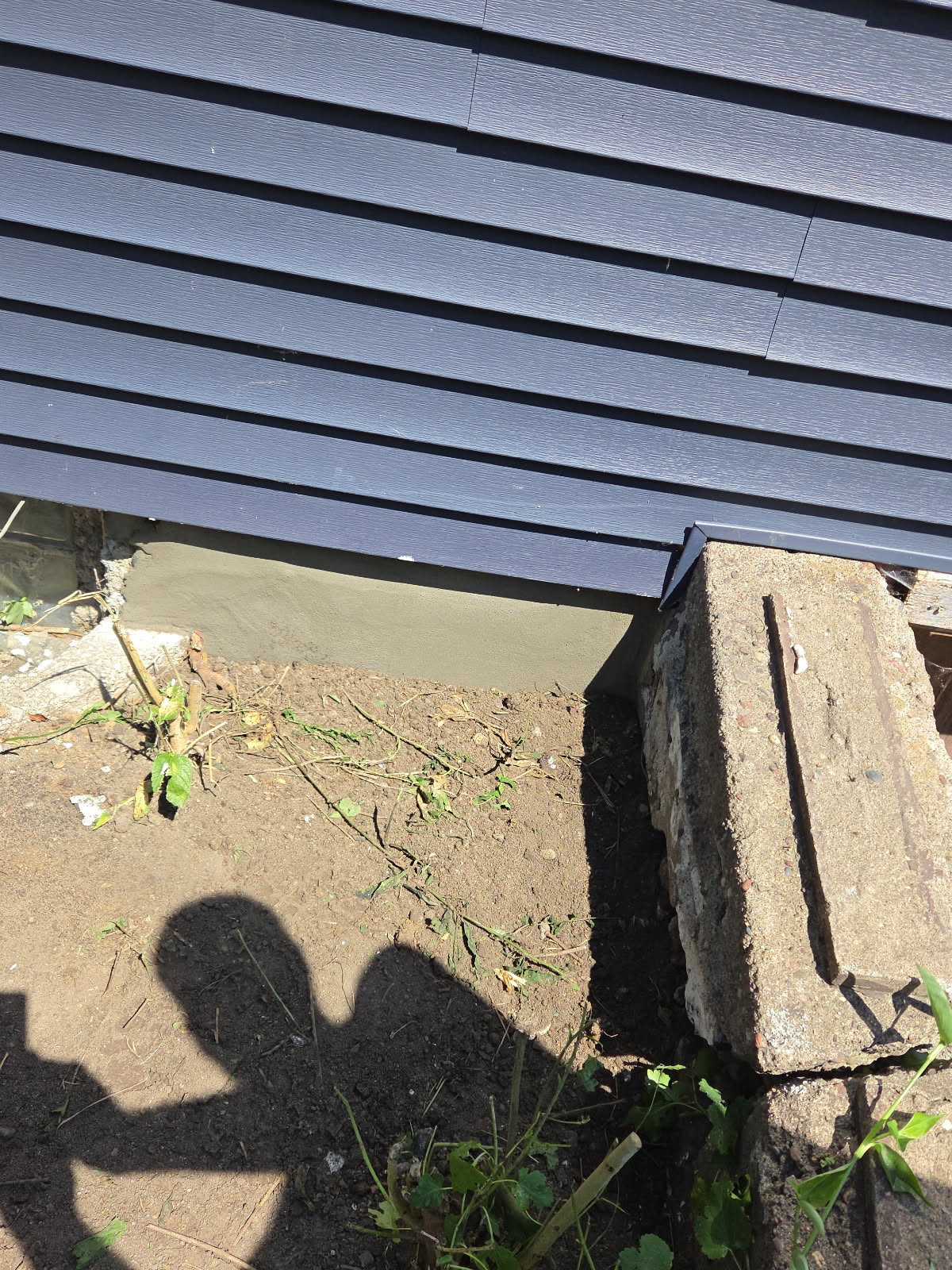
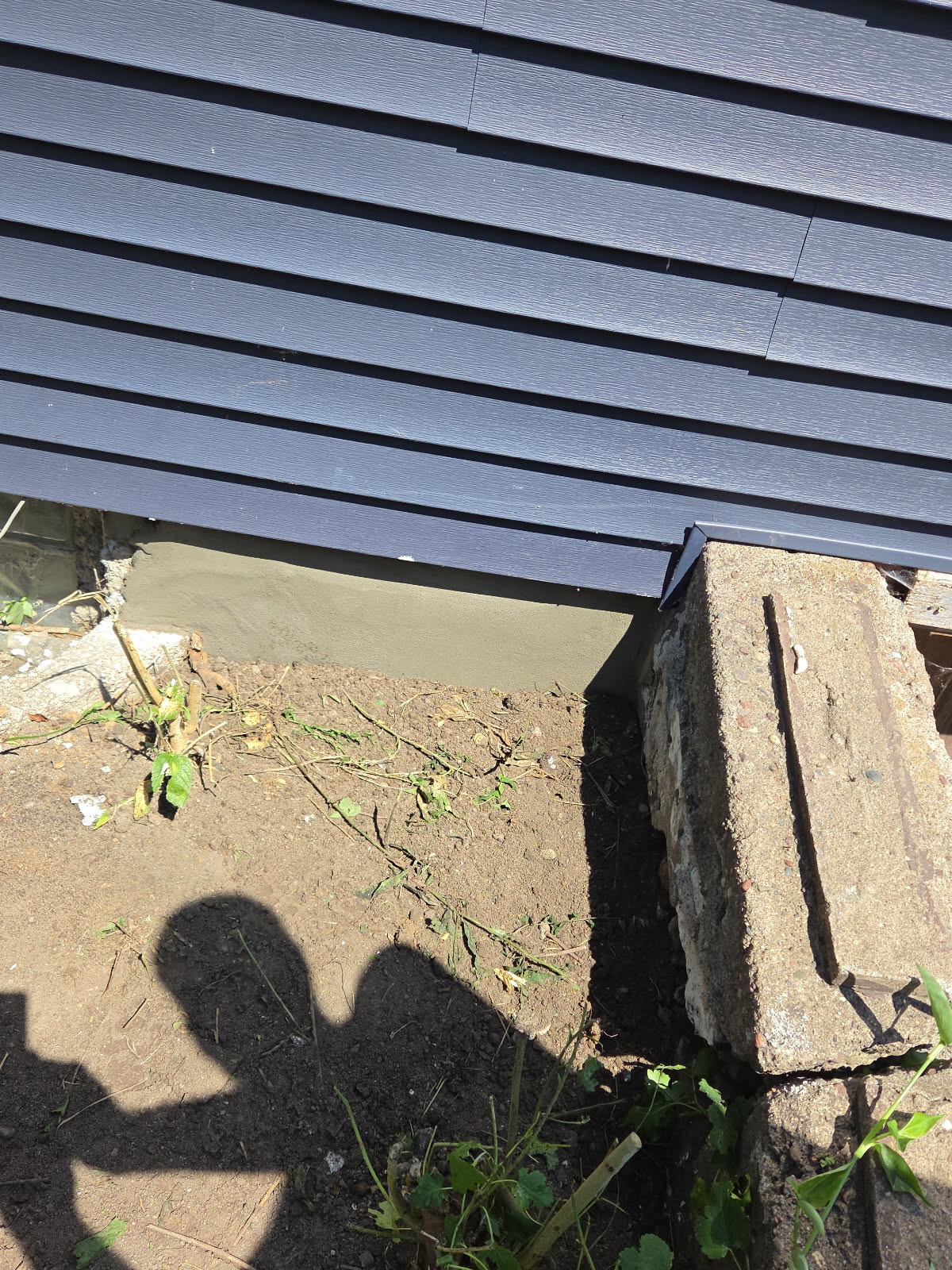
On this home, we repaired multiple foundation walls and completed a localized stone foundation repair before applying the new parge finish. The result is a cleaner appearance, improved weather resistance, and added protection for the underlying masonry.
If your foundation is showing exposed stone, crumbling mortar, or deteriorating parging, Behncke Construction has been repairing and protecting foundations since 1948 throughout Davenport and the Quad Cities. Schedule a professional foundation inspection today.
Project details
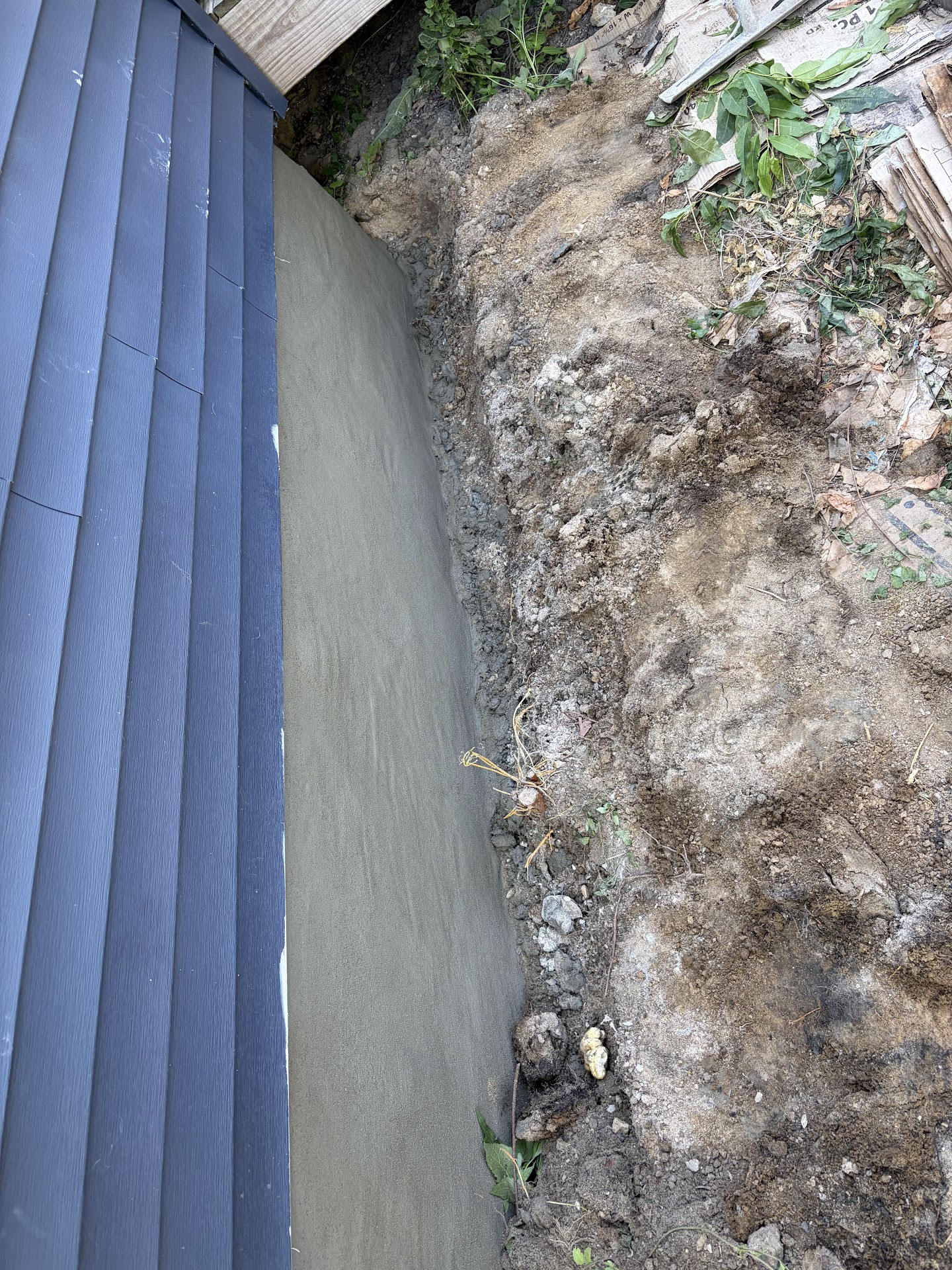
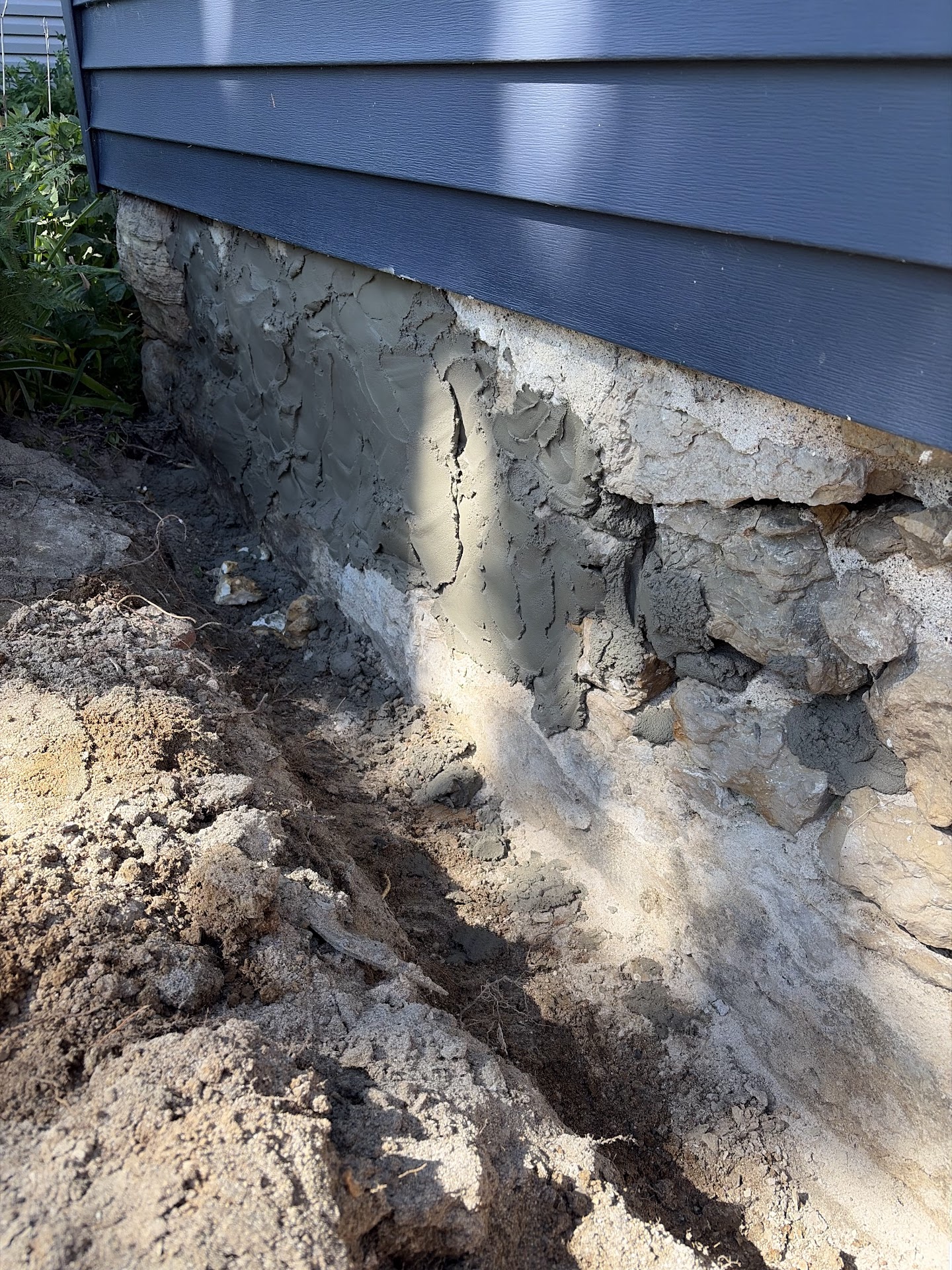
Parging is only as good as what’s under it. Before the new coat went on, the crew repaired deteriorated mortar joints, filled open voids, rebuilt weakened areas, and completed a localized stone foundation repair. The new exterior parge coating then seals the whole surface against moisture and weather, leaving a cleaner, more uniform finish.
What homeowners should know
A parge coat is a thin masonry finish applied over a foundation wall. It improves appearance, but its real job is to seal the surface against moisture and weather. Because it’s thin, it can only last if the masonry beneath it is sound.
That’s why open mortar joints and voids are repaired first — otherwise water gets behind the parging, freezes, and pushes it back off. Filling joints, rebuilding weak spots, and repairing loose stone before parging is what turns a cosmetic coat into real, lasting protection for the foundation.
Related services
Learn more about our foundation repair and masonry repair, or browse more recent projects.
Photo highlights
The finished photos show the completed foundation with the new parge coat in place, giving the wall a clean, uniform surface beneath the siding. An in-progress image captures the fresh parge coat as it was applied, and a before image shows the deteriorated stone and open mortar the crew repaired first. The remaining detail shots follow the wall around the home — some showing the exposed foundation and mortar before the work, others showing the finished parge surface at the base of the wall.
Related services & reading
Exposed stone or crumbling mortar?
If your foundation is showing bare stone, open mortar joints, or a flaking parge finish, Behncke Construction has repaired and protected Quad Cities foundations since 1948. Schedule a foundation inspection and we will tell you what the wall actually needs.
Schedule an inspection