Foundation Cracks · Quad Cities
Is My Foundation Crack Serious? A Straight Answer
You found a crack and the internet made it sound like the sky is falling. Here’s the honest version: most foundation cracks aren’t emergencies — and here’s how to tell the ones that are.
Based on more than 1,200 written inspections and nearly 10,000 estimates across the Quad Cities in the last ten years.
The honest headline: most cracks aren’t emergencies
We’ll say the thing a lot of companies won’t: the majority of foundation cracks we’re called out to look at are not structural emergencies. Concrete cracks — it’s what concrete does as it cures and as a house settles into its life. That doesn’t mean every crack is nothing, but it does mean you can take a breath. What separates a cosmetic crack from a serious one isn’t how scary it looks; it’s a few specific signs.
The reassuring signs
Cracks that tend to be minor share a look: they’re thin, the two sides are still lined up flush with each other, and they aren’t changing over time. Narrow vertical or diagonal cracks in a poured wall are frequently just shrinkage from the concrete curing years ago. If there’s no offset — you can run a finger across and the wall is still flat, not stepped — and the crack isn’t growing, it’s usually in the “seal it and monitor it” category, not the “structural repair” one.
The signs worth taking seriously
A crack moves into “get this evaluated” territory when it shows force and movement rather than simple shrinkage. The signals we pay attention to: a crack where one side has shifted out of plane with the other, so the wall feels stepped or offset; a crack that’s clearly widening over time; a horizontal crack across a wall, especially paired with the wall bowing inward; cracks running through block or brick units rather than around them; and cracks that come alongside doors sticking, floors sloping, or a corner that has visibly dropped. Any one of those is worth a real look — not because it’s necessarily dire, but because those are the patterns that can be.
A leaking crack is a water question first
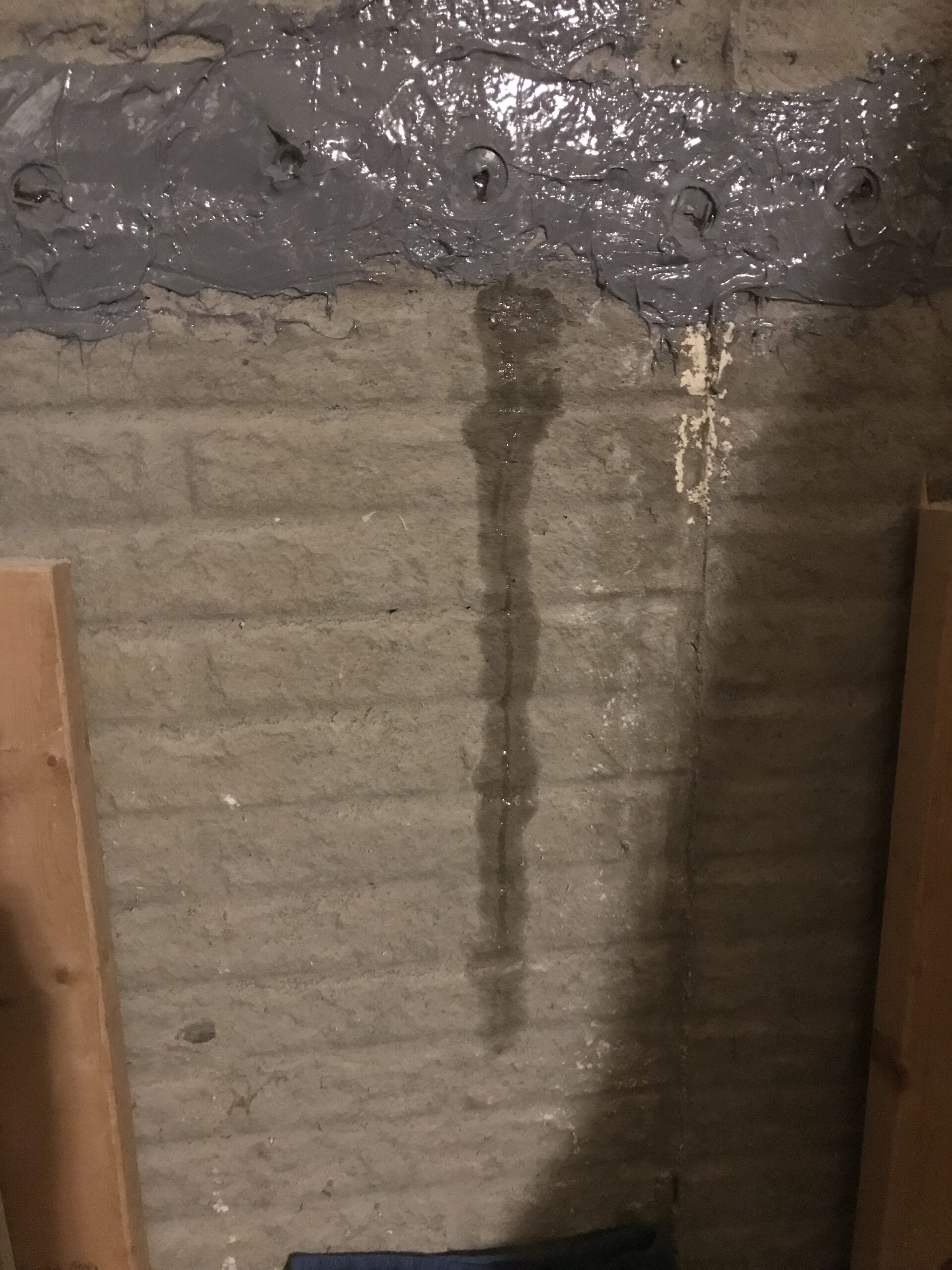
One more useful distinction: a crack that leaks isn’t automatically a structural problem. Plenty of stable, non-structural cracks let water in simply because they’re an open path. That’s a real issue worth sealing — wet basements cause their own damage — but it’s a drainage-and-waterproofing question, not necessarily a sign the foundation is failing. Treating a leaking cosmetic crack as a structural emergency is a classic way to get oversold.
So what should you do?
If your crack is thin, aligned, dry, and unchanging, it’s reasonable to seal it and keep an eye on it. If it’s offset, widening, horizontal with bowing, or paired with doors and floors acting up, have it evaluated. And if you’ve already been handed a big structural quote for what looks like a hairline, that’s precisely when a second opinion pays for itself. For more on reading specific patterns, see stair-step cracks and our overview of foundation cracks.
Common questions
Are most foundation cracks serious?
No — most are not structural emergencies. Concrete cracks as it cures and as a house settles. Thin, aligned, unchanging cracks are usually cosmetic. The serious ones show offset, widening, or come with bowing and sticking doors.
Which cracks are the ones to worry about?
Cracks where one side has shifted out of line with the other, cracks that are widening, horizontal cracks paired with an inward bow, cracks running through block or brick units, and cracks that arrive with sloping floors or a dropped corner.
My basement crack leaks — is my foundation failing?
Not necessarily. Many stable, non-structural cracks leak simply because they’re an open path for water. That’s worth sealing, but it’s a waterproofing issue, not automatically a structural one.
Is a vertical crack better than a horizontal one?
Generally, yes. Narrow vertical or diagonal cracks in poured walls are often shrinkage. A horizontal crack — especially with the wall bowing inward — is more likely to be structural and worth evaluating.
How do I know for sure?
An in-person evaluation reads whether the crack shows movement and force versus simple shrinkage, and whether it’s active or long-since stable. If a quote treats a hairline like an emergency, get a second opinion.