
Second Opinions · Quad Cities
Why Do Foundation Repairs Fail? Read This Before You Pay for a Second One
A repair that comes back almost always failed for a knowable reason — the water was ignored, the method didn’t fit the wall, or the fix was under-built. Here’s how to tell a lasting repair from one that’s just buying time.
Get an Honest Second OpinionBased on more than 1,200 written inspections and nearly 10,000 estimates across the Quad Cities in the last ten years.
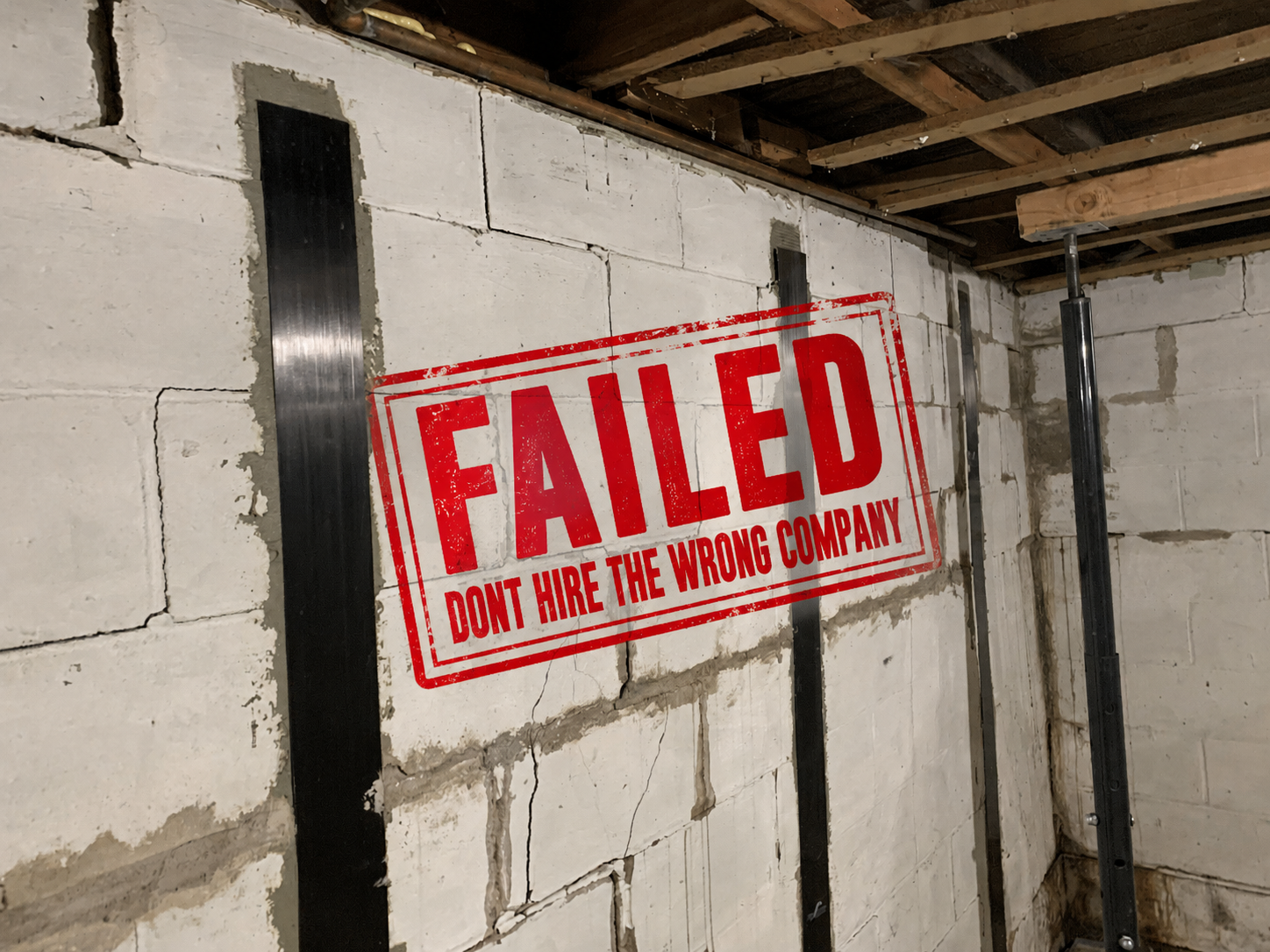
You paid for a fix — so why is it back?
It’s one of the most disheartening calls we get: a homeowner paid good money to have a foundation problem repaired, and a year or two later the crack is open again, the wall is still moving, or the floor is still dropping. It feels like they got taken. Usually they didn’t get robbed so much as they got a repair that was never going to last — and the reasons it failed are almost always knowable.
Here’s the honest version, without the sales spin, so you can tell a lasting repair from one that’s just buying time.
The one thing failed repairs have in common
Nearly every foundation repair that comes back has the same flaw underneath it: it treated the symptom instead of the cause. A crack got filled, a wall got a brace, a corner got a squirt of caulk — but nothing dealt with why the foundation was moving in the first place. If the force that cracked your foundation is still there, the repair is just a countdown.
Three causes account for most of the failures we’re called in to fix.
Reason 1: the water was never dealt with
This is the big one. Almost every foundation problem in the Quad Cities is driven by water in the soil — saturated ground pushing on a wall, a downspout soaking one corner, runoff feeding a slope. Fix the wall and ignore the water, and the exact pressure that caused the damage is still working on your house. A repair that doesn’t include the drainage almost always comes back. If you take one thing from this page: a foundation fix that never mentions your gutters, grading, or drainage is only half a repair. (More on that: fix the drainage first.)
Reason 2: the method didn’t match the wall
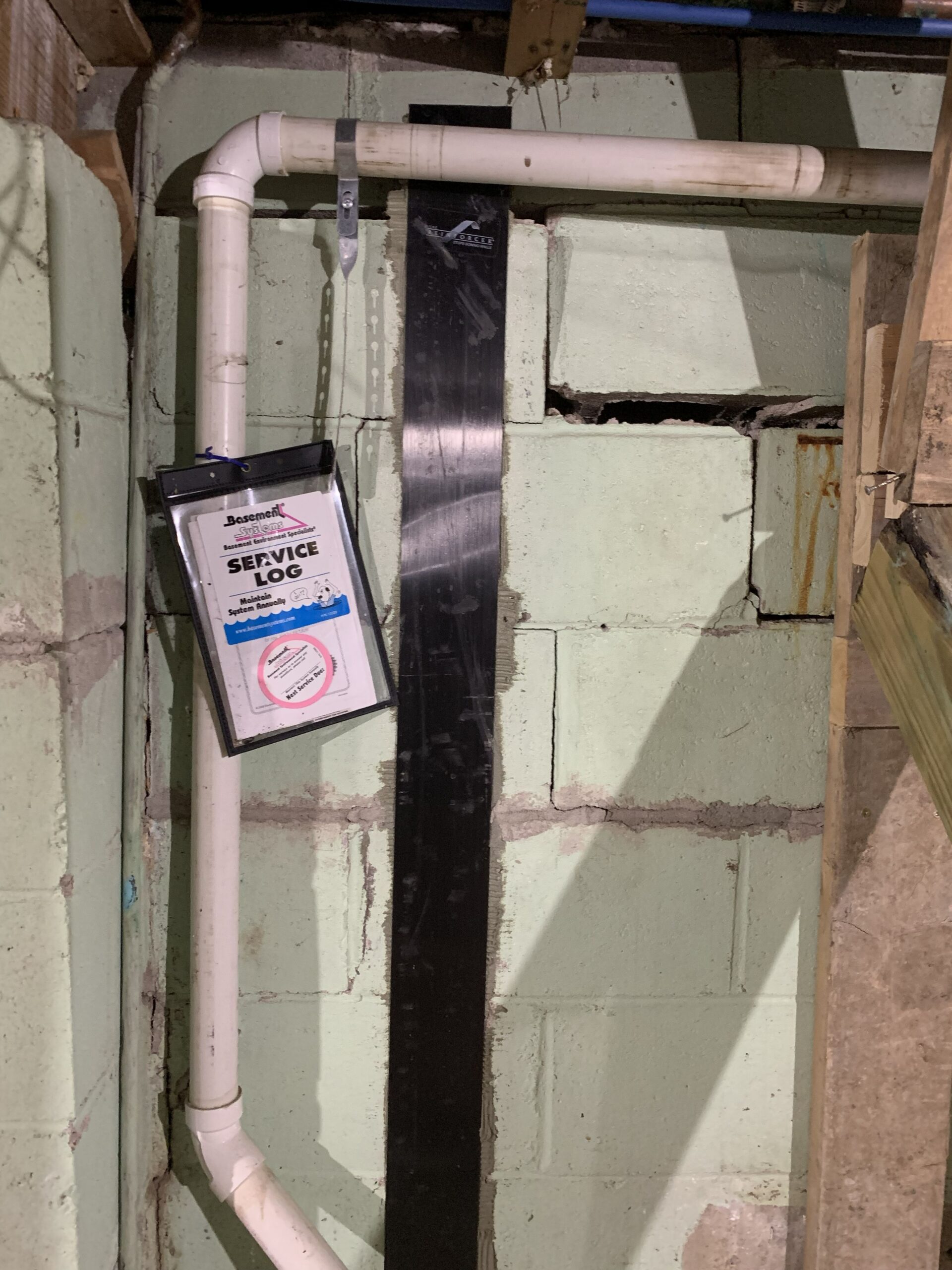
A repair method that’s perfect for one wall is useless on another. The classic example is a surface reinforcement — like carbon fiber — installed on a wall that’s already deteriorating or still moving. The strap can’t hold what’s crumbling behind it.
(See how that plays out on bowing walls: carbon fiber, steel, or rebuild.)
Reason 3: the fix was under-built — or done in the wrong order
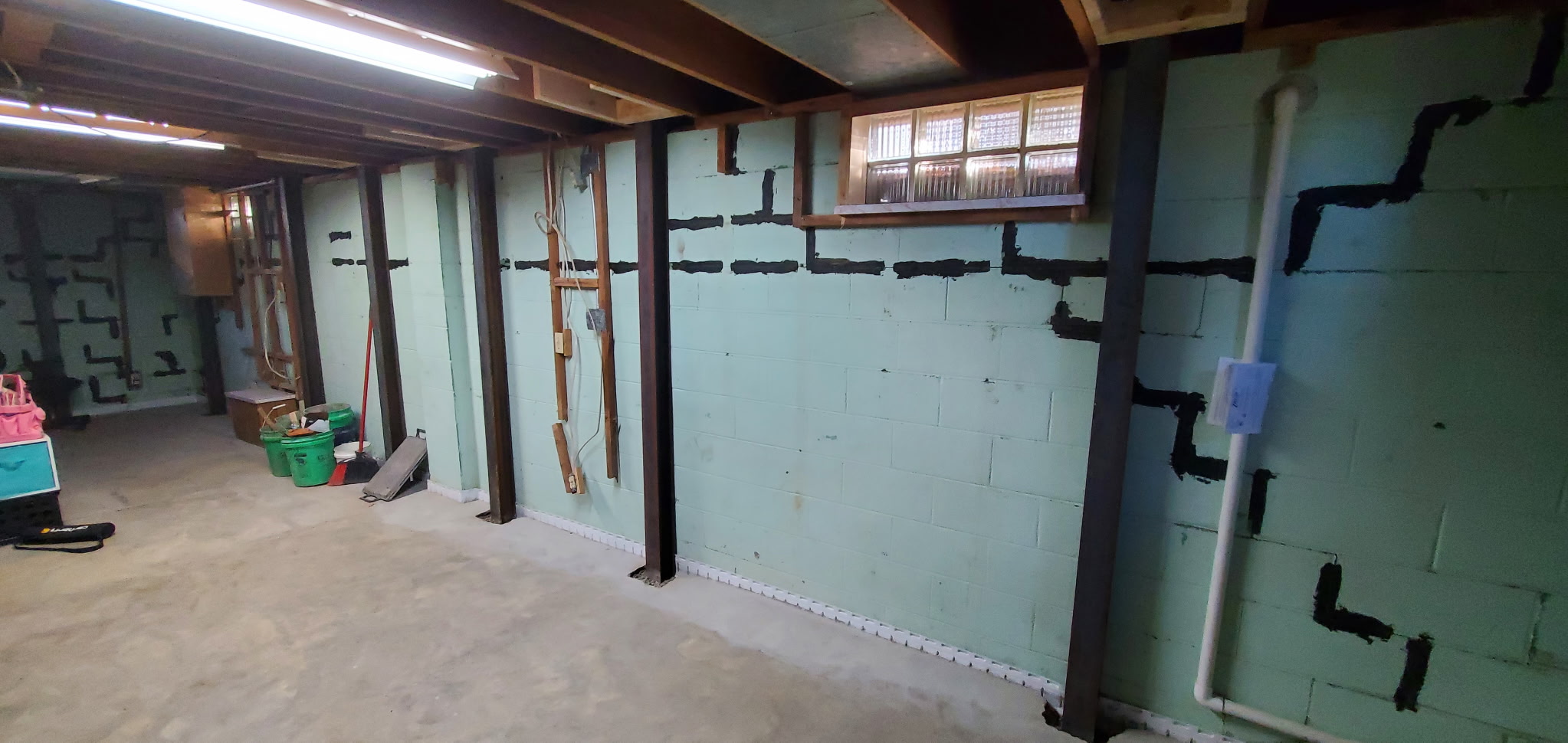
Even the right type of repair fails if it’s done cheaply or out of sequence. We’ve opened walls to find heavy steel supports from a previous contractor held in place by just a couple of screws — decoration, not structure. We’ve seen cracks injected and sealed while the wall kept right on moving, because nothing was done to stop the movement first. And we’ve seen point braces that hold one spot while the wall fails around them.
“It was already fixed” is the most dangerous phrase in a basement
Whenever we hear “oh, that was repaired years ago,” we look harder, not less. In our experience, previously-repaired walls fail constantly — because that first repair is exactly the one that treated the symptom. Braces, straps, anchors, caulked joints, fresh coatings hiding what’s underneath: every one of those deserves a real second look before anyone assumes the foundation is stable. If your house has an old repair you’re not sure about, that uncertainty is worth resolving before it becomes an emergency. A settling corner or a crack that “was handled” is worth re-checking.
What a lasting repair actually does
Put simply, a repair holds when it does three things: it deals with the cause (almost always water and soil, not just the wall), it matches the wall’s real condition instead of applying one method to everything, and it’s actually built to carry the load — real connections, done in the right order. None of that requires knowing our trade secrets; it just requires someone willing to diagnose honestly before they sell you anything. That’s the whole difference between a repair and a re-do.
Before you pay twice — get a second opinion
If you’ve already got a repair that isn’t holding, or you’ve been handed a quote to “fix it again,” the smartest money you can spend is on finding out why the first one failed before you buy the second one. That’s exactly what our second opinion is for — a look at what actually went wrong, so the next repair is the last one. It’s also why we keep a public list of repairs we don’t recommend: the shortcuts we’ve watched fail.
Common questions
Why did my foundation repair fail?
Most failed repairs treated the symptom instead of the cause. The three usual reasons: the water and soil that drove the movement were never addressed, the method didn’t match the wall’s real condition, or the repair was under-built or done in the wrong order. A good evaluation can usually tell you which one happened.
My repair is under warranty — doesn’t that protect me?
A warranty is only as good as the company behind it and what it actually covers. Many warranties cover a specific product but not the underlying movement or water, so the “covered” repair can be reapplied and still not hold. It’s worth reading exactly what’s promised — and getting an independent look at why the repair failed.
Is carbon fiber a bad repair?
No — on the right wall it’s a legitimate option. It fails when it’s used on a wall that’s deteriorating or still moving, where no surface reinforcement can hold. The problem is almost never the product; it’s using it where it doesn’t fit.
A company filled my crack and it came back — why?
Filling a crack seals it, but it doesn’t stop whatever is pulling the wall apart. If the movement and the water aren’t addressed, the crack reopens (or a new one appears nearby). Injection is a finishing step, not a substitute for fixing the cause.
Should I go back to the original company or get someone new?
That’s your call, but a second, independent opinion is valuable either way — it tells you whether the original diagnosis was right in the first place. If the first repair missed the cause, repeating it with the same company usually repeats the result.
How do I avoid paying for this twice?
Insist on an evaluation that explains the cause, not just the fix — where the water goes, what shape the wall is really in, and why the recommended method fits your specific situation. If a quote doesn’t address the water or the wall’s condition, treat that as a warning sign.
A repair method worth understanding before you buy it: what carbon-fiber straps can and can’t do on a bowing wall.