Home / Foundation Repair / Repairs We Don’t Recommend
Foundation Repair · Learning Center
Repairs We Don’t Recommend (And Why)
Several foundation “solutions” get sold far more often than they should, usually because they’re profitable to install, not because they’re what the home needs. Our rule never changes: diagnose first, evaluate the drainage, and bring in an engineer when there’s a real structural question.
None of these products are evil, but several are recommended far more often than they should be, usually because they’re profitable to install. Before you commit to anything major, have the drainage evaluated, bring in an engineer if there’s a structural question, and get an honest second opinion.
1. Helical Piers
Helical piers are sometimes necessary, but usually they’re not. They’re a big, expensive solution, and we see them proposed for homes that don’t need anything close to that. Before anyone talks about piers, the drainage should be evaluated, because poor water management is so often the real driver of movement. When there’s a genuine structural question, that’s when an engineer should weigh in.
2. Wall Anchors
This is one of the highest-failure products we encounter. The idea is to tie the wall back to a plate buried in the yard, but that anchor is only as good as the soil holding it. In disturbed or saturated soils the plate can move, and then the anchor isn’t doing its job. We also see plenty of failures from improper installation.
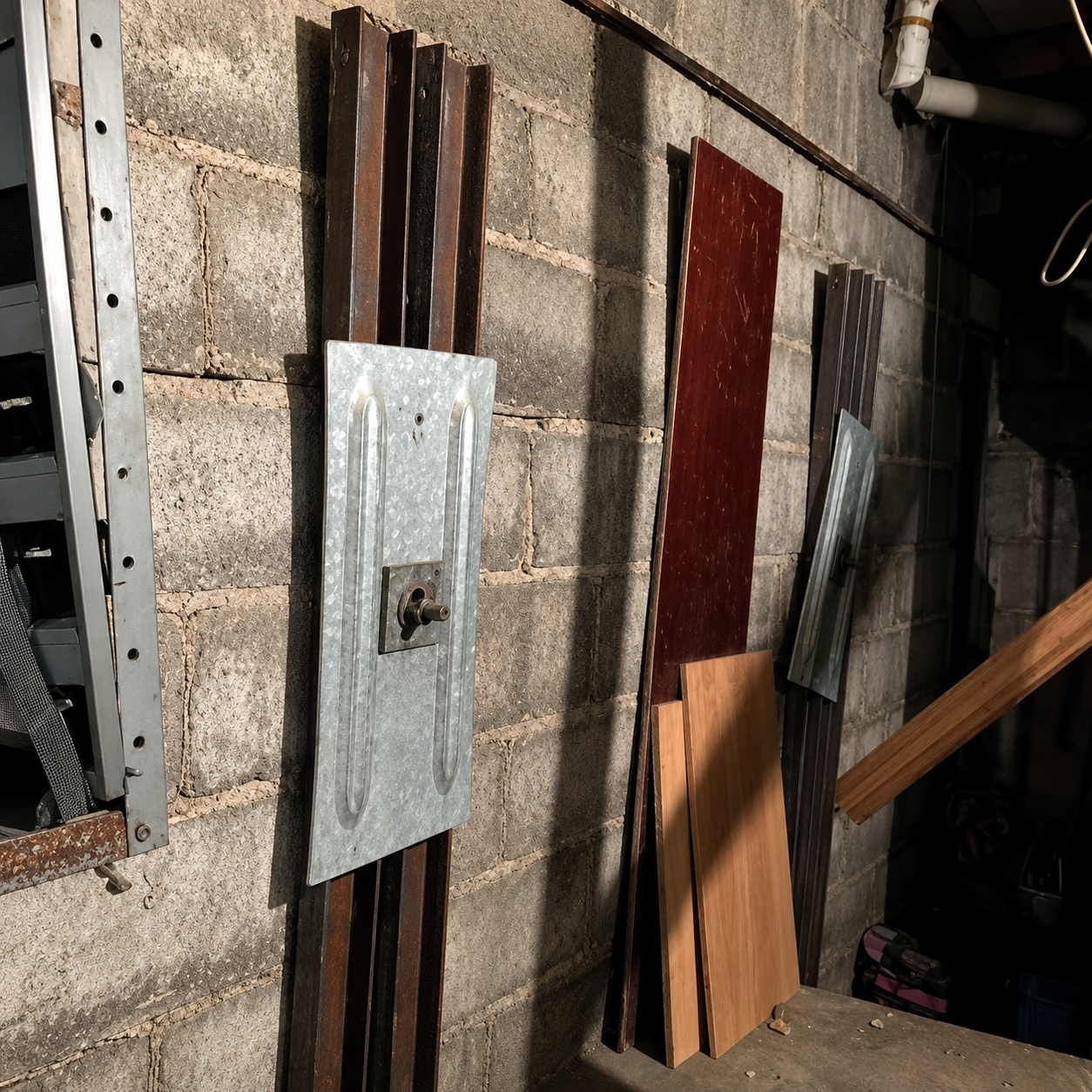
We’ve been called out more than once to fix a bowing wall that already had anchors on it. That’s why, for most Quad Cities walls, we reach for steel I-beam reinforcement instead, it braces the wall directly and doesn’t depend on the soil in your yard.
From the Field
“Wall anchors are one of the highest-failure products we see. When the soil moves, the anchor moves. We’d rather brace the wall directly with steel.”
Behncke Construction · since 1948
3. Epoxy Injection as a Standalone Fix
Epoxy injection gets oversold as a cure-all — and that’s the problem, not the tool. Crack injection (epoxy or polyurethane) is in our toolkit: it’s the right call for a stable, non-moving crack, and for structural re-bonding when an engineer specs it. But when the wall is still moving or exterior water is the real cause, injection alone just hides the symptom, and the water comes right back. We fix the source first, then seal the crack. Injection shouldn’t be the default standalone fix.
4. Adjustable Power Braces
Adjustable power braces are tightened over time to push a wall back. The problem is where that load goes: it can transfer up into the floor system above. We’ve come across broken floor joists as a result, trading a wall problem for a framing problem. We prefer permanent steel reinforcement that braces the wall without putting the floor system at risk.
5. Interior Waterproofing Systems
Interior drainage systems are sometimes genuinely necessary, particularly when water pushes up through the floor from a high water table. But they’re frequently oversold. Many basements need a drainage correction on the outside, gutters, downspouts, and grading, not a full interior system. If a company quotes a complete system before looking at your gutters and grading, get a second opinion.
6. Gravity vs. Pumps
Whenever it’s possible, we’d rather move water with gravity than rely on a mechanical pump. A gravity drain has nothing to break and no power to lose. A sump pump is one more thing that can fail, usually during a heavy storm. When a pump genuinely is necessary, we recommend a battery backup so an outage doesn’t flood you.
Frequently Asked Questions
Do wall anchors work?
They’re one of the higher-failure products we encounter, because they depend on the soil in your yard holding a buried plate. For most Quad Cities walls we prefer steel I-beam reinforcement.
Do I need helical piers?
Sometimes, but usually not. Drainage should be evaluated first, and an engineer consulted when there’s a real structural question.
Does epoxy crack injection work?
Yes, on the right crack. Injection (epoxy or polyurethane) works well on a stable, non-moving crack, and epoxy re-bonds structural cracks when an engineer specs it. It fails when it’s used alone on a wall that’s still moving or still taking water from outside — the source has to be fixed first.
Sump pump or gravity drain?
Gravity whenever possible. If a sump pump is necessary for a finished basement, we recommend a battery backup so a storm outage doesn’t flood you.
Been quoted a big repair? Get a second opinion.
We’ll evaluate the real cause and recommend only what your home actually needs, written estimate, usually within one business day.