Foundation Repair · Quad Cities
Garage Wall Cracks & a Floor Pulling Away From the Wall: What’s Really Going On
A cracking garage wall or a slab separating from it is almost always a water story — not a mystery. Here’s what’s happening under there, and what actually fixes it.
Based on more than 1,200 written inspections and nearly 10,000 estimates across the Quad Cities in the last ten years.
The tell: your slab is pulling away from the wall
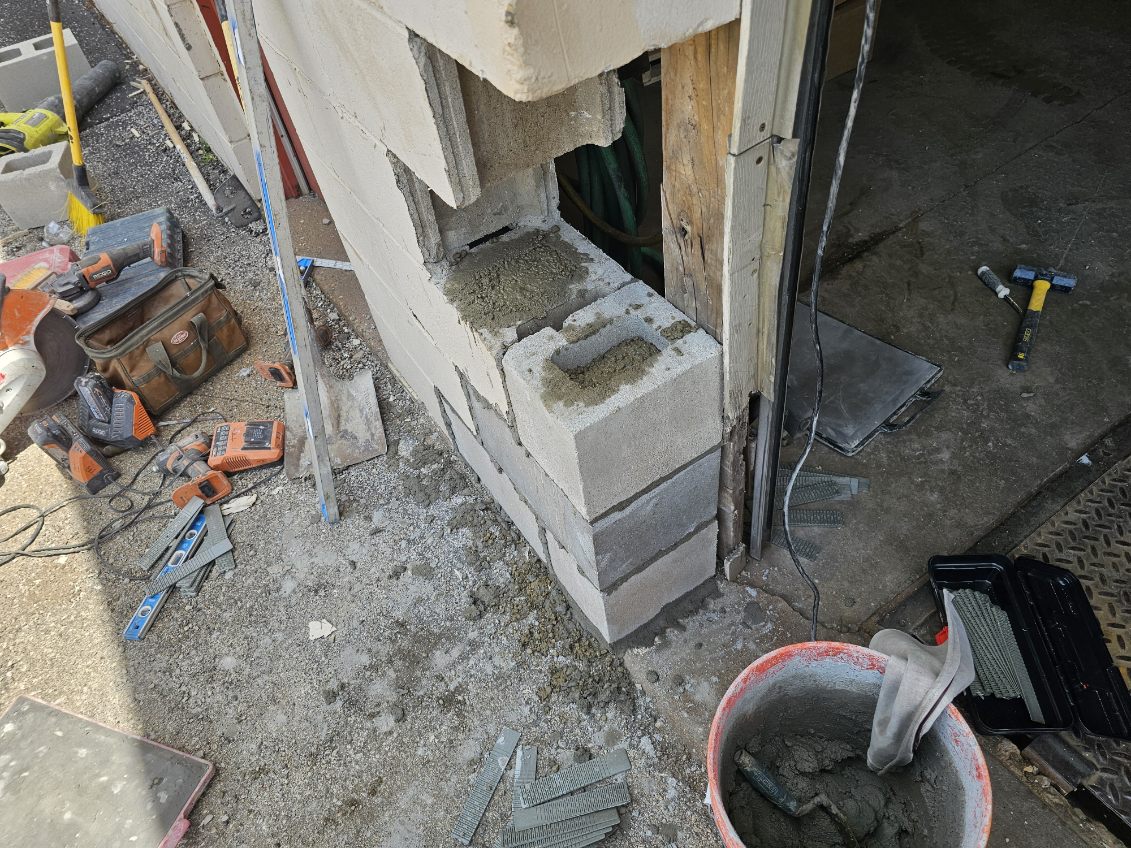
The most common thing homeowners notice is a gap opening where the garage floor meets the wall — the slab looks like it’s sinking or drifting away, and a crack runs along that joint. Sometimes the block courses in the wall are cracking or bulging too, usually near the overhead door. That specific pattern — the slab separating from the wall — is a strong clue, and it points almost every time to the same cause.
Why it happens: driveway water in the sub-base
Your driveway and garage floor sit on a bed of soil. When the driveway settles or slopes the wrong way, every rain runs toward the garage instead of away from it, and that water soaks into the ground under the slab and behind the wall. Saturated soil is heavy and weak: it pushes on the wall and washes out the support under the concrete. We sometimes describe a tilted driveway approach as a water cannon aimed at your garage — it feeds water straight to the one place you don’t want it. Fix the wall and ignore the driveway, and you’ll be back.
The winter version: frost heave
In our climate there’s a cold-weather twist. When that sub-base soil stays wet and then freezes, it swells and lifts — working the block joints open a little more every winter and cracking the slab. A garage wall on a shallow footing is especially vulnerable. If your garage cracks seem to move with the seasons — worse in winter, easing in summer — frost is likely part of the story, and that changes what the right repair is.
One safety note: don’t park over a void
When water washes out the soil under a garage slab, it can leave a hollow space you can’t see from above. A slab bridging a void can look fine and still be unsupported. Until that void is filled, it’s worth keeping heavy vehicles off it — a floor that’s holding your weight isn’t the same as a floor that’s holding a truck. It’s the kind of thing a real evaluation checks for before anyone signs off on the slab.
What actually fixes it
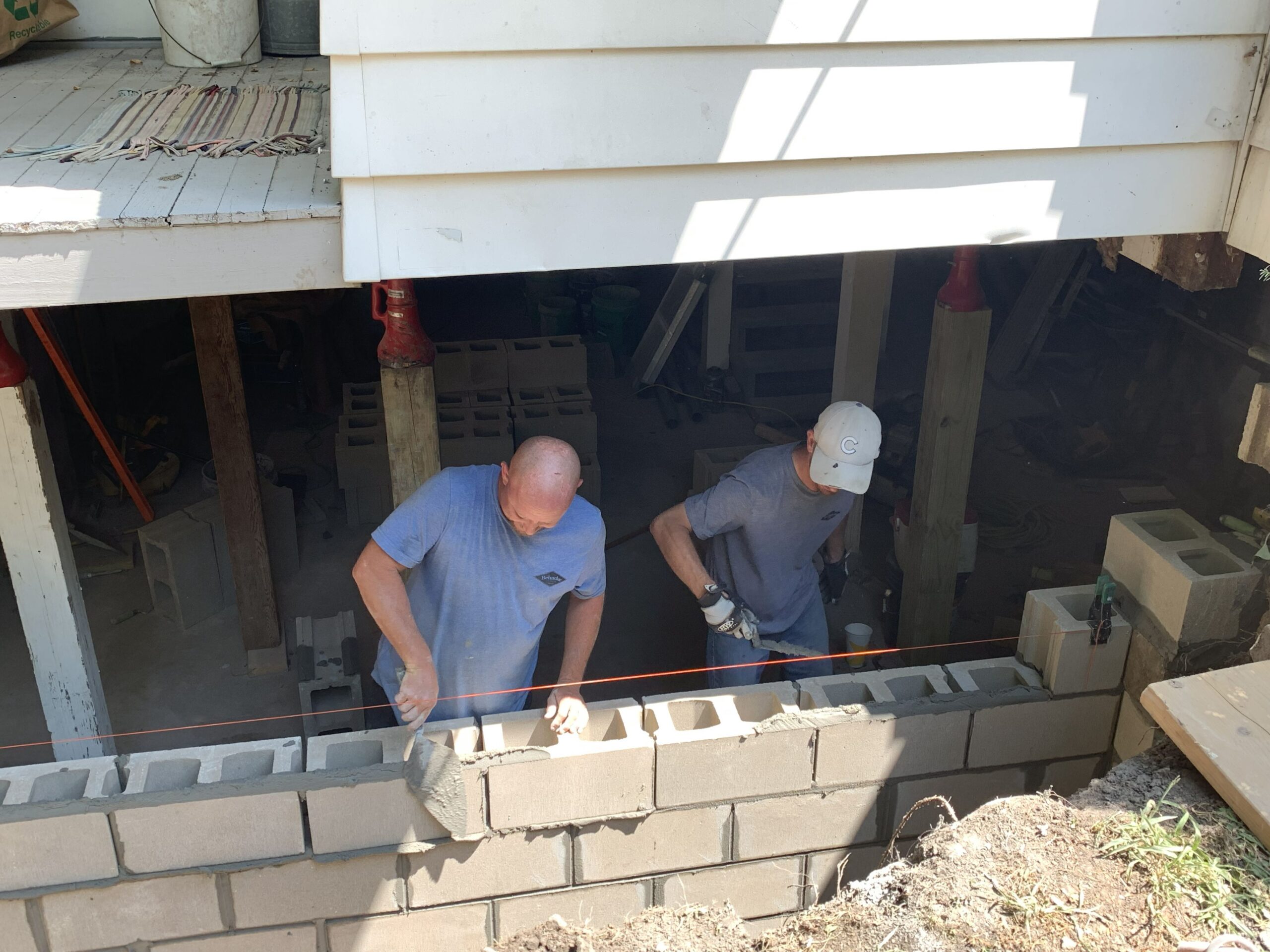
Because the cause is almost always water and soil, a lasting repair starts there: correct the driveway slope and drainage so storm water leaves instead of pooling at the garage. From there, the concrete side depends on how far things have gone — filling the voids and re-supporting a slab that’s otherwise sound, resetting or reinforcing block that has shifted, or rebuilding a wall section that’s moved too far or sits on an inadequate footing. Which of those you actually need is a judgment call that comes from looking at your garage, not from a menu. The honest news is that many garage problems are on the lighter end of that range once the water is handled.
So what should you do?
Start by watching where your water goes — the driveway slope, the joints at the overhead door, where the downspouts discharge. Then get an evaluation that reads the whole picture: the slab joint, the wall, the footing depth, and the drainage together. If you’ve been quoted a wall repair that never mentions your driveway or drainage, that’s worth a second opinion — because on garages, the water is usually the whole story.
Common questions
Why is my garage floor separating from the wall?
Almost always because water from the driveway has saturated and washed out the soil under the slab. The wet ground settles and the slab drifts away from the wall, opening that joint. It’s a drainage problem showing up as a concrete problem.
Is a cracked garage wall serious?
It can be, but many are on the lighter end once the water is handled. What matters is why it’s cracking — driveway water, frost heave, or an inadequate footing — and whether the wall or slab has actually lost support. An in-person look sorts that out.
Why does it get worse every winter?
Wet sub-base soil freezes and swells, lifting the slab and working the block joints open a little more each cold season. Seasonal movement like that points to frost heave as part of the cause, which affects the right repair.
Is it safe to park on the garage floor?
If water has washed out the soil, there can be a hidden void under the slab — it may hold your weight but not a vehicle’s. Until a void is ruled out or filled, it’s wise to keep heavy vehicles off that area.
Will fixing the wall stop it from coming back?
Only if the driveway and drainage are corrected too. The water is what caused it; a wall or slab repair that ignores where the water goes tends to come back.