
Home / Wood & Floor Repair / Rock Island
Structural Wood Repair · Rock Island, IL
Sagging Floor & Wood Repair in Rock Island
Sagging, sloping, or bouncy floors in Rock Island usually mean a failed joist, beam, or support below. We find the real cause and fix it for good.
Why It Sags
Why Rock Island Floors Sag, and How We Fix Them
A sloping or bouncy floor is structural: a rotted joist, an undersized beam, a failed sill plate, or a settled support post. In Rock Island’s historic and riverside homes, moisture and settlement are common culprits. We diagnose what actually failed and repair the structure so the floor stays level for good.
What We Do
What We Repair Below the Floor
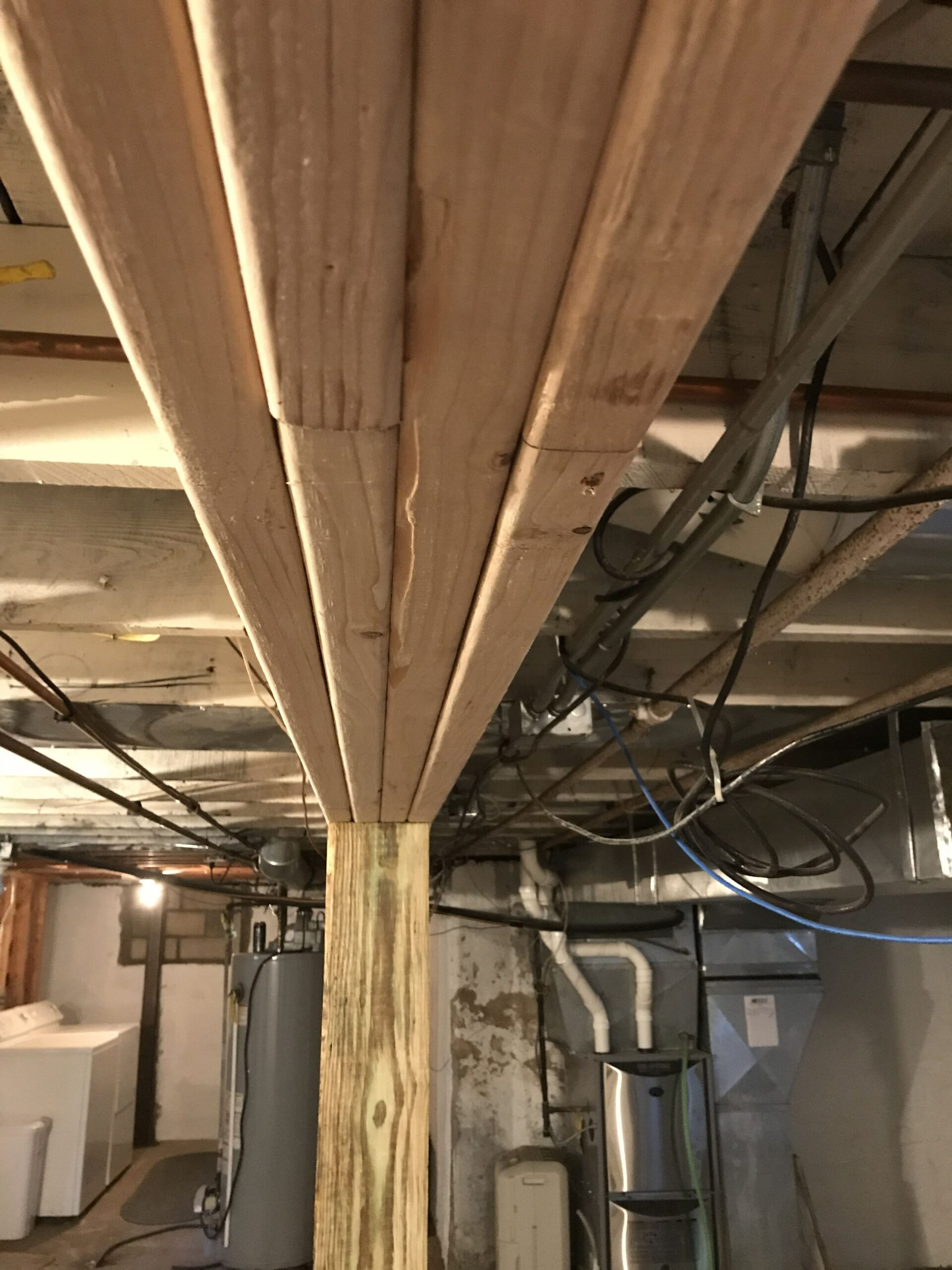
Floor Joist Repair & Sistering
Reinforcing or “sistering” cracked, sagging, or undersized joists, and replacing those that are too far gone.
Beam & Girder Replacement
Replacing failing main beams and girders, and adding properly sized support where the original was undersized.
Sill Plate & Rot Repair
Cutting out water-damaged sill plates and rotted framing and rebuilding with treated, properly flashed material.
Support Posts & Jacks
Adding or replacing support posts and adjustable columns on proper footings to carry the load and re-level the floor.
Root Cause
Often It Starts With Water
Our Philosophy
A surprising amount of structural wood damage traces back to moisture, a wet crawl space, poor drainage, or a foundation leak quietly rotting the wood above it. We look for that root cause so the new framing doesn’t end up failing the same way. Sometimes the real fix is drainage or waterproofing →
Behncke Construction · since 1948
Floors sloping or bouncing?
We’ll get under the floor, find what’s actually failing, and recommend the repair that fixes it for good, with a written estimate, usually within one business day.
Related Pages
Some settling happened decades ago and stopped
Century-old Quad Cities homes have settled, and not every slope or crack means active failure. Some movement happened long ago and is stable now. We tell you honestly whether what you’re seeing is old and settled or active and worth addressing, not every old floor needs work.
The Behncke crew
Your next step
“My old house has sloped floors, should I worry?”
Tell stable settling from active movement:
- Wood & floor repair reading what old floors are telling you
- Foundation repair when the floor is really a foundation question
Real customers · real reviews
What Quad Cities homeowners say
“We had our basement joists replaced. Reasonable quote, booked in a timely manner, great communication with expectations and the contract. We could park a semi on our new floors. The owner was a doll.”
“Kyle came out and did a very thorough job of looking for possible cracks in the foundation, digging down to see below surface line, and informed us he didn’t see any obvious cracks.”