Wood & Structural Repair · Quad Cities
Sagging & Bouncy Floors: When It’s the Framing, Not the Foundation
A floor that dips or bounces feels like a foundation emergency. Often it isn’t. Here’s how to tell what’s really going on under your feet — and why that changes the fix.
Based on more than 1,200 written inspections and nearly 10,000 estimates across the Quad Cities in the last ten years.
Good news first: it’s often not your foundation
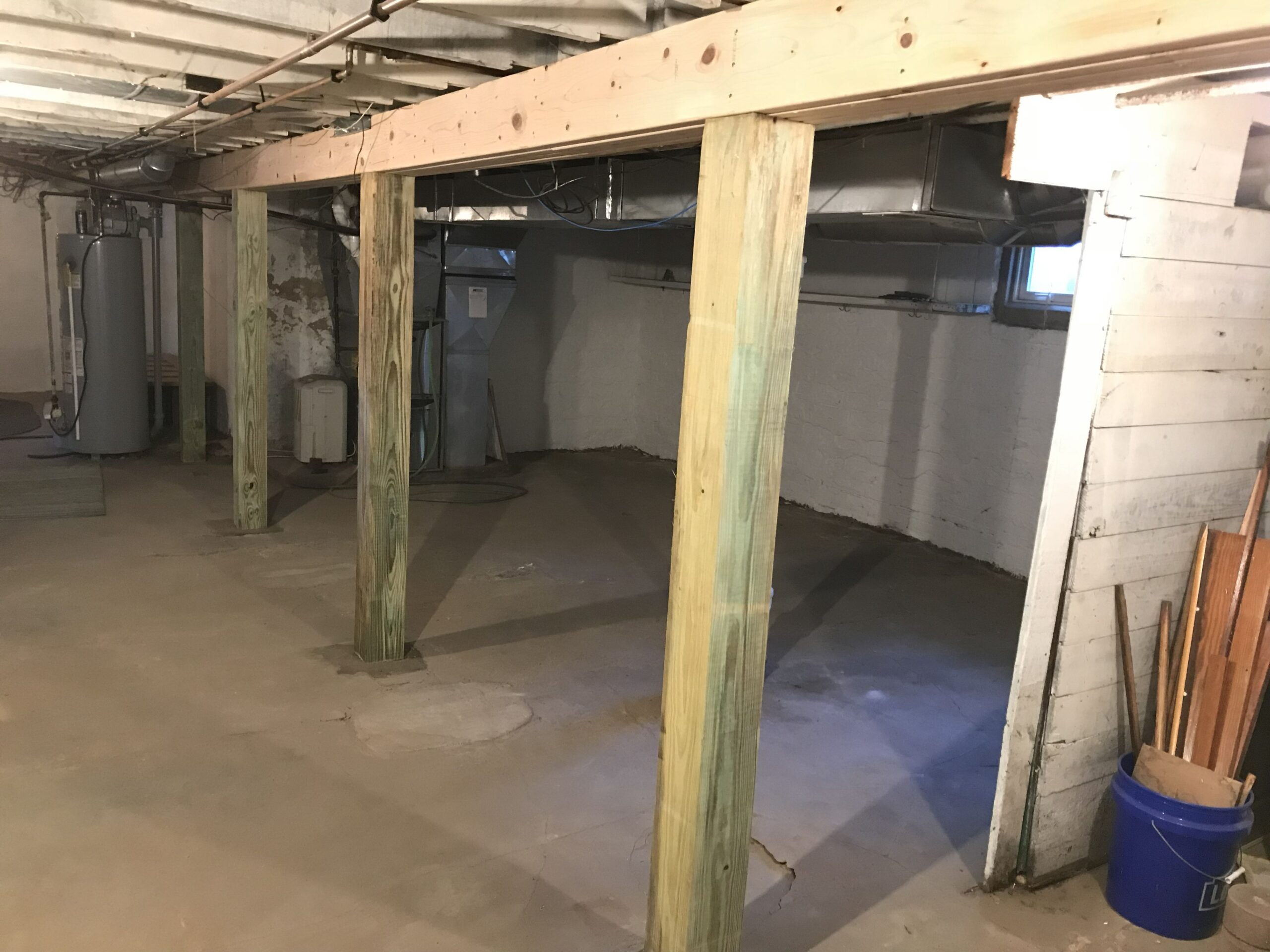
When a floor sags in the middle of a room or bounces when you walk across it, people understandably fear the worst about their foundation. But a floor is held up by its own framing — joists, beams, and posts down in the basement or crawlspace — and much of the time that framing is the story, while the foundation walls are perfectly sound. Telling the two apart is the whole game, because the repairs are completely different.
The three usual causes
Most sagging or bouncy floors we see come down to one of three things.
The framing was never big enough
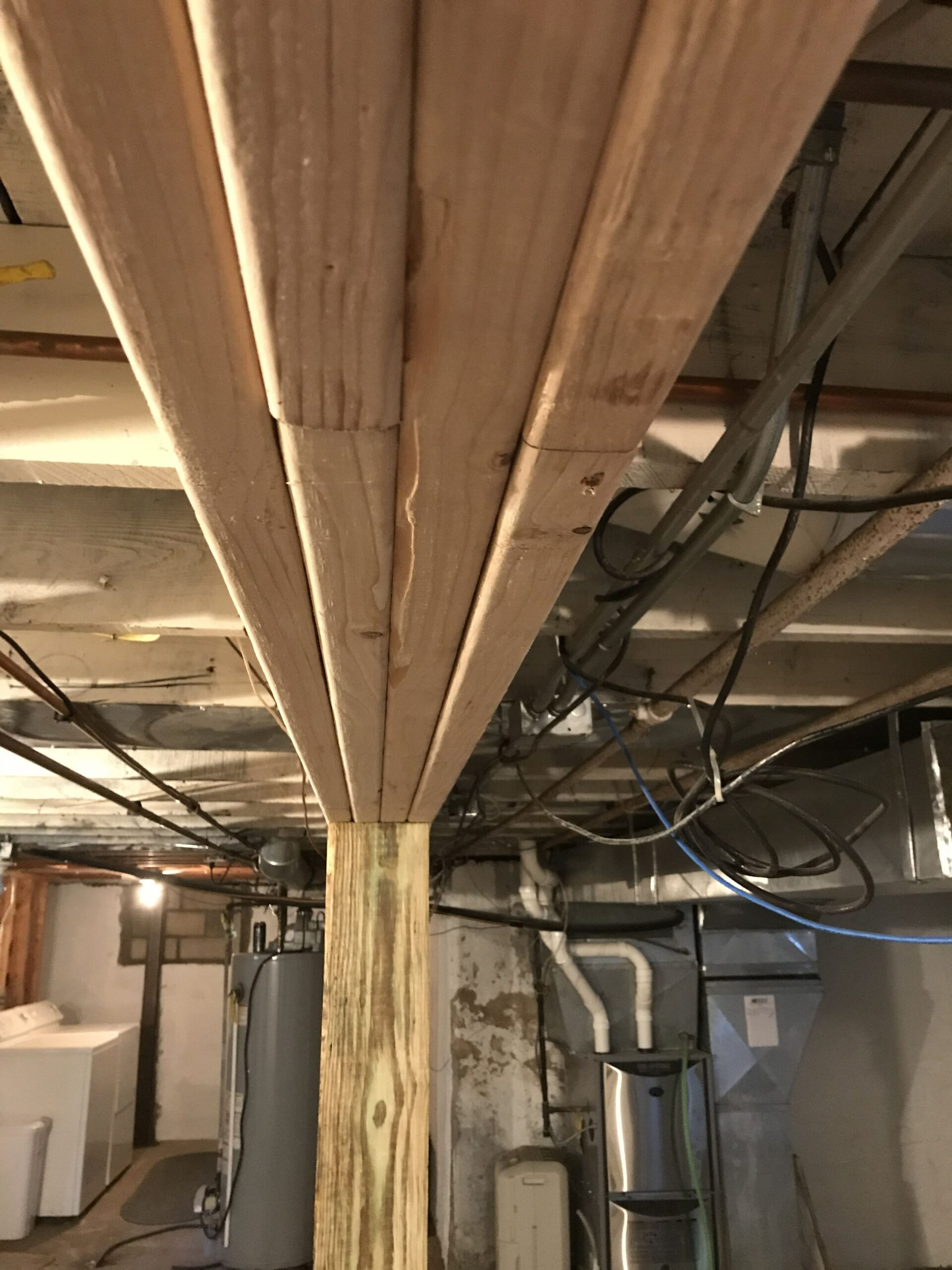
Sometimes the floor joists or the main beam simply don’t have the size to span the distance they’re covering. This is especially common in older homes and additions. As one of our estimators puts it, a sagging floor over a sound foundation is often just arithmetic — the wood was asked to do more than its size allows, and over the years it slowly gives. No foundation problem involved.
Decay or insects ate the wood
Moisture, rot, or termites can quietly destroy the strength of joists and beam ends while the concrete around them is fine. A floor that’s soft or dropping in one area can be the first sign that the wood underneath has lost its integrity — which is why we always look at the actual condition of the framing, not just its size.
Improvised posts that never had footings
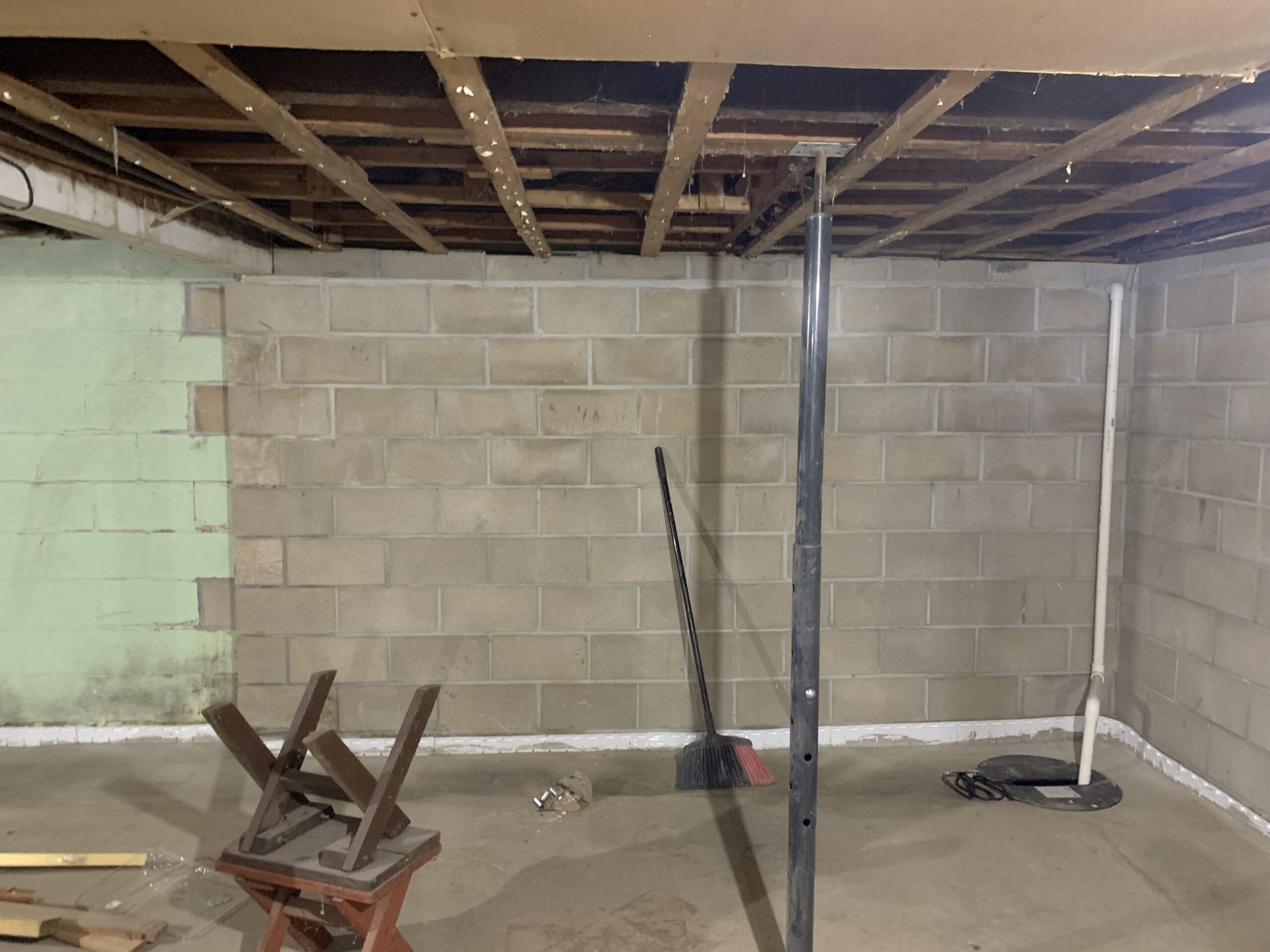
Over the decades, many basements collect a museum of homeowner and handyman supports — posts and jacks propped under the beam, resting on the slab. The trouble is that a basement slab isn’t a footing; it can move, and a post bearing on it moves with it. Support that isn’t tied to solid ground can create as many problems as it solves.
How we tell which one it is
The answer is almost always in the basement or crawlspace, so that’s where we start — before ever blaming the foundation. We look at how the floor is framed and how far it spans, the condition of the beam and the ends of the joists (probing for soft, decayed, or insect-damaged wood), and what the existing posts actually bear on. Only once that picture is clear does it make sense to talk about a repair. Reading the framing correctly is what keeps you from paying for a foundation fix you don’t need — or missing a real one.
Why the cause decides the fix
Each cause calls for a different answer, and applying the wrong one is money wasted. Reinforcing a joist doesn’t help if the real problem is that the whole floor is over-spanned; adding a beam does little if the wood is rotted through; and a new post accomplishes nothing if it lands on the same moving slab as the last one. Support has to reach solid ground, damaged wood has to be genuinely restored or replaced, and an under-sized floor needs real added capacity — not a cosmetic patch. The right repair follows the right diagnosis, which is exactly why the evaluation matters more than the quote.
What to do
If your floors sag or bounce, note where and how much — one room or the whole level, steady or getting worse — and then get an evaluation that starts underneath. If someone quotes a foundation repair for a bouncy floor without first looking hard at the framing, that’s worth a second opinion. Repairing the framing itself falls under our structural wood repair work.
Common questions
Does a sagging floor mean my foundation is failing?
Not usually. Floors are held up by their own framing, and much of the time the joists, beam, or posts are the problem while the foundation is sound. The only way to know is to look underneath — that’s where the answer is.
Why does my floor bounce when I walk on it?
Bounce usually means the floor framing is under-sized or over-spanned for the distance it covers — it flexes because the wood is doing more than its size allows. It can also come from decayed joists or supports that aren’t bearing on solid ground.
Can’t I just add a post or jack under it?
Only if that post lands on a real footing. A basement slab isn’t a footing — it can move — so a post resting on it moves too. Support that isn’t tied to solid ground often just relocates the problem.
Could it be termites or rot?
Yes. Moisture, rot, and insects can destroy the strength of wood framing while the concrete is fine. A soft or dropping spot can be the first sign, which is why we check the actual condition of the wood, not just its size.
How do I know it’s the framing and not the foundation?
An evaluation that starts in the basement or crawlspace tells you. We read the framing size and span, the condition of the beam and joist ends, and what the posts bear on, then compare that against the foundation before making any call.