
Foundation Repair · Quad Cities
Foundation Settlement: Why One Corner Drops — and What It Really Takes to Fix
Sticking doors, cracks climbing the drywall, a floor that tilts toward one corner. Settlement has more than one cause — and more than one fix. Here’s how to think about it honestly before anyone quotes you piers.
Based on more than 1,200 written inspections and nearly 10,000 estimates across the Quad Cities in the last ten years.
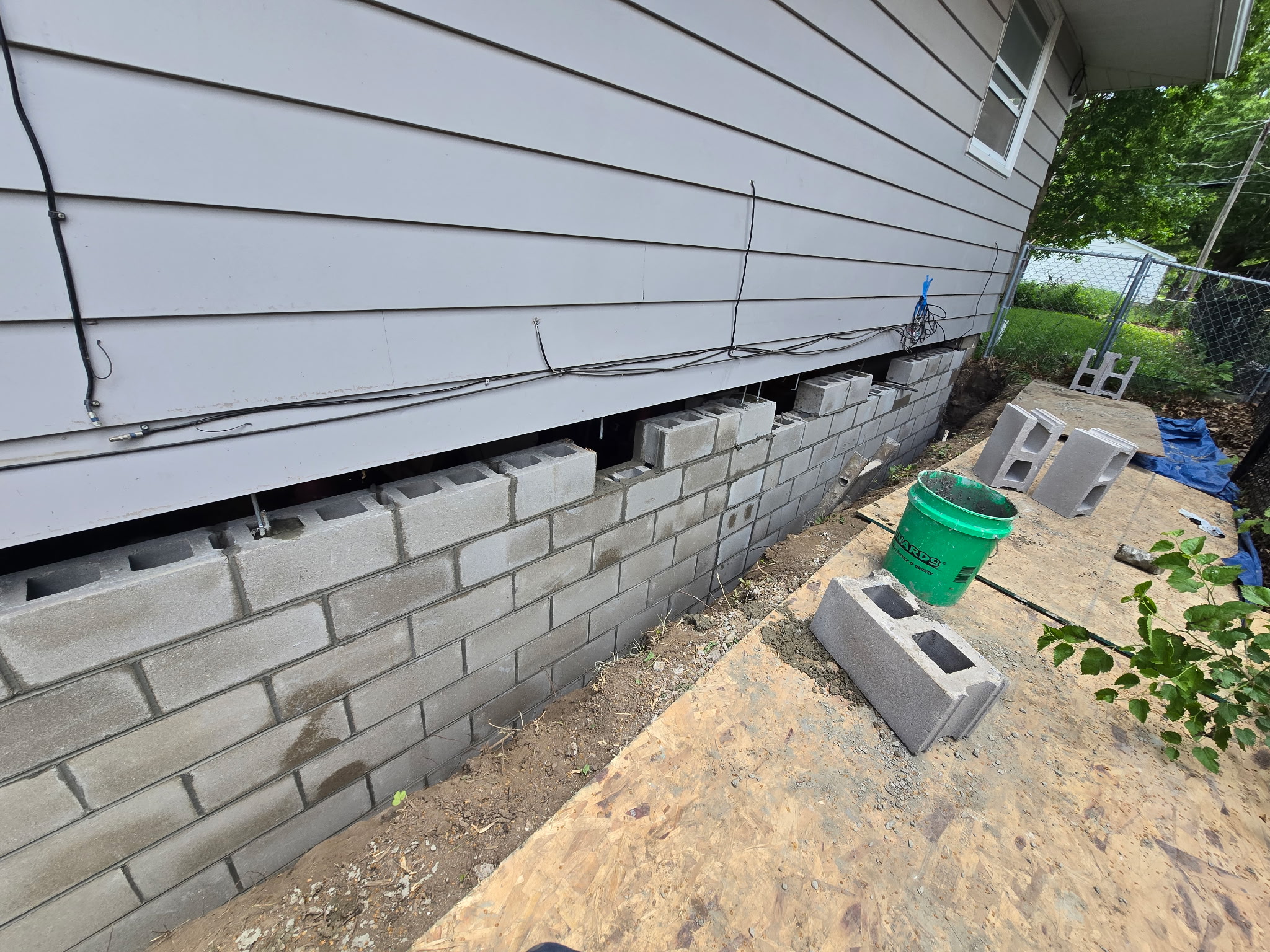
What foundation settlement looks like — and why one corner drops
Settlement usually announces itself upstairs before you ever look at the foundation: a door that suddenly sticks, a hairline crack climbing the drywall above a doorway, a floor that feels like it tilts toward one corner of the house. Down in the basement you’ll often find the matching evidence — stair-step cracks running through the block or brick, a corner that has dropped, gaps opening where the structure meets the foundation.
The cause is almost always the same story: the soil under one part of the footing has lost its ability to carry the load. In the Quad Cities that happens for a few familiar reasons — our clay soils soften and lose strength when they stay wet, a corner was built over loose fill that keeps compressing, water washes out the ground under a footing, or the whole slope a house sits on is slowly creeping. When the dirt under one corner gives way and the rest holds, the house settles unevenly, and that difference is what cracks walls and tilts floors.
The important thing for a homeowner to know: uneven settlement is a real structural signal worth taking seriously — but how it gets fixed depends entirely on why it’s happening and whether it’s still happening.
Is it still moving — or did it stop years ago?
Here’s the question that changes everything, and the one most sales pitches skip: not all settlement is active. Some houses moved decades ago, found a stable footing, and haven’t budged since. An old crack that was painted over, siding that was trimmed to clear a door years back, a floor that’s been sloped since you bought the place — those can be signs of movement that already finished. If the house isn’t moving anymore, the honest answer may be to document it, monitor it, and repair the cosmetic damage — not to pay for major structural support you don’t need.
The only way to tell active from historic is to look for the tells and, when it’s unclear, measure and watch over time. We’d rather establish that first than sell you the biggest system on day one.
Why there’s no single “settlement repair”
Two houses can show the same dropped corner and need completely different work, because the fix follows the cause. A footing sitting on ground that’s still soft needs different treatment than a footing on a slope that’s actively sliding, which needs different treatment again than a corner that already stopped moving. Sorting that out — what’s under the footing, what’s driving the movement, and whether it’s ongoing — is what a real evaluation does. It’s also why a trustworthy recommendation comes from someone standing at your house looking at the soil, the drainage, and the cracks together, not from a price quoted over the phone.
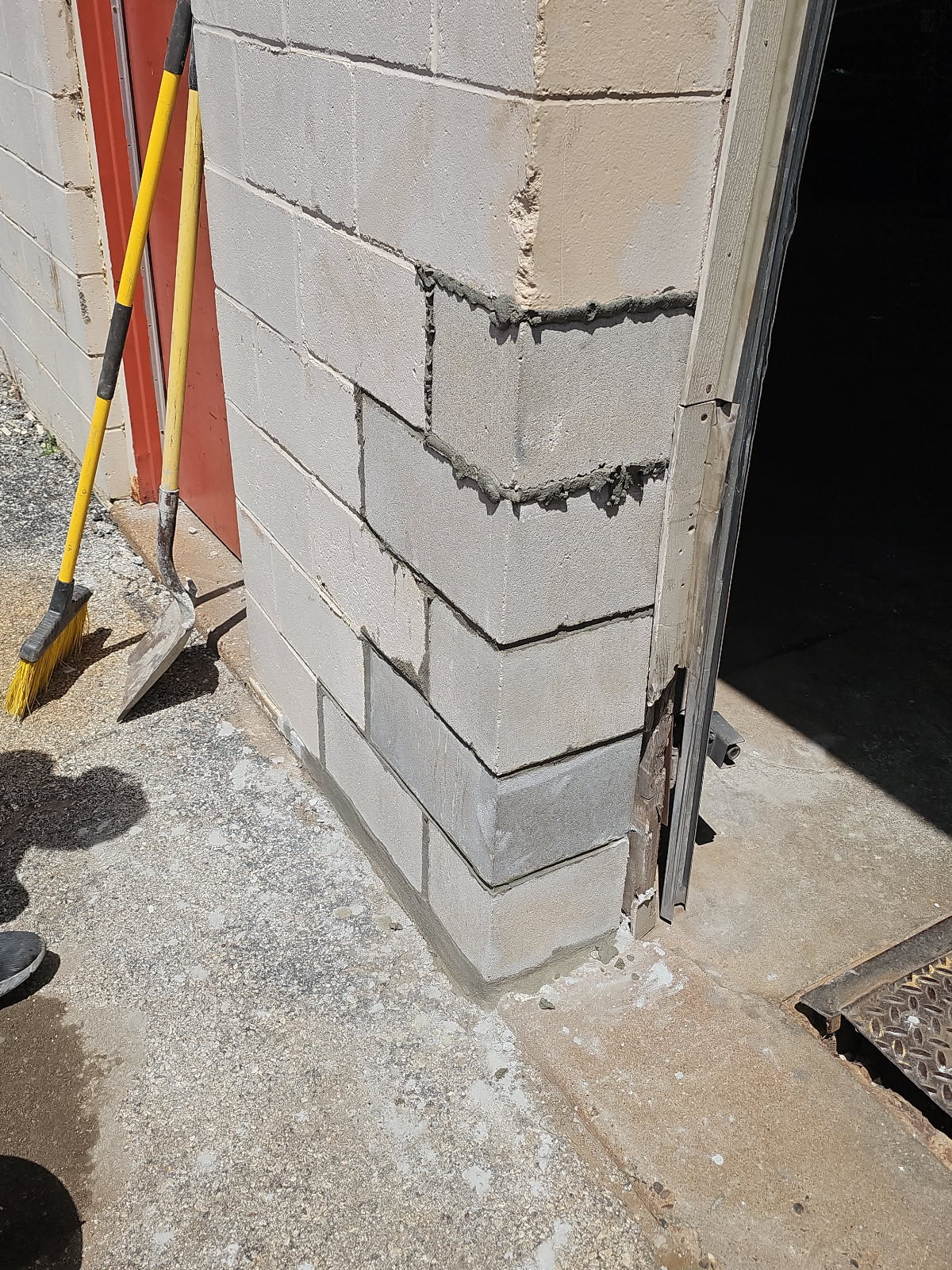
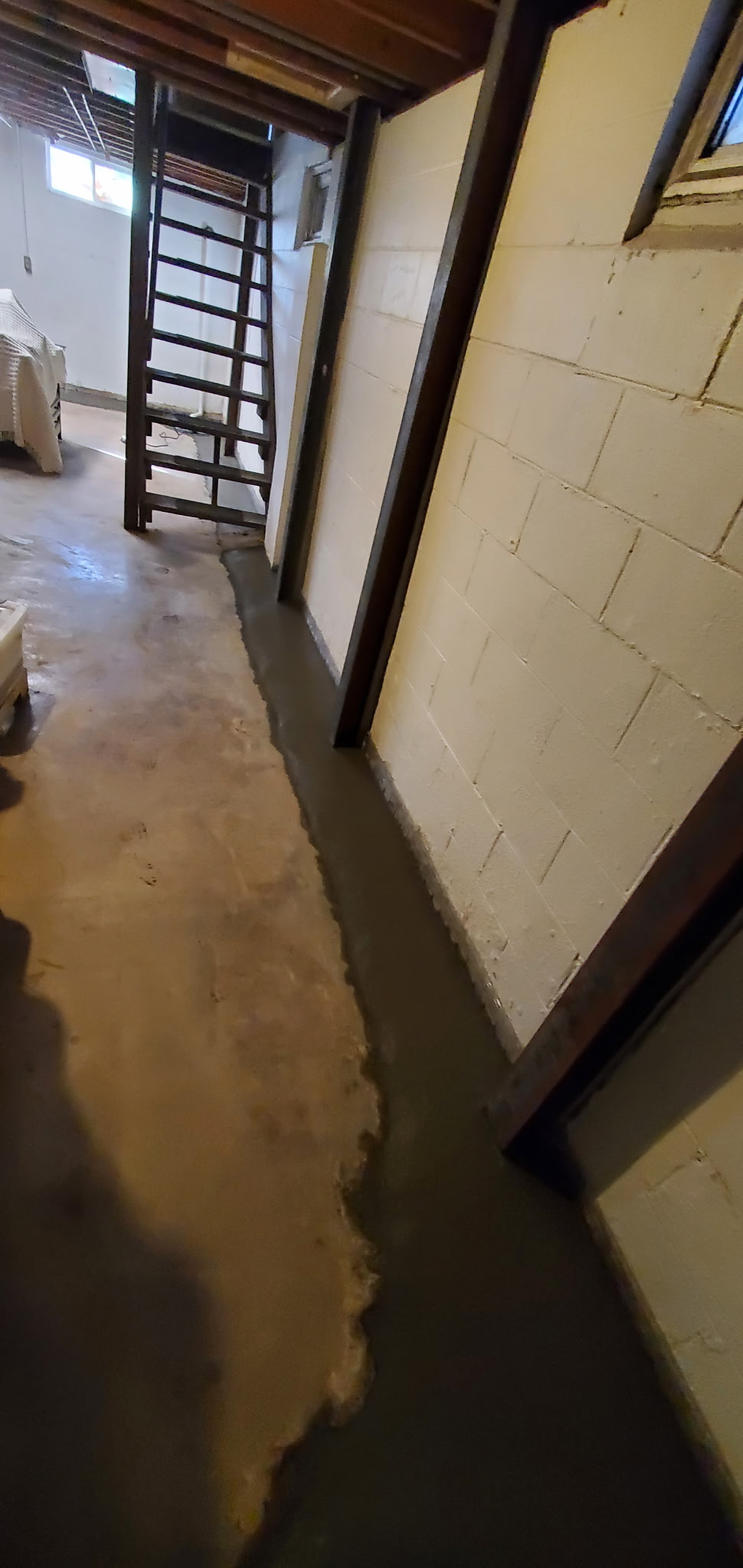
The repair options — at a high level
There isn’t one fix, there’s a range, and which one fits depends on the cause and how far things have gone. Broadly, settlement repairs fall into three families:
Stabilizing and supporting
When a footing has lost its bearing but the structure above is still sound, the goal is to give that part of the house solid, permanent support again and stop the movement. There’s more than one way to do that, and part of an honest recommendation is matching the method to the soil and to how much certainty you want. Some support methods come with a transferable, warrantied permanence; a lighter approach can be legitimate when the movement is judged essentially finished. That’s a real choice, and you deserve to have it explained rather than decided for you.
Leveling
In some cases the settled portion can be carefully brought back toward level as part of the repair. Whether that’s possible — and how far it’s wise to go — depends on the house’s condition and how it’s built.
Rebuilding the affected section
When a corner or wall has moved too far, or moved enough that it’s no longer properly carrying the structure above it, that section needs to be rebuilt on sound footing. This is the heavier end of the range, reserved for the cases that have gone furthest.
One thing homeowners appreciate: it’s rarely all-or-nothing. Settlement is usually local — one corner, one wall — so the work is targeted to the part that moved, not the whole house. Quoting a whole-foundation system for a single settled corner is how people get oversold.
Cosmetic or structural? One honest tell
Not every crack over a settling corner is an emergency, but there’s a difference worth knowing. Cracks that follow the mortar joints in a stair-step pattern can sometimes be minor. Cracks that run straight through the brick or block units themselves — splitting the masonry, not just the mortar — are telling you the structure is being pulled apart, and that’s structural. From our files: on a Davenport home with an older multi-wythe brick corner, cracks running through the brick units — not around them — were the clear sign this was genuine settlement that needed real repair, not caulk. If you want to go deeper on reading cracks, see our guide to foundation cracks.
The step nobody can skip: the water and the soil
Here’s what ties nearly every settlement case together. Almost all of them have a water story behind them — chronic saturation softening the bearing soil, a downspout soaking one corner, runoff feeding a slope until it slides. Fix the foundation and ignore the water, and the same ground conditions that caused the drop are still there waiting to do it again. That’s why a lasting repair deals with the drainage and the soil that caused the movement, not just the concrete. If you do one thing before we arrive, walk your drainage first — where your downspouts and grade send water is often the whole story.
So how do you know which repair yours needs?
The only honest answer is that it depends on your house — what’s under the footing, what’s driving the movement, and whether it’s still going on. That’s what a real evaluation sorts out. If you’re buying or selling, this is exactly what a proper foundation inspection should tell you — active versus historic, structural versus cosmetic. And if you’ve already been handed a single-method quote for piers or underpinning, that’s what our second opinion is for: a look at whether the recommended repair actually fits what your house is doing.
Common questions
Is foundation settlement always a serious problem?
Not always. Some settlement happened years ago and stopped — in that case the right answer may be to monitor it and repair the cosmetic damage, not to install major support. Settlement that’s still active is more serious and worth addressing before it gets worse. Telling the two apart is the first job of an honest evaluation.
How can I tell if my foundation is still settling or if it already stopped?
Some tells point to old, finished movement — cracks that were painted over long ago, siding trimmed to clear a door years back, damage that isn’t changing. When it’s unclear, the reliable way is to measure and watch over a period of time rather than guess. We’d rather confirm that than sell you a repair you may not need.
One corner of my house is sinking — what causes that?
Uneven settlement means the soil under that part of the footing has lost its ability to carry the load — often from ground that stays wet and soft, loose fill that keeps compressing, water washing out the soil, or a slope that’s slowly moving. The cause matters, because it decides the repair.
Do I need piers or underpinning?
Sometimes, but not always — and the specific method should follow the soil and the situation, not a script. When new support is the right call, there’s usually more than one option, including choices that differ in permanence and warranty. A good recommendation explains those trade-offs instead of defaulting to the most expensive one.
Will fixing the foundation stop it from happening again?
Only if the cause is addressed too. Most settlement here is driven by water and soil conditions, so a repair that ignores drainage and the ground leaves the real cause in place. We deal with both.
Do I need an engineer?
For anything beyond minor, clearly-historic cases, a structural engineer’s involvement protects you — the repair is designed for your specific conditions and documented. We work with structural engineers on repairs that call for it.