
Home / Basement Waterproofing / Fix the Drainage First
Basement Waterproofing · Learning Center
Wet Basement? Fix the Drainage First
Before you spend a dollar on an interior system, look outside. Surface drainage causes most of the wet basements we see in the Quad Cities, and fixing it is usually simpler and cheaper than homeowners expect.
Start Outside: Check the Big Three
Before anything else, we check three things outside, because nine times out of ten, the answer to a wet basement is hiding in one of them:
- Gutters — clean and actually carrying water, or overflowing at the wall?
- Downspouts — connected and carrying water away, or dumping it at the foundation?
- Grading — does the ground slope away from the house, or back toward it?
Fix them and the water often stops, no system required.
Our Philosophy
Fix the drainage first. Most basements don’t need an expensive system, they need the water managed before it ever reaches the wall.
Behncke Construction · since 1948
Where the Water Comes In Tells You What’s Wrong
Through the walls
Usually a surface drainage problem. Water is collecting against the wall from gutters, downspouts, or grading, and the fix is almost always outside.
Through the floor
More often a high water table pushing up from below. This is where interior drainage and a sump may genuinely be the right call. That single distinction saves a lot of money: water through the walls rarely needs a system; water up through the floor sometimes does.
Drainage Solutions That Actually Work
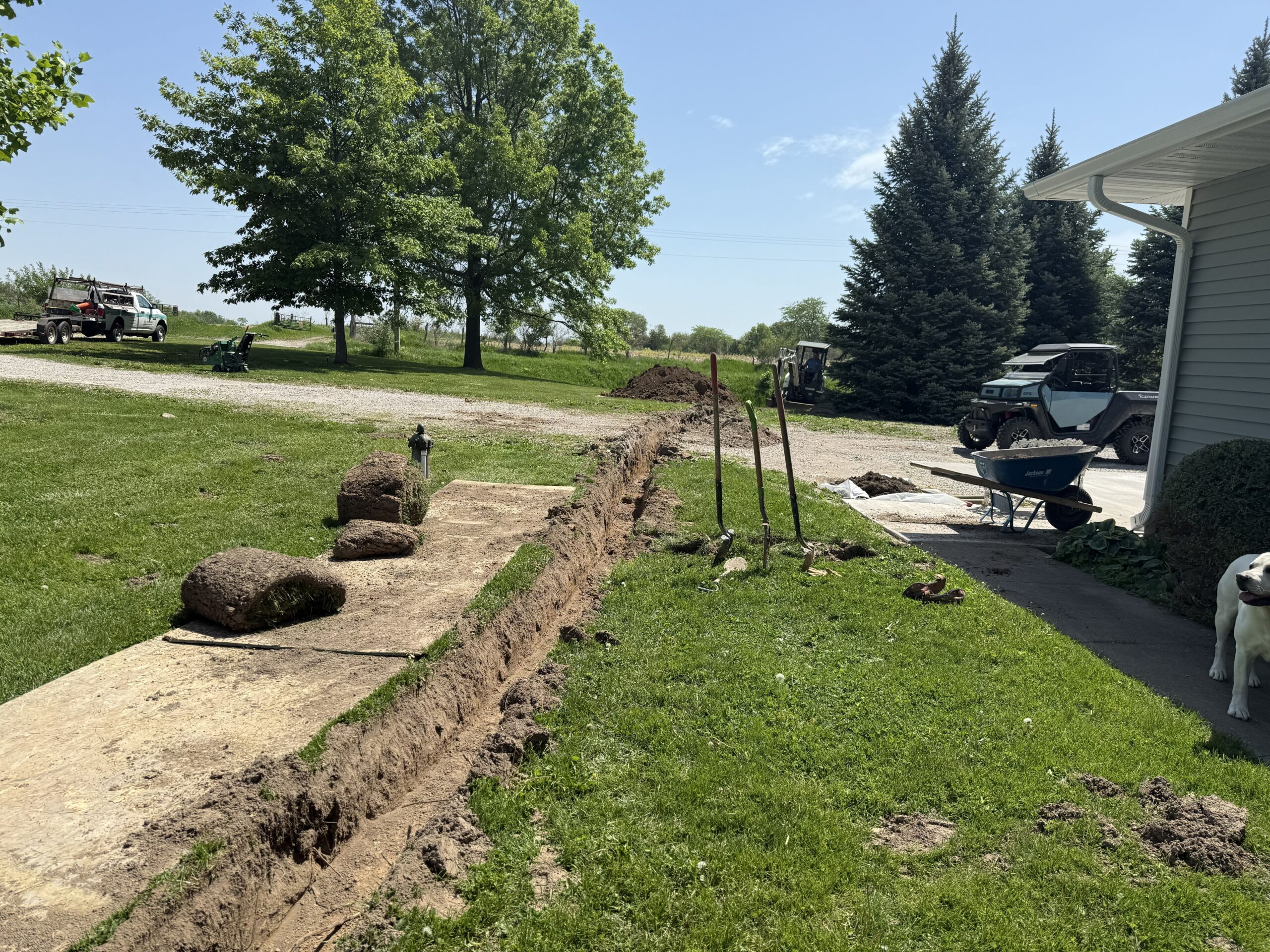
When the problem is surface water, here are the tools we reach for, roughly from simplest to most involved. The goal of every one is the same: move water away from the foundation.
- Regrading — reshaping the ground so it slopes away from the house. The spec we work to: roughly 5% fall for the first 5–10 feet, then a gentler steady slope beyond.
- Adding soil — building up low spots that let water pool against the wall.
- Lawn drains — collecting water from soggy areas of the yard.
- Inlet drains — catching water at problem spots and piping it away.
- Swales — shallow graded channels that guide runoff around the home.
- Rain gardens — planted low areas that absorb and slow runoff attractively.
Which combination is right depends on your lot, but the principle never changes. And whenever gravity can carry the water away on its own, we’ll choose that over a pump that can fail.
Get Your Downspouts Right
If we had to pick the single most common, most fixable cause of a wet basement, it’s a downspout dumping water right next to the house. A roof sheds an enormous volume of water, and if it lands against the foundation, the soil can’t keep up. The fix is simple: extend your downspouts so they discharge 10 to 12 feet away from the foundation whenever practical, past the looser backfill soil. It’s cheap, and it works.
From the Field
“The cheapest fix we recommend is often just extending a downspout 10 or 12 feet out. We’ve watched that alone dry up a basement that another company wanted thousands to ‘waterproof.’”
Behncke Construction · since 1948
Could It Be Plumbing Instead?
One last check before you assume it’s the foundation: think about the weather. If you’re getting water and it hasn’t rained recently, look for a plumbing leak first. A leaking supply line, a failing water heater, or a slow drain leak can all show up as water on the floor and get mistaken for a foundation problem. Rain-driven water points outside to drainage; dry-weather water points to plumbing.
Frequently Asked Questions
Where should I start with a wet basement?
Start outside: gutters, downspouts, and grading. Surface drainage causes most basement leaks, and correcting it is usually simpler and cheaper than an interior system.
How far should downspouts extend?
Generally 10 to 12 feet from the foundation whenever practical, far enough to get the water past the disturbed backfill soil.
Gravity drain or sump pump?
Gravity whenever possible, nothing to break or lose power. If a pump is necessary, add a battery backup.
Could it be plumbing?
When there’s water with no recent rain, check for a plumbing leak first, a supply line or water heater can mimic a foundation leak.
Let’s solve it from the outside in.
We’ll evaluate your drainage and recommend the simplest fix that keeps your basement dry, written estimate, usually within one business day.