
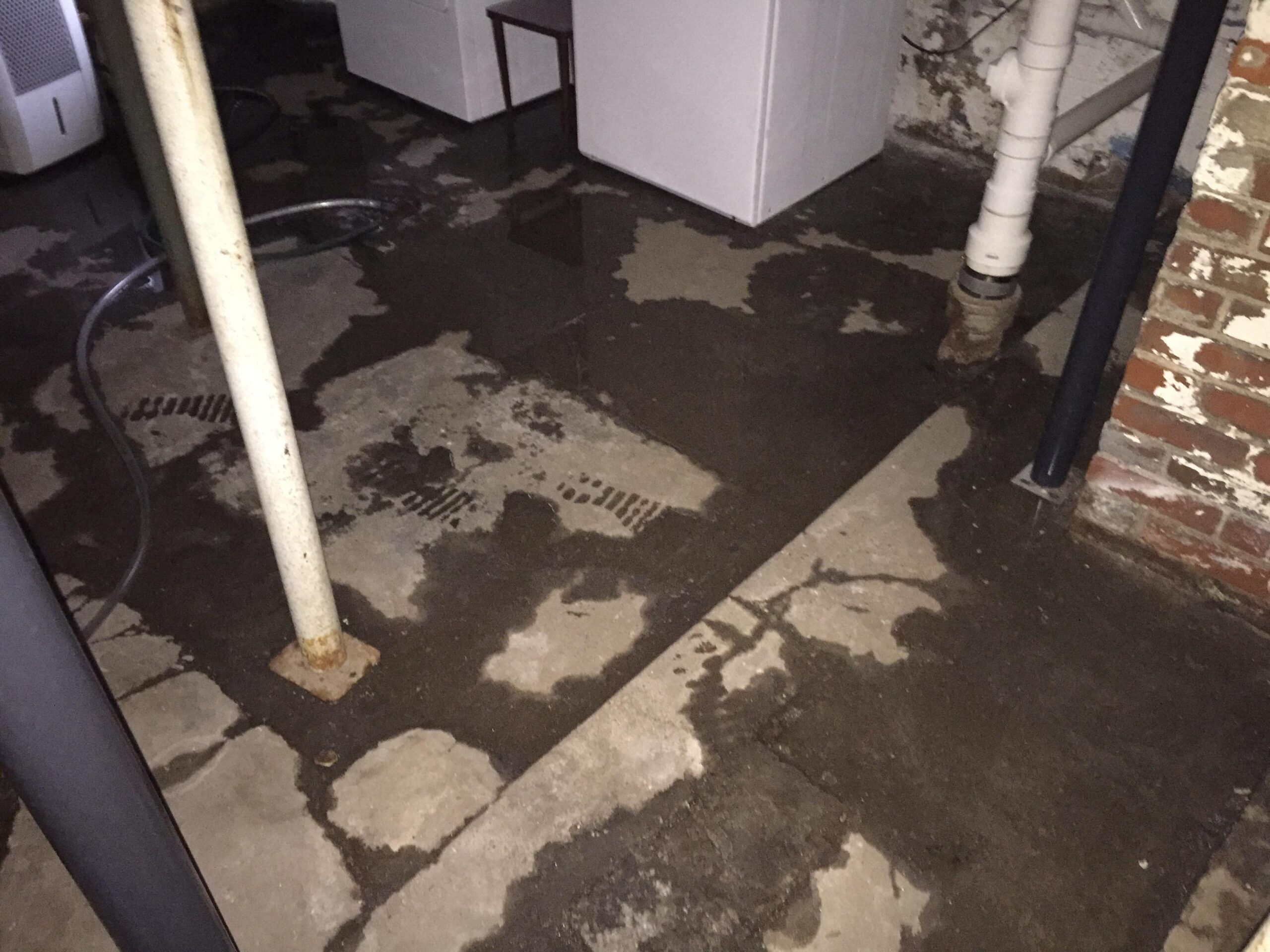
Home / Basement Waterproofing / Why Basements Leak
Basement Waterproofing · Learning Center
Why Basements Leak in the Quad Cities
After thousands of basement inspections across the Quad Cities since 1948, here’s the truth most homeowners never hear: the overwhelming majority of basement leaks aren’t a structural emergency. They’re a water-management problem, and the fix is usually far less than you fear.
Most Basement Leaks Start Outside, Not Inside
The water that ends up on your basement floor usually started as surface water that wasn’t directed away from the house. The usual culprits:
- Disconnected downspouts that drain right at the foundation instead of away from it.
- Downspouts that discharge too close to the house, a few feet isn’t enough.
- Poor grading, where the ground slopes toward the home instead of away from it.
We’ve walked into countless basements where the homeowner was bracing for a five-figure repair, and the leak stopped once we got the water moving away from the house.
Our Philosophy
We don’t sell systems. We solve problems. Diagnose the source first, then recommend the least expensive repair that fixes it permanently.
Behncke Construction · since 1948
Quad Cities Clay Soil Is Not Like the Rest of the Country
A big misconception is that foundations behave the same everywhere. They don’t. The Quad Cities sits on expansive clay soil, and that single fact explains a huge share of the water problems we see. Clay holds enormous amounts of water: it swells when wet and shrinks when dry. Add our freeze-thaw cycles, and that soil is in constant motion against your foundation, leading to:
- Foundation settlement
- Wall movement and inward pressure
- Cracking
- Water intrusion through those cracks and joints
Saturated clay is heavy, and when it presses against a wall after a wet stretch, it pushes hard, that’s hydrostatic pressure. Manage the water, and you take the pressure off the foundation.
How We Actually Diagnose a Leak
When we come out, we don’t start by measuring you for a system. We start by following the water:
- Gutters — are they clean and actually carrying water?
- Downspouts — connected and discharging well away from the house?
- Grading — does the ground slope away from the foundation?
- Driveway and slab settlement that channels water toward the wall
- Overall water flow and drainage patterns around the property
Only after we understand where the water is coming from do we talk about what to fix. Sometimes it’s a drainage correction, sometimes a sealed crack, sometimes, honestly, it’s just cleaning the gutters and extending a downspout.
A $10,000 Lesson in Diagnosing First
A homeowner had already spent over $10,000 with another waterproofing company. The basement still leaked. When we looked in the sump pit, we found mud. Clean water collecting in a pit is one thing, mud means soil is washing in from somewhere, and that pointed us straight to a crack in the footing. The previous company had installed a whole system and never found the actual source.
From the Field
“They’d spent five figures and the basement still leaked. The clue was mud in the sump pit, that told us there was a crack in the footing. We repaired it for a fraction of what they’d already paid.”
Behncke Construction · since 1948
The lesson isn’t that the other company was evil, it’s that they sold a system before they diagnosed the problem. If you’ve already paid for a fix that didn’t work, a true second opinion is worth it.
Where the Water Comes In Tells Us a Lot
Water through the walls
Usually a surface drainage problem, gutters, downspouts, or grading letting water collect against the wall. Often the most affordable to fix.
Water through the floor
More often a high water table pushing up from below. This is where interior drainage and a sump may genuinely be warranted. One more check: if it hasn’t rained recently and you’re still getting water, look for a plumbing leak before assuming it’s the foundation.
What You Can Check Yourself This Weekend
A lot of basement water problems can be prevented, or fixed, with basic seasonal maintenance:
- Clean your gutters. Overflowing gutters are one of the most common causes of a wet basement.
- Extend downspouts so they discharge 10 to 12 feet from the foundation whenever practical.
- Check the sump pump discharge line — make sure it’s open and not frozen or clogged. And if your sump cycles every 10–15 seconds on a dry day, that’s not weather — it’s a continuous underground source worth having diagnosed.
- Seal driveway and slab joints where they meet the foundation.
- Check your grading. The ground should slope away from the house.
Block, Stone & Poured: How They Behave
The age and construction of your foundation matters too. Across thousands of Quad Cities basements, the pattern we see:
- Block foundations leak more frequently than poured, the mortar joints give water more paths.
- Stone foundations, common in older Davenport, Moline, and Rock Island homes, are remarkably durable but do tend to leak.
- Poured foundations perform best overall, but still crack and leak depending on how well they were built.
No matter which type you have, the principle is the same: keep water away from it, and most problems never start.
Frequently Asked Questions
Is a leaking basement a structural problem?
Usually not. Most leaks come from poor surface drainage, gutters, downspouts, and grading, not structural failure. We diagnose the source before recommending any repair.
Do I need an interior drainage system?
Often, no. Interior systems are sometimes necessary, especially for water coming up through the floor, but they’re frequently oversold. Many Quad Cities basements only need drainage corrections.
Why does my basement leak only after heavy rain?
A classic sign of a surface-drainage issue. Water is collecting against the foundation faster than the soil can move it away. Fixing gutters, downspouts, and grading usually solves it.
How far should downspouts discharge?
Generally 10 to 12 feet from the foundation whenever practical. Getting the water past the backfill zone makes a real difference.
Wet basement? Let’s find the real cause.
We’ll follow the water, diagnose the source, and recommend the least expensive repair that fixes it for good, written estimate, usually within one business day.