
French Drains: When They Work for Quad Cities Homes, and When They Don’t
A French drain is a great tool for the right problem and a waste of money for the wrong one. Here is how we decide whether your home actually needs one.
Get a Free Diagnosis →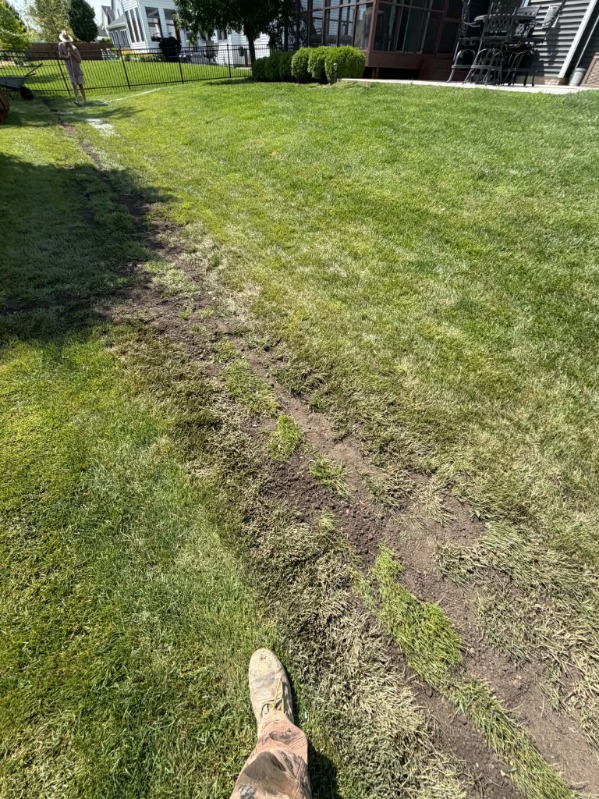
A simple idea that gets misapplied
A French drain is straightforward: a gravel-filled trench with a perforated pipe that gives water an easy path to travel away from where you do not want it. Done right, it quietly redirects surface and shallow groundwater for decades. The trouble is that it gets sold as a cure-all, including for problems it cannot solve.
The key distinction we draw on every inspection is whether your water problem is coming from the surface or from pressure below the slab. A French or exterior drain handles surface and yard water beautifully. It does not relieve the hydrostatic pressure that drives water up through a basement floor, that is a job for interior drain tile. Matching the tool to the source is the whole game.
How we decide if a French drain is right
The same trench is either the perfect fix or the wrong one depending on where the water is coming from.
We find where the water originates
A soggy yard, water pooling against the house, or runoff from a slope points to a surface problem a French drain can solve. Water seeping up through the basement floor points to pressure below, a different fix entirely.
We look uphill and at the grade
If the lot sheds water toward the foundation, intercepting it before it arrives is often the cleanest solution. Grading and downspouts come first; a drain handles what they cannot.
We rule out hydrostatic pressure
If the water table is pushing water up under the slab, no exterior trench relieves that. We check the entry points, cove joint and floor cracks, before recommending exterior work.
We pick the least invasive fix that lasts
Sometimes that is a French drain; sometimes it is interior drain tile; sometimes it is just better grading and downspout extensions. We recommend the one that actually addresses your source.
French drains and their close cousins
“French drain” covers a family of drainage tools. Here is how we use each.
Yard / surface French drain
For a wet yard or water pooling near the house, a gravel-and-pipe trench routes surface water to a safe outlet, keeping it away from the foundation in the first place.
Exterior footing drain
Installed at the foundation footing during deeper waterproofing work, it collects water along the wall before it can enter. The right call when the wall itself is the entry point.
Interior drain tile (when it is pressure)
When water is being driven up from below, the durable answer is interior drain tile and a sump, not an exterior trench. We are clear about which problem you have.
The wrong drain in the wrong place looks busy but fixes nothing.
We have been called to homes with a brand-new French drain that never had a surface-water problem to begin with. Diagnosing the source first is how you avoid paying for drainage that was never going to work.
Common questions
Will a French drain fix a wet basement?
Only if the water is coming from the surface or yard. If it is being pushed up through the floor by pressure below, a French drain will not relieve that, you need interior drain tile. We confirm the source before recommending either.
What is the difference between a French drain and drain tile?
A French drain typically handles surface and yard water outside; interior drain tile sits below the basement slab to collect water that pressure drives in from underneath. Same concept, very different jobs.
How long does a French drain last?
Installed correctly with proper gravel, fabric, and outlet, it can work for decades. Most failures trace back to poor installation or, more often, being used for a problem it was never going to solve. One install detail that matters: perforated pipe belongs only in the collection zone — the run that carries water to the outlet should be solid pipe, so the water it picked up can’t soak back into the ground along the way.
Do I need a permit or a big excavation?
It depends on the scope and where the water goes. A simple yard drain is modest; a footing drain involves real excavation. We lay out exactly what your situation requires before any digging.
Explore related repairs & solutions
Not sure what’s causing it? We’ll tell you straight.
We diagnose the real cause first, then recommend only what permanently solves it, the honest read the Quad Cities has trusted since 1948.
Schedule a Free Inspection →